Financial Literacy Websites Present Best Educational Practices
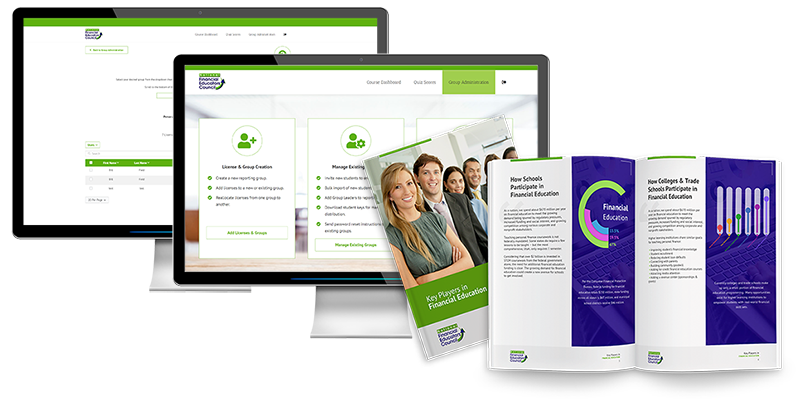
If you search for financial literacy websites, chances are your search results will land on the National Financial Educators Council’s eLearning platform. On this platform – branded with the name eVolve – you will find the latest trends in website financial literacy programming. These trends include best practices in web-based educational methods and the state of the art in financial education strategies.
This personal finance course online system has been grounded in constructivist theory, wherein students construct their own understanding by engaging in practical money management activities and then learning to apply the knowledge to real-world decisions. Since the instruction centers around the learner, it can be customized to prepare learners for the life events they expect to face both in the near- and the long-term.
Top Aspects of Website Financial Literacy
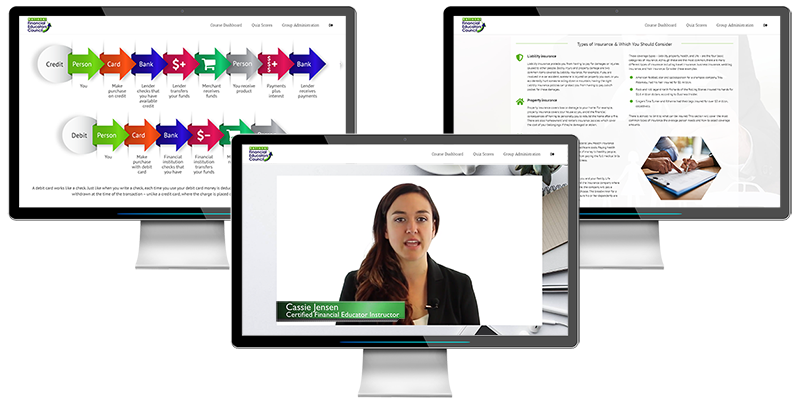
The rigorous eVolve platform and its organizational Learning Management System were designed to represent best practices for online learning, according to empirical research. These flexible financial literacy websites combine the following features for participant engagement: 1) a great user experience; 2) personalized learning based on student metrics; 3) action and behavior modification; 4) learner-centered teaching strategies including scaffolding, scenario-based learning, and case studies; 5) interactivity through videos, simulations, and a peer forum; 6) comprehensive battery of integrated tests; 7) gamification, with capability to transfer points, badges, and bonuses; and 8) maximum accessibility in compliance with CAG 2.0 standards.
Financial Literacy Websites Offer Financial Life Guide Activity
The eVolve system does not stop with simply educating students; learners do activities with practical applicability, such as completing the Financial Life Guide. This Guide walks participants in this personal finance class online study through the process of creating a full-life financial plan – one that will serve their needs at each individual life stage. The Financial Life Guide is part of the project-based learning (PBL) approach these financial literacy websites take to help learners translate knowledge into action.
The Financial Life Guide inspires participants to create budgets (current and future), craft solid retirement plans, form investment tactics, explore when and how to buy a home, get copies of their credit reports, ready themselves for major purchases, pay off or evade debt, choose educational pathways, and set clear lifestyle goals – in other words, participants develop a full lifetime personal finance plan.
Website Financial Literacy has Many Choices for Pace and Delivery
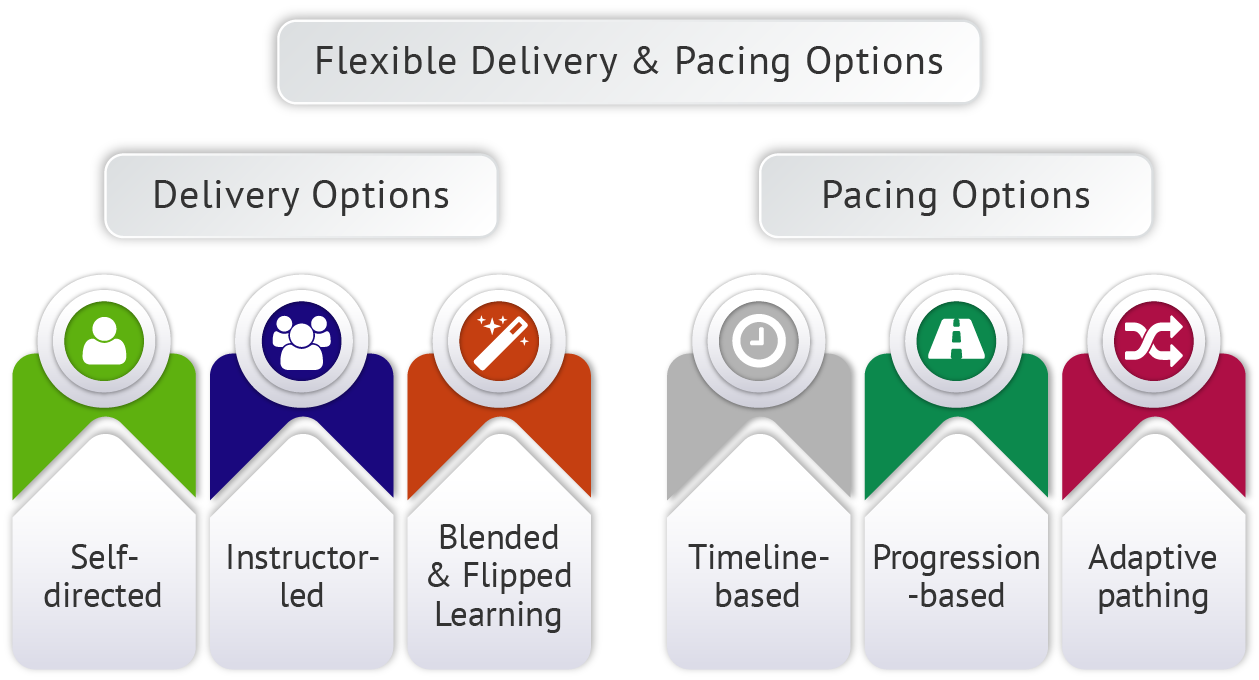
On the eVolve website, financial literacy can be offered in multiple ways – the platform provides choices for pacing and delivering the lessons. In regard to pace, you can time-release lessons according to a predesigned schedule; you may set the platform to control students’ progress based on lesson completion; or you can make the financial literacy websites adaptive for high school, where learners who are unable to pass a lesson test get redirected to a review component that presents that topic in a fresh way.
For delivery, you may choose between self-directed study, where learners move at their own pace; live instructor presentations; or some hybrid blend of those two options. Blended learning has been identified as useful for online instruction at every age level, including elementary school.
Learning Management System for the Financial Literacy Websites
Integration and data communication are two key features of the Learning Management System employed by these financial literacy websites. First, if you desire to integrate eVolve with other technological systems, you can use the built-in TIN CAN API to merge activities from different programming. The API automatically tracks all the learning experiences in which participants engage, for example, it will record when learners complete the Financial Life Guide which has them build their full financial plans, as with other personal finance topics in the program.
The Learning Management System offers facets that help you manage participant progress and performance. It’s easy to use, and supports your efforts to bring learners into higher levels of knowledge and thinking as they work toward financial wellness.