
Personal Finance Project-Based Learning Makes Education Fun & Relevant
Do you cringe at the thought of making advanced decisions about your personal finances? Do the concepts of budgeting, investing and retirement planning make you glaze over and put you in a daze? If so, it is important that you change these attitudes toward your money. As fate would have it, you’re in exactly the right place to do just that. Below, we explain how personal finance project-based learning makes managing your money fun and rewarding. We want to help you get a grip on your personal finances. Keep reading to start your financial healing right now.
You’ve discovered the National Financial Educator’s Council (NFEC). We recognize the importance of personal financial literacy and we see a pervasive lack of educational programs teaching it. That’s where we come in.
We provide resources that help people learn and teach others about personal finance. Our specially designed project-based financial learning programs meet core educational competencies and they’re designed to be flexible and dynamic, so they appeal to people of all ages and all backgrounds. If you have a desire to teach finance to others, you can become an NFEC Certified Financial Educator and teach our courses to groups of all sizes.
A Personal Finance Project Resource Book Points the Way to Help Others
Here’s an example of how others have used personal finance project-based learning to help groups of people become financially literate.
Maria was born and raised in Venezuela. As her country’s political policies caused hyperinflation, things got intense. When her husband was a victim of an “express kidnap”, where kidnappers demand cash from ATM withdrawals, they both knew it was time for her and her family to leave. Thanks to her education and an established career in finance, she, her husband and their 6 and 8-year-olds were among the lucky 1265 Venezuelans granted asylum in the US between 2014 and 2016.
As they settled into the US, Maria became increasingly concerned about the lack of financial education offered in US schools. Instead of fighting the education system, she took matters into her own hands. She organized and implemented a successful class on financial literacy to minorities of all ages.
Now her students wanted more, and so did she. Her recent students and other immigrants with a basic personal finance education so they wanted to learn about advanced topics like investing, entrepreneurship, home ownership and political influence on personal finances. This was the perfect opportunity for Maria to continue her financial literacy activism.
Online research led her to a personal finance project resource book. This and the NFEC website gave her the resources she needed to solidify plans for an advanced financial class.
She knew finance and she had the demand from her target audience. When she presented the results of her first class to local community immigrant help centers, they offered advertising and use of the community facilities.
Defining the Goals of this Personal Finance Project-Based Learning Course
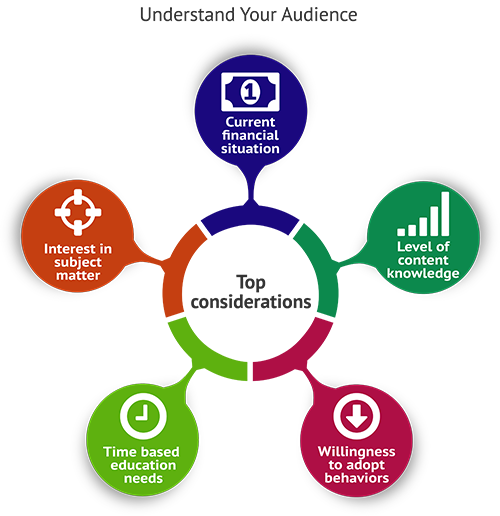
Her audience already had basic financial skills, so for this class, she wanted to instill knowledge on the advanced topics in which they had expressed an interest. While they were busy, she knew from her previous class that they were willing to give a longer-term commitment and she was hopeful that she would be able to get them to the point of short-term strategic thinking and touch on extended thinking in these advanced topics. If she was able to only cover the skills and concepts, that would be acceptable too.
She knew this would take about 40 hours and she was pretty sure these driven students would commit to that, as long as she structured it to fit each of their schedules. This amount of time would allow her to pick up needed personal finance vocabulary and start to implement the lessons.
Technology and Project-Based Personal Finance Learning
Her audience for this advanced class was motivated enough to stay committed on their own, but their schedules were all around the clock. Instead of forcing them into a timeline-based program, she decided that a self-paced schedule would work best. This necessitated a technology-based approach and she knew that the NFEC had the perfect answer, so this would not be a problem. Personal finance project-based learning was what she needed.
A technology-based approach would also allow her to collect different kinds of data than live teaching and she was excited to see what information she could derive.
She would still be able to help her students on the closed Facebook group and the weekly 1-hour live webinar to provide scaffolding, where they could ask questions and get immediate support.
Personal Finance Project-Based Learning and Project Resource Book
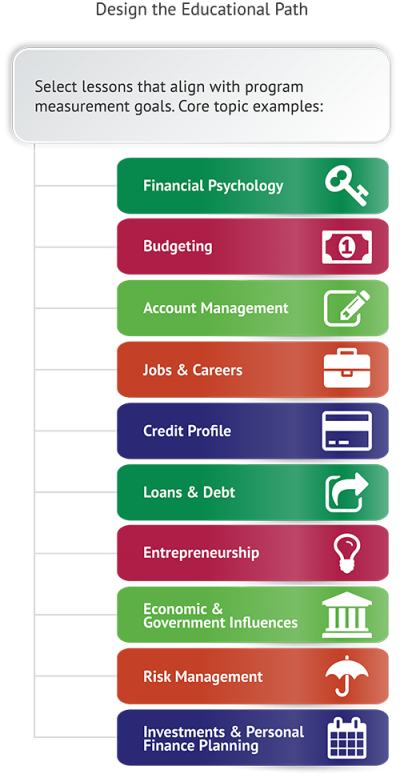
It was easy to decide on topics to present in this advanced class because her students from her first class told her as much. They wanted to learn about investing, entrepreneurship, home ownership and political/governmental influence on personal finances.
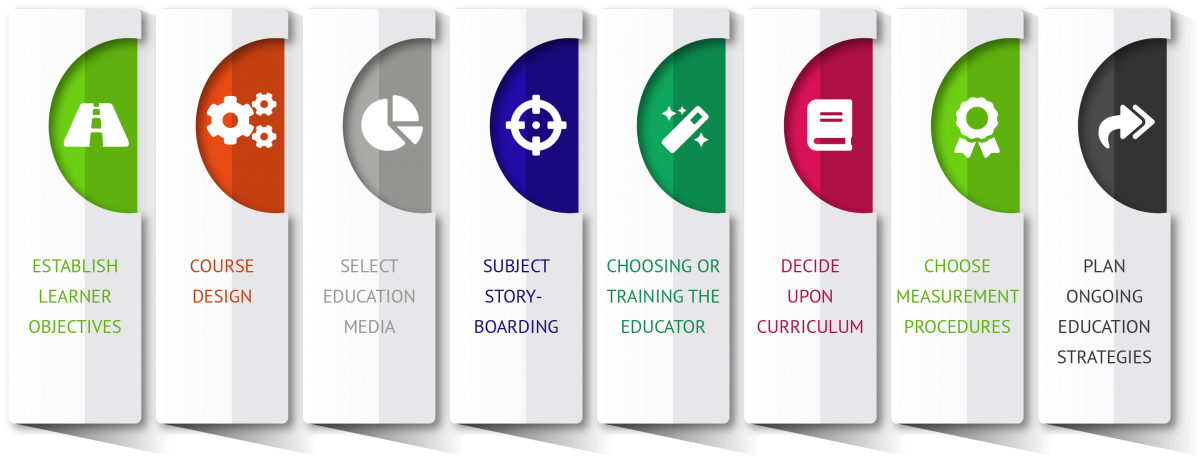
It was a lot to cover in 40 hours. She decided to provide a basic understanding of those topics, then let the class decide where they wanted to deepen their understanding. She would provide additional resources for those who didn’t get exactly what they wanted. A personal finance project resource book would be provided to all students upon successful completion.
A Flexible, Modular Curriculum to Facilitate a Custom Personal Finance Final Project
Her students were already motivated and patient enough to learn it in-depth before applying it to their lives. They didn’t need extra motivation.
What the program did require, was to be independent and meet core educational competency standards, since many of the students would advance with other continuing education classes. It also had to require complex thinking and meet any schedule but she also wanted to include personal finance games to keep learning fun. In-demand learning was also important, so students could get answers when they needed them.
For a personal finance final project, each student would research their area of interest and apply it to their own lives. A flexible, modular design would allow this.
A Certified, Experienced Facilitator of Project-Based Learning in Personal Finance
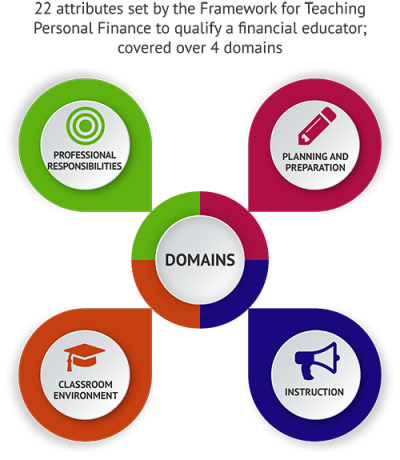
Once she had the topics and personal finance curriculum nailed down, Maria wanted to find an NFEC Certified Financial Educator to help her out. She had recently gotten her own certification from the NFEC, but wanted extra support from someone with more experience. She wanted the instructor to be an immigrant who had succeeded financially in the US and served as a symbol of what her students wanted to achieve in life, a living testament that they could do it too. To her delight, she found an NFEC Certified Financial Educator who fit the bill perfectly.
Project-Based Personal Finance Learning is a Success
The personal finance project-based learning was a success. Of the 60 immigrants who registered for the program, 56 of them proudly completed the course successfully. The data proved that their level of understanding had grown significantly since starting the program.
Maria compiled the data and put a report together that demonstrated how far the students had come. She would use it to expand the program’s reach and offerings. It would also look good on her resume.
Learning Personal Finance is a Never-Ending Process
Upon completion, Maria presented them with a Certificate of Completion for completing all personal finance topics they could use on their resumes and continuing education applications. She kept the Facebook group active and the students continued to help and support each other. She didn’t forget to give them each a personal finance project resource book.
The graduates couldn’t wait to start researching their financial options. They found particular value in the customized personal finance final project. They took great pride in understanding what was available to them and choosing the best options on their own. This level of independence truly represented what they imagined life in the US would be like.
Knowing she helped so many people in such a profound way made Maria feel better about herself than she ever had and she couldn’t wait to do more.