
Presenting High School Money Management Lessons
There are good ways and less successful ways to deliver high school management lessons for teens. Some valuable tips and information about top financial literacy programs for youth are covered on this page, so read on to learn the recommendations we’ve discovered during the past decade we’ve spent promoting financial literacy.
Top Recommendations to Teach Money Management for High School Students
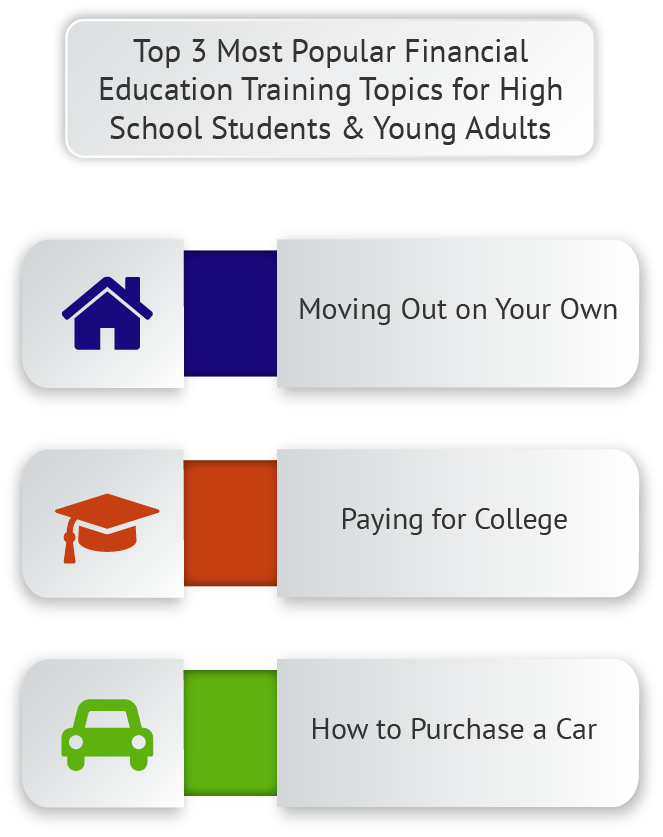
The key to tailoring lessons in money management for high school students is to hit the topics they will find most relevant to their own life decisions. Forbes Magazine suggests 5 money lessons teens should learn before going out on their own. One good example is how to buy a car. Many youth, especially as they approach driver’s license age, are interested in learning these tools. We suggest covering such money management topics as budgeting, goal-setting, expense identification, insurance, and credit, as related to the car-buying process.
Another relevant topic might be moving out on one’s own. This subject may be in the forefront of many youth’s minds as they move toward independence. Best programming to cover this topic can include short- and long-term money planning, budget creation, income sources, insurance, debit/credit and banking basics.
A third pertinent subject in high school money management could be paying for higher education. College-bound kids can benefit from learning how to plan for education, return on college investment, funding sources (e.g. scholarships, grants, loans), and saving for college.
The solution is to settle on topics that give them skills to handle real-world decisions, so they are eager to learn and willing to stay focused on the education.
Money Management High School Tips: Know What Barriers Kids are Facing
Our most essential money management high school tips include gaining a deep understanding of the roadblocks young people may run up against. First, a personal finance class for high school attendees should consider their demographics and backgrounds. What financial challenges do they encounter in their family homes? Are they low or high SES? Do they live in an urban or rural setting?
Next, look at the behaviors related to high school money management that they’ve already developed. This set of behaviors has been influenced not only by their backgrounds but also by what their parents and friends do and the advertisements to which they’ve been exposed. Advertising has a particularly powerful impact on money management for high school students. The effects of media can create gender, racial, and class stereotypes, contributing to depression and low social image for some teens. This grave issue should be a real consideration when teaching students financial literacy.
Money management high school-targeted lessons can be a solution to the negative influences they’ve run into. Youth need to become prepared to enter the real world after high school. That means financial education in high school lessons should help them get the appropriate financial and support systems set up. They also need a network of professional advisers who can guide their personal finance paths into the future. These systems can help ensure that high school money management lessons stay with them as they mature.
