The Power of a Financial Literacy Practice Test is Often Underrated

The financial literacy test questions you ask will define the data you will derive, which can then be interpreted in different ways. Our tests are designed to thoroughly measure and track different aspects of financial literacy in the students and evaluate different financial education programs. Students can list the course on college applications and resumes. Programs can use their newly-proven success to increase the chances of continued funding, which means improvement and expansion.

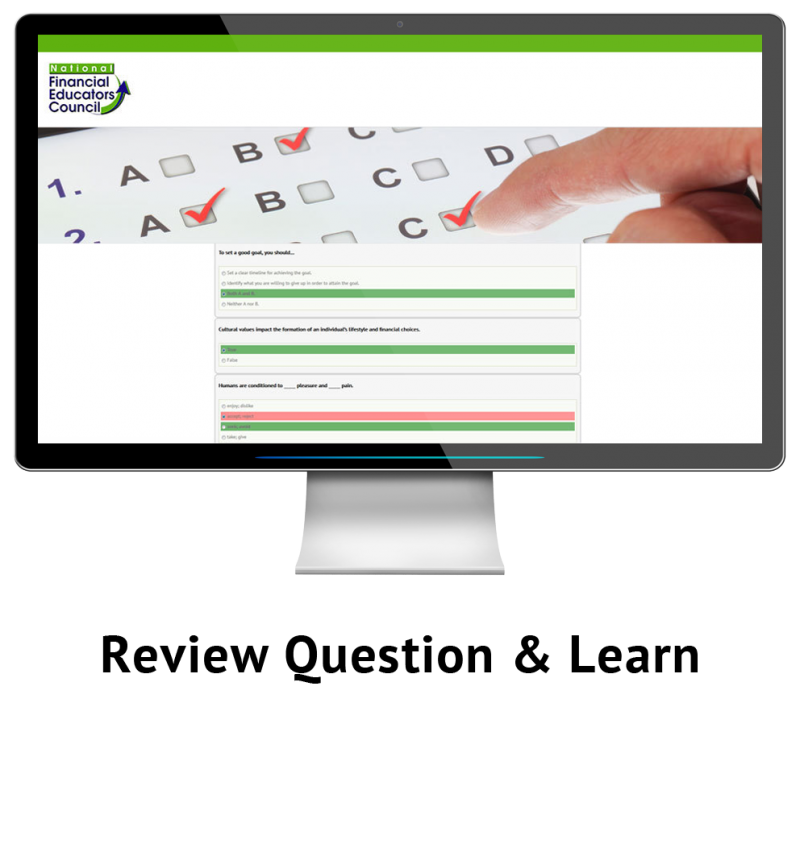
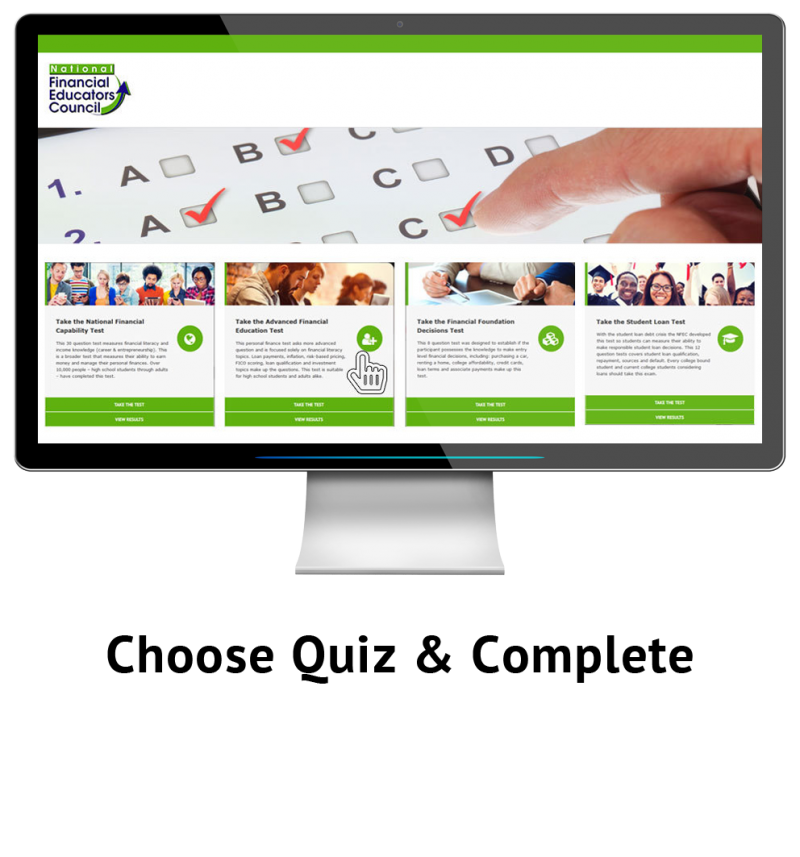
Start now. Just choose your area of interest, take the test and your financial literacy test answers will be emailed to you for review right away.
Planning for Financial Literacy Test Questions Methods

Accepted Financial Literacy Test Questions Skill Set

Augmentation of Financial Literacy Test Questions Capabilities

Results

67%

Average Score of 67.38%

0
Participants to Date

Personal Financial Literacy Test Answers Will Illuminate Possible Weak Points in Your Program

We probe five separate and distinct aspects of personal finance. Not only do we evaluate financial knowledge, we also look for less obvious yet very powerful unconscious personal forces that might sabotage financial knowledge. If a person hates money and doesn’t even know it, these pre-existing, deeply ingrained financial sentiments will have a huge impact on how they behave toward money. Attitude and behavior directly affect personal financial wellness, so these critical hidden issues must be addressed.

Students create and implement their own financial systems that work in their own lives. Tracking this progress shows the success and failure of a financial program as it highlights overall results, measured by the personal financial situation of the students.

Appropriate Use of Financial Literacy Test Questions Scenarios

Personal Financial Literacy Test Questions and Answers Reveal Levels of Knowledge

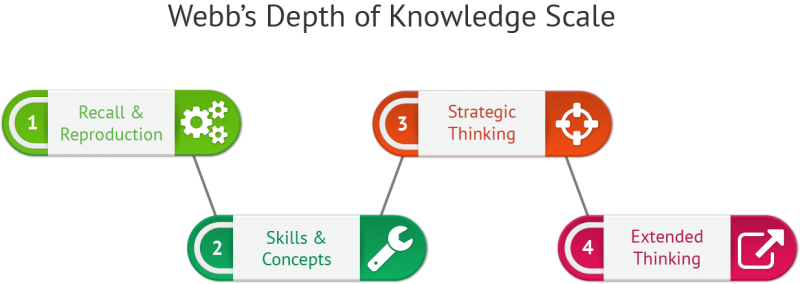
A course that doesn’t track students’ level of knowledge, runs the risk of teaching material that is too advanced, causing frustration and losing students’ interest. If a student is unable to analyze with strategic thinking, he can’t be expected to learn extended thinking such as creating and evaluating. Attempts to try will only backfire. Our comprehensive personal financial literacy test questions are designed to determine the class’s level of knowledge on Bloom’s Taxonomy. Aligning the curriculum with the right level of understanding is a critical component of a successful financial education program.
Significant Financial Literacy Test Questions Management

The topic of financial literacy garners a good deal of attention in the media these days as we begin to recognize the role financial wellness plays in people’s overall health. The number of financial education programs around the U.S. has increased dramatically. But no matter how great a curriculum may be, program success can only be determined by employing rigorous research methods to quantify results. That’s why the National Financial Educators Council (NFEC) developed a financial literacy test to provide a baseline measure of financial capability among American teens and young adults.

In collaboration with Edward Halteman, Ph.D. – a statistician credited with transforming the world of empirical research by introducing the concept of web-based surveys – the NFEC designed an online financial literacy test for high school students. The goal of survey development was to assess current financial knowledge among today’s youth, to help clarify the topic areas educational programs should target. Approximately 1,300 young people aged 15-18 completed the survey between January 2012 and August 2013.

Results of this national financial literacy test proved noteworthy. For example, the NFEC’s analysis found that less than one-third of respondents were able to answer 70% of the questions correctly, and the average score across the whole group was just 58%. As teens move through high school and prepare for their college years, they will be asked to make many difficult yet essential decisions about how they organize and manage their finances to ensure future success. For example, they will need to decide whether or not they will enter into student loan debt. Based on the NFEC survey results, clearly there is plenty of room to improve how we prepare young people to face the financial realities of living on their own.

As concerned citizens and educators work to develop effective programs to help raise financial capabilities among America’s youth, including a measurement component should form a critical step in the process. Empirical measures like the NFEC survey are much-needed to quantify the impact of financial literacy education and training events so they may be upgraded and improved. The NFEC also uses surveys and other measurement tools to identify the key lessons presented in its money management curriculum packages.

Financial Literacy Test Questions Provide Solid Basis for Designing Programs

Presenting a successful financial literacy event requires a series of steps that lead an organization from the pre-planning stage through evaluation and building sustainability. None of these steps can be omitted without risk of failure. The National Financial Educators Council can guide a community group through the entire process. Before you even get started, there is a series of financial literacy test questions that should be asked during the pre-planning phase.  See our global international financial literacy test.

First you must clearly define your objectives. Individual objectives—business, personal, and philanthropic—are one aspect to consider. But aligning with overall organizational objectives also is critical. What do you hope to accomplish with the program? What are the final outcomes you want to see? And how will you know if you reach your goals? The NFEC recommends using a financial literacy test to serve as an evaluative measure of success.

Measure the increase in financial capabilities of students with the NFEC’s financial literacy quiz for students in high school that have been used with teens and young adults all across the U.S. These test materials measure not only the students’ money management knowledge, but also their motivation to learn and how confident they feel about taking the first steps toward securing their futures.

Financial literacy programs build a road toward achieving a variety of organizational objectives, which might include fundraising, service promotion, networking and building a positive community reputation, or attracting media attention. The financial literacy questionnaire that the NFEC suggests organizations take during pre-planning includes questions such as:

  1. What personal finance topics do you want to teach?
  2. What specific results do you want to see?
  3. Who is your target audience?
  4. What topics will most benefit your intended audience members?
  5. How will you measure program success?

The results of the financial literacy test questions and baseline research will help you define clear goals. With that information its now up to you to build a plan that leverages financial literacy to achieve them. Thus you will be reaching important organizational goals while you improve the lives of the participants.