

Building a Financial Foundation is About More Than Money: It’s About Empowerment
By Dr. Darvincia Warren, The Money ChicTM, CEO and Founder of CORE DMV
For years, Dr. Darvincia Warren watched the same story unfold across kitchen tables, offices, classrooms, and community spaces: hardworking people were doing their best to get ahead, yet too often they lacked the knowledge and tools they needed to turn effort into lasting financial stability.
The problem, she came to understand, was not a lack of ambition. It was a lack of access.
Known personally as The Money ChicTM, Dr. Warren has spent 15 years working in financial services and is the Founder and CEO of CORE DMV, a government-contracted financial literacy and empowerment organization serving families, youth, and communities throughout the DMV region and the state of Maryland. Her perspective on financial education is shaped not by theory alone, but by years of watching real people confront real financial decisions – and by seeing what happens when they finally have the information and resources to make those decisions confidently.
Her message is increasingly relevant at a time when financial pressures are touching people at every stage of life. Young adults enter a complicated economy with little preparation for managing money. Working families must navigate rising costs and competing financial priorities. Returning citizens face significant barriers to rebuilding economic stability. Older adults confront the challenge of protecting assets accumulated over a lifetime.
The common thread is that financial education must be about more than information; building a financial foundation must be about more than money.
It must be about empowerment.

The Financial Knowledge Gap: A Community Issue
Dr. Warren’s work began with DW Tax Prep, where she spent years sitting across the table from families who were working hard but still struggling financially. Those conversations revealed a pattern that would eventually shape her career.
People were doing everything right, she observed, yet many had never been given access to the foundational financial knowledge that could help them make better decisions.
That realization led to the evolution of DW Tax Prep into CORE DMV and, eventually, to the development of FinLitTM Youth Build, an evidence-based financial literacy curriculum delivered in schools through multi-agency government contracts across the region.
The philosophy behind the work challenges a common assumption about financial hardship: that people simply need to try harder.
In reality, financial outcomes are influenced by access to education, opportunity, trusted guidance, and practical tools. Someone cannot make an informed investment decision if they’ve never been taught what investing means. A person can’t effectively manage credit if no one ever explained interest rates, repayment terms, or credit scores. A family can’t adequately prepare for financial emergencies without understanding the importance of savings and risk management.
Financial literacy, in this context, becomes less about knowing financial terminology and more about having the capacity to act.
A Financial Foundation is Multi-Layered
Dr. Warren’s approach to helping people build a financial foundation centers around five interconnected areas that underpin financial capability: Financial Psychology; Accounts, Savings, Budgeting, and Investment; Credit, Debt, and Loans; Income, Careers, Business, and Entrepreneurship; and Risk Management and Insurance.
This framework reflects a broader view of financial well-being.
The first layer is psychological. People’s financial decisions are shaped by their experiences, beliefs, fears, and expectations. Financial education that ignores the emotional side of money may provide information, but doesn’t address the behaviors that determine whether that information is ever put into practice.
The second is practical: understanding accounts, budgeting, saving, and investing. People need to know how to manage today’s money while simultaneously preparing for tomorrow.
Credit and debt represent the third critical layer. Credit can open doors to housing, transportation, education, and business opportunities, but poorly-understood debt can also become a significant obstacle to financial progress. Understanding how borrowing works – and how to evaluate financial products – is an essential component of financial freedom.
Income is equally important. a financial foundation cannot be built solely by cutting expenses. Career development, entrepreneurship, business ownership, and other strategies for increasing income must also be part of the conversation, particularly when discussing economic mobility and wealth creation.
Finally comes protection. Insurance and risk management are often overlooked in conversations about financial literacy, yet a single unexpected event can erase years of progress. Building wealth without understanding how to protect it leaves the foundation vulnerable.
Together, these areas offer a comprehensive definition of financial literacy – one that encompasses not only how to manage money but also how to earn it, grow it, and protect it.
Translating Knowledge Into Reality
Effective financial education also requires a move away from education that ends the minute the class concludes.
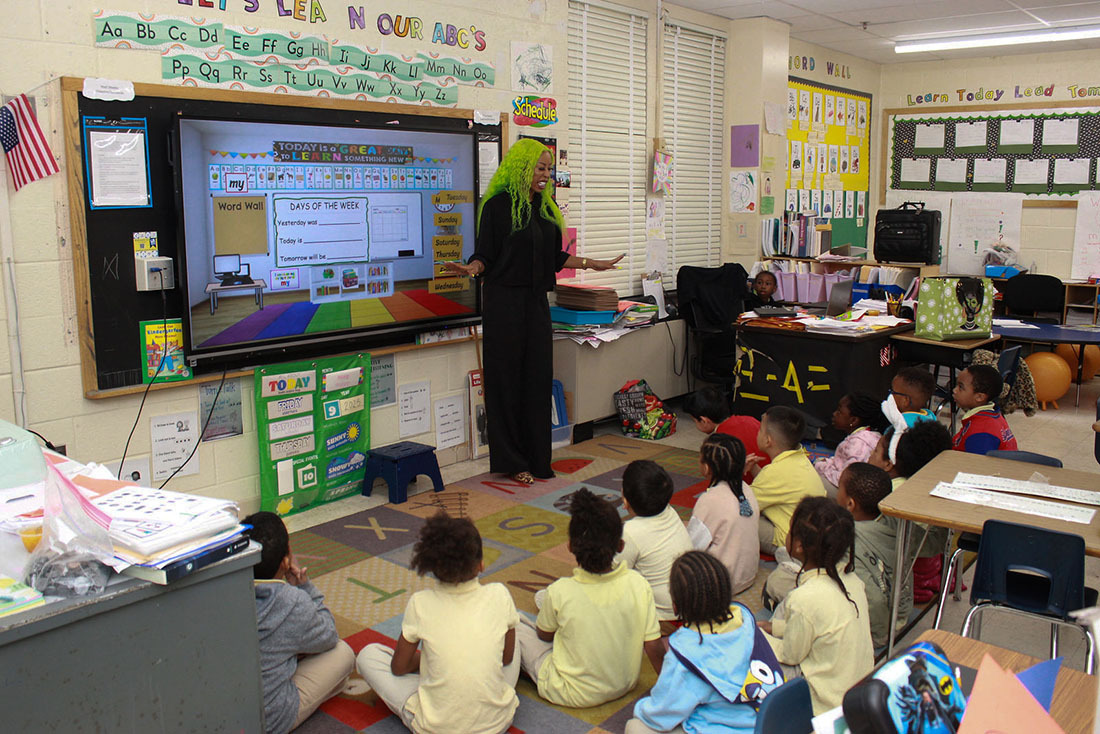
CORE DMV’s FinLitTM YouthBuild program offers an example. Students who complete the curriculum receive a certificate of completion along with a $200 seed savings stipend deposited into a tax-advantaged growth account through a complimentary one-on-one Financial Needs Analysis with a licensed professional.
The distinction is important.
The program does not simply tell young people that saving matters. It gives them something tangible with which to begin.
That approach reflects Dr. Warren’s broader belief that financial education should create an immediate bridge between knowledge and action. The lesson about saving becomes more meaningful when a student has an actual savings account. A conversation about investing becomes more relevant when a young person can see how money can grow over time. Financial planning becomes less abstract when participants have the opportunity to work with a professional to examine their individual circumstances.
In other words, financial education should not simply inform people about financial empowerment; it should create pathways toward that empowerment.
Financial Education Should Follow People For a Lifetime
Dr. Warren’s work also challenges the common notion that financial literacy is primarily a youth issue.
CORE DMV’s four signature programs are designed to address different life stages. FinLitTM YouthBuild serves students. TeamBuild provides financial wellness programming for working adults. ReBuild focuses on returning citizens seeking to reestablish financial stability and reduce the likelihood of recidivism. LegacyBuild helps seniors protect what they have accumulated and plan for what they want to leave behind.
This approach recognizes that financial needs evolve.
A teenager preparing for college or a first job faces different questions from a parent managing household expenses. A returning citizen rebuilding credit confronts different barriers from an entrepreneur seeking capital. A senior planning retirement and legacy has different priorities from a young adult opening a first bank account.
Yet each is building – or rebuilding – a financial foundation.
That is why financial education must be accessible across the lifespan and responsive to the realities people actually face.
A Broader Vision of Financial Empowerment
Dr. Warren’s commitment extends beyond her organization. She serves on the Maryland Comptroller’s Financial Literacy Advisory Council and the Maryland Financial Educators Council Advisory Board, bringing a practitioner’s perspective to conversations about financial education policy and practice. She also serves as Communications Director and FIT Program Lead for The Pinkhouse Group, where she launched the Financial Independence and Transformation program for at-risk and unhoused youth in 2025.
Her community work includes financial literacy events such as Money Smart Week and Capital Connections: Empowering Minority Businesses, reflecting a belief that financial empowerment must extend beyond classrooms and into the communities where people live and work.
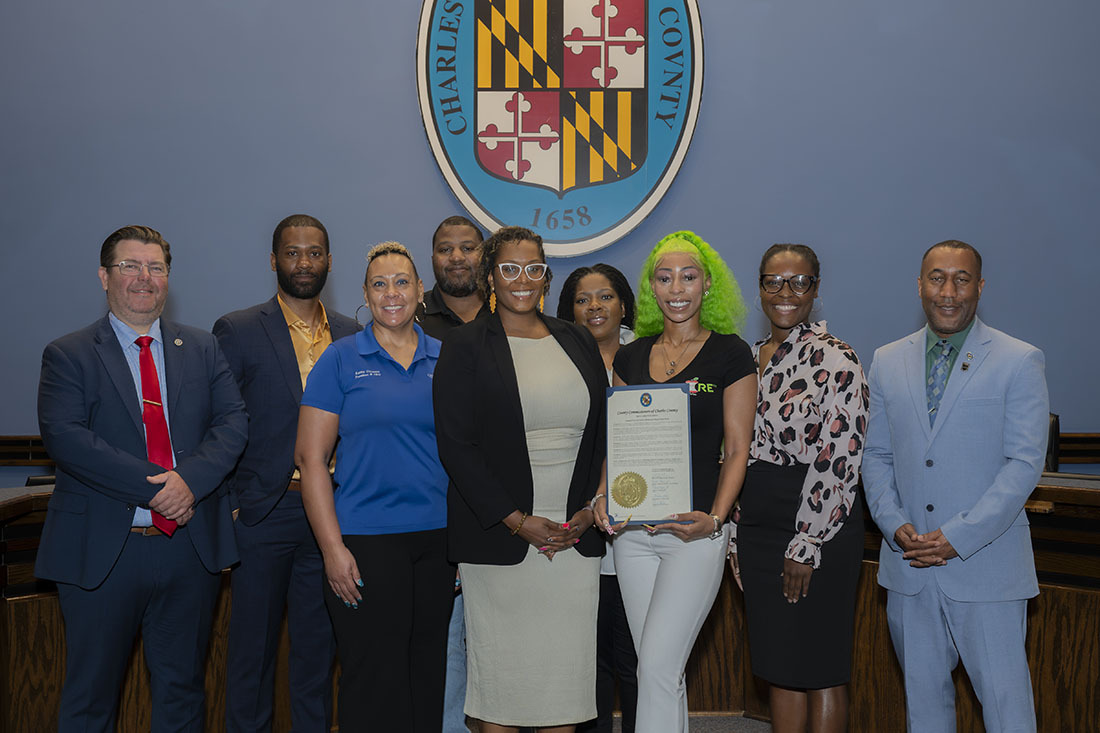
That perspective has also earned recognition, including being named among Maryland’s Top 100 Women in 2026, participating as a Goldman Sachs One Million Black Women alumna, and receiving the WPO Entrepreneurial Women of Impact Award and the Mirinda Jackson Minority Business of the Year Award.
But the central measure of success, to Dr. Warren, is not recognition.
It is impact.
Her philosophy is straightforward: no one gets left behind.
Not the student who has never heard the word investment. Not the returning citizen starting over. Not the senior who worked an entire lifetime but lacks the knowledge to protect what they earned. Not the family that has been told, explicitly or implicitly, that financial security is beyond their reach.
Building a financial foundation is not a luxury. It is a form of empowerment – and ultimately a matter of equity.
The most effective financial education, then, may not be the education that teaches people the most financial concepts. It may be the education that helps people take the next step.
Open the account. Start saving. Understand the credit report. Ask the questions. Protect the family. Explore the career. Launch the business. Invest for the future.
Because financial freedom is rarely built through one decision or one lesson. It is built incrementally, through knowledge translated into action. And when people have access to both, they are not simply learning about money.
They’re gaining the power to change the trajectory of their lives.