

Stop Advertising to Kids – Stop Predatory Advertising
Marketing to children under 8 years old should be stopped. The NFEC calls for a halt to advertising via all avenues that target this age group and safety measures to ensure that misleading marketing messages are not shaping our children’s values and financial behaviors.
Why? Data show that advertising can have a negative impact on children’s self-esteem, financial behaviors, health, and activities.(1–3) Children aged 8 and younger lack the cognitive ability to recognize advertising’s persuasive intent and are unable to discriminate between commercial and noncommercial content.(4) But even up until age 11, kids do not fully understand advertising.
Advertisers spend billions on child-targeted ads, with US expenditures on kids’ advertising estimated at $2.9 billion in 2021 and projected to reach $21.1 billion by 2031.(5) By the time they turn 21, young people will have been exposed to over one million advertisements – many of which are highly-sophisticated ads that encourage them to make purchases based on wants rather than needs. According to studies cited by the American Psychological Association, after just one exposure to a commercial, children can recall the ad’s content and express a desire for the product.(6)
Stop Advertising to Kids Whitepaper
Advertising to children today is pervasive across a broad and growing range of platforms, which raises ethical and health concerns across the gamut of life aspects.
This report explores the problems posed by advertising to children and youth – with particular focus on kids’ financial health – and suggests two policy strategies to help mitigate those risks.

Research: The Negative Consequences of Advertising to Children
Advertising to children is a multi-billion dollar industry, with US expenditures on kids’ advertising estimated at $2.9 billion in 2021 and projected to reach $21.1 billion by 2031.(1) A 2018 estimate was broken down as $3.2 billion for nondigital and over $900 million for digital marketing to children in the US in 2018.(1) The food industry alone spends more than $1.6 billion annually on child-targeted advertising.(2)
In 2015, children aged 2-11 viewed on average 11.8 ads per day on television just for food and beverages.(3) It’s estimated that the average US kid sees as many as 40,000 total televised ads annually.(4) However, that figure does not include marketing content children encounter online, on mobile apps, in print, at the movies, in video games, or at school.(5)
A common theme in marketing to children is to foster a positive connection between brand and product to create loyalty to brand.(6) Advertising to children specifically aims to encourage early consumer brand recognition and loyalty, re-conceptualizing child development as a learning process for purchasing goods.(6) Children develop an association convincing them that the brand product is superior to identical, non-brand products.
Research shows that children as young as preschool age (<6) do develop brand-product association.(3) For example, a study conducted in 2013 showed a positive interrelationship between children’s exposure to child-targeted fast food ads and consuming food from those restaurants, most notably McDonald’s.(7) In a 2018 study, Harris and Kalnova (3) found that children’s viewing of television advertisements was strongly associated with knowledge of unhealthy food brands, but much less strongly with less-advertised, healthier brands. In 2023, kids and teens in a UK survey chose Netflix as the “coolest” brand, followed by YouTube, McDonald’s, Nike, and Oreo.(8)
Marketers also take emotional and/or subconscious approaches – like using celebrities or trusted characters – to appeal to children.(5) These positive emotional associations with brands may prove quite difficult to change, especially when formed at an early age when children’s brains are more malleable.(6)
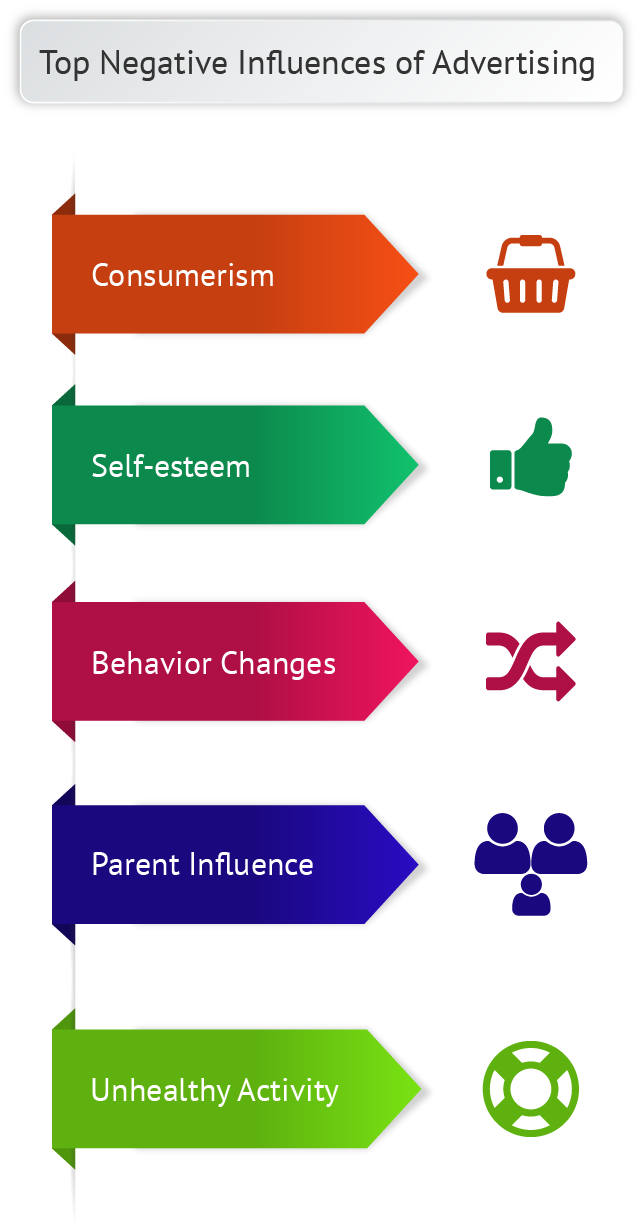
The literature clearly demonstrates that advertising to children can have harmful effects which may be lifelong. Critics of the practice say child-targeted marketing contributes to the development of unhealthy habits, perpetuates gender and social stereotypes, encourages materialism, and fuels family disputes.(9–12)
People agree, advertising to kids should be stopped. In a recent survey from the National Financial Educators Council, over 80% said adverting to kids under 8 years old should stop.

Research: Children’s Ability to Understand Advertising
The debate over advertising to young children has been a long one. Since the 1970s, research has been exploring the “cognitive defenses” children have developed against the influences of advertising – in other words, the ability of young kids to comprehend that advertisers are trying to sell them something and to develop a healthy distrust of those messages.(1) According to the American Psychological Association, marketing to kids at or under 8 years old is “inherently unfair because it capitalizes on younger children’s inability to attribute persuasive intent to advertising.”(2)
Recently, we have witnessed many advances in advertising strategy due to the advent of the Internet, social media, mobile apps, and digital television, which have made child-targeted advertising increasingly more sophisticated.(3) Today digital marketing messages reach children through sponsored content, social influencers, data collection, persuasive design, and personalized behavioral marketing.(4) Across all platforms, marketers now use “embedded” advertising techniques where marketing messages are merged with media content, for example, integrating brands into television shows or other forms of entertainment.(5)
User-created content such as the highly-popular “unboxing” and toy-play videos can have powerful influence on child behavior.(4) Multi-screening – an increasingly prevalent practice – can lead children to be exposed to multiple advertising messages at one time.(3) Kids now engage actively with advertising through advergames (where fun, exciting games feature branded content); and by being solicited as brand ambassadors (where companies encourage children to reach out to friends about a product).(6) There also is strong evidence that digital marketers collect data on children’s online behaviors, which are then used to target advertising messages to them.(3,6) Such targeted messaging may further undermine children’s ability to identify or think critically about the message.(4)
Kids under age 8 are especially vulnerable to advertising influence because of their level of cognitive development. At the preoperational stage identified by Piaget, children have not yet reached the ability to comprehend another person’s perspective or to process multiple aspects of a situation at once.(1,7,8) Young kids (under age 7) have been clearly established to lack the cognitive ability to recognize the persuasive and biased nature of advertising information, and so accept the messaging as true and accurate without qualification.(2,6,9) Children have difficulty recognizing the commercial nature of televised advertising, and that task becomes even more difficult with embedded and sponsored content online.(3,10) Therefore legal scholars have come to the conclusion that any advertising to young children is inherently misleading and unfair.(2,11)