
6 Essential Financial Literacy Resources Design Considerations
Teaching someone to be financially “literate” is easy; making a measurable impact on their finances and ability to manage money requires more effort, but accomplishing these goals is possible. There are important steps you need to consider when designing your program and selecting the education material you will use – this article explores the top financial literacy resources design considerations.
There’s an abundance of financial literacy resources available; but few programs make measurable impact on people’s behaviors and results. Providing a cohesive learning experience focused on helping individuals adopt positive financial behaviors takes expertise. The National Financial Educators Council’s personal financial literacy curriculum can help you make a meaningful difference in the lives of the people you reach.
To address your program development needs, the tips provided on this page outline essential elements that should be included in your financial literacy materials and considered when designing in your overall program.
Step 1: Identify the Learners’ Needs & Establish Goals
The most important step in selecting lesson plans is understanding your audience’s pressing financial needs and current competencies, and using that information to prioritize their education. Selecting personal financial literacy curriculum that matches participants’ needs gives them strong reasons to learn, assuring that they can implement the lessons in the near-term and that the education comes at a critical time when they most need the information.
Because financial knowledge without behavior adoption does little to help the people who attend your program, it’s important to set goals that consider knowledge, sentiment, behaviors, and results. All these factors can support the development of positive behaviors and help learners gain personal benefit from your course.

Step 2: Select Financial Education Topics Mix and Theme
Now that you understand the audience and have defined clear goals, it is time to select the topics you need to cover in the financial literacy curriculum and develop an overall theme.
First, consider a theme designed around life events or the audience’s most pressing financial needs. This alignment provides learners with strong reasons to participate and a timely education they can implement in the short term. For example, if you were delivering a program to high school seniors titled “How to Move Out on Your Own,” you would incorporate topics like learning to budget, understanding housing expenses, how to start saving toward rental deposits, and building a credit profile, to create an event that is most beneficial to them.
Common Life Stages & Events for Youth & Young Adults
Moving Out on One’s Own
Buying a Car
Going to College
Entering the Job Market
Starting a Savings Plan, etc.
Common Life Stages & Events for Mid-life Adults
Having a Child
Planning for a Major Purchase
Buying a Home
Combining Finances with Partner
Paying off College Loans, etc.
Common Life Stages & Events for Later-life Adults
Transitioning to Retirement
Deciding on Social Security Options
Estate Planning
Paying for Children’s College & Other Purchases
Step 3: Deciding on Delivery Options & Flow of Information
Properly-designed programs are built with purpose: all communications with the learners work together to promote their understanding of the topic and help them mold positive behaviors. During this phase, you will construct the program based on the goals you want to achieve while considering any constraints.
Programs start at first communication and continue indefinitely as long as you provide ongoing education. From this perspective the flow of information is a critical element to consider pre-event, at the event and post-event. Think through the user-experience at each of these junctures.
Personal Delivery Options
In-person Group Training
Webinar Group Training
Personal Coaching
Technology-Based Education Options
Online Learning & Project-based Activities
Mobile Application Learning
Social Media Tip-based Education
Support Education Options
Ongoing Education & Timely Reminders
Self-study Options
Peer Accountability Programs
Step 4: Decide Upon Program Touchpoints
Deciding where and when education takes place is important. Fortunately, today we have many opportunities to connect with learners and help support their financial health. Consider these three key touchpoints:
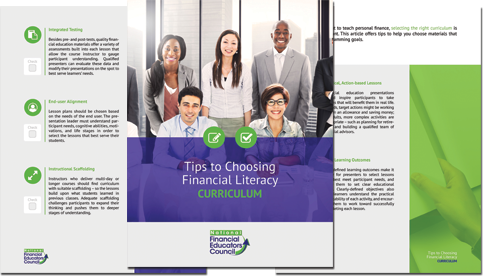
Step 5: Financial Literacy Resources Design Considerations & Sourcing Options
There are four ways you can build your financial literacy programming, as shown in this section. With each strategy, there are pros and cons to consider – so we have outlined the most common elements people look for when considering which curriculum to use.

Step 6: Consider NFEC Resources
The NFEC solves the problems associated with locating financial literacy resources and makes delivering top-quality programming turnkey. We empower people with the financial literacy curriculum and support resources they need to optimize financial education programming.
Our materials offer educational-grade content, a positive user experience, and a turnkey solution to your financial education programming needs.
