
Creating a Multimethod Education Delivery Mix for Personal Finance Programs
How will you deliver the training in your financial education program? Will you use live instruction, student-led online learning, virtual drip education, social media, or accountability programs?
Deciding how you will deliver training should be an early consideration when designing your financial literacy plan, because the answer will directly affect program results. Your delivery methods should align with how your students prefer to learn.
When teaching personal finance, it’s important to customize how you deliver the training to accommodate your learners’ needs. The educational mix you consider for your personal finance program should align with user preferences and include multiple delivery options to accommodate the variety of ways in which people like to learn.
NFEC Supplies Resources for All Educational Touchpoints
The NFEC provides you programming resources for each of the main educational touchpoints. This comprehensive package gives you the freedom to develop a unique educational mix and ensures that participants have the freedom to learn in the way that best suits their needs.
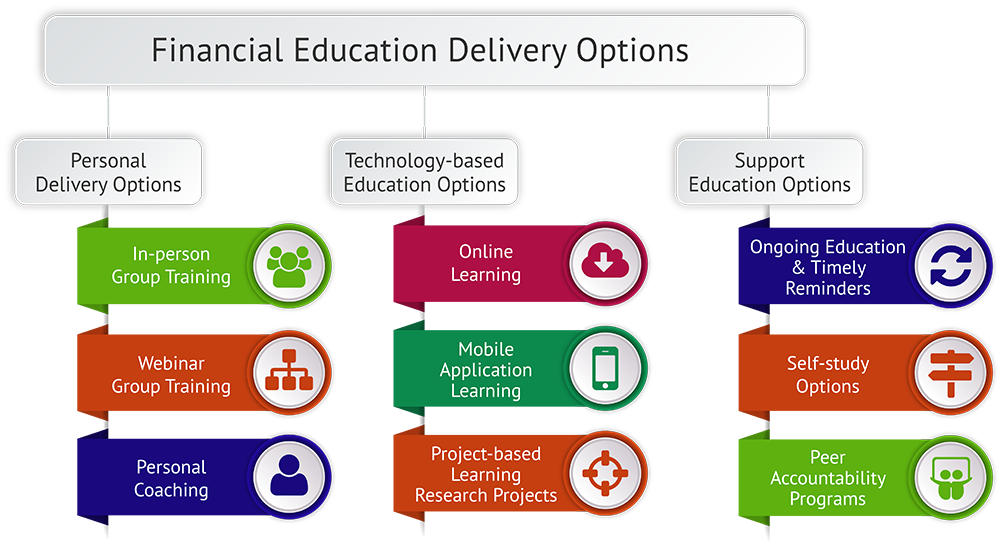
Education Mix Worksheet
The NFEC provides you with programming resources for each of the main educational touchpoints. This comprehensive package gives you the freedom to develop a unique educational mix and ensures that participants have the flexibility to learn in the way that best suits their needs.
Use the education mix guide as you go through the rest of this webpage. Start to draft out the delivery mix you envision for your audience.
Suggested: Include Multiple Delivery Options to Enhance Learning
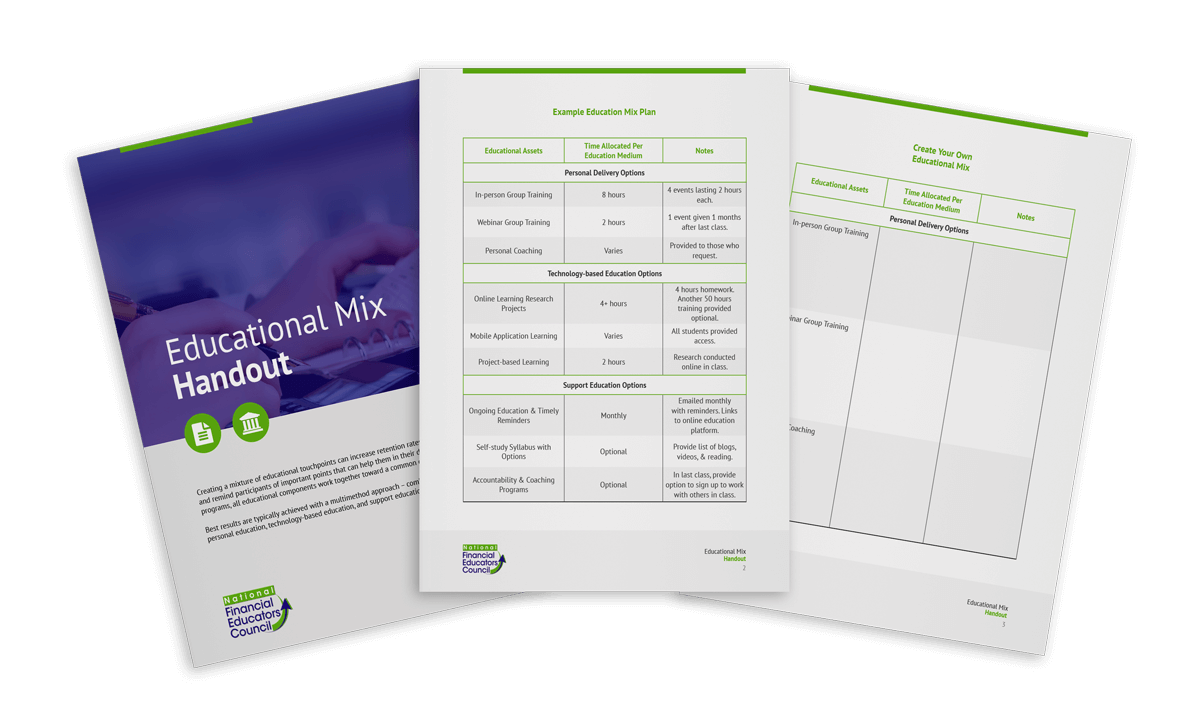
Include multiple touchpoints in your education plan to increase retention rates, provide timely learning, and remind participants of important points that can help them in their daily lives. In well-planned programs, all educational components work together toward a common goal.
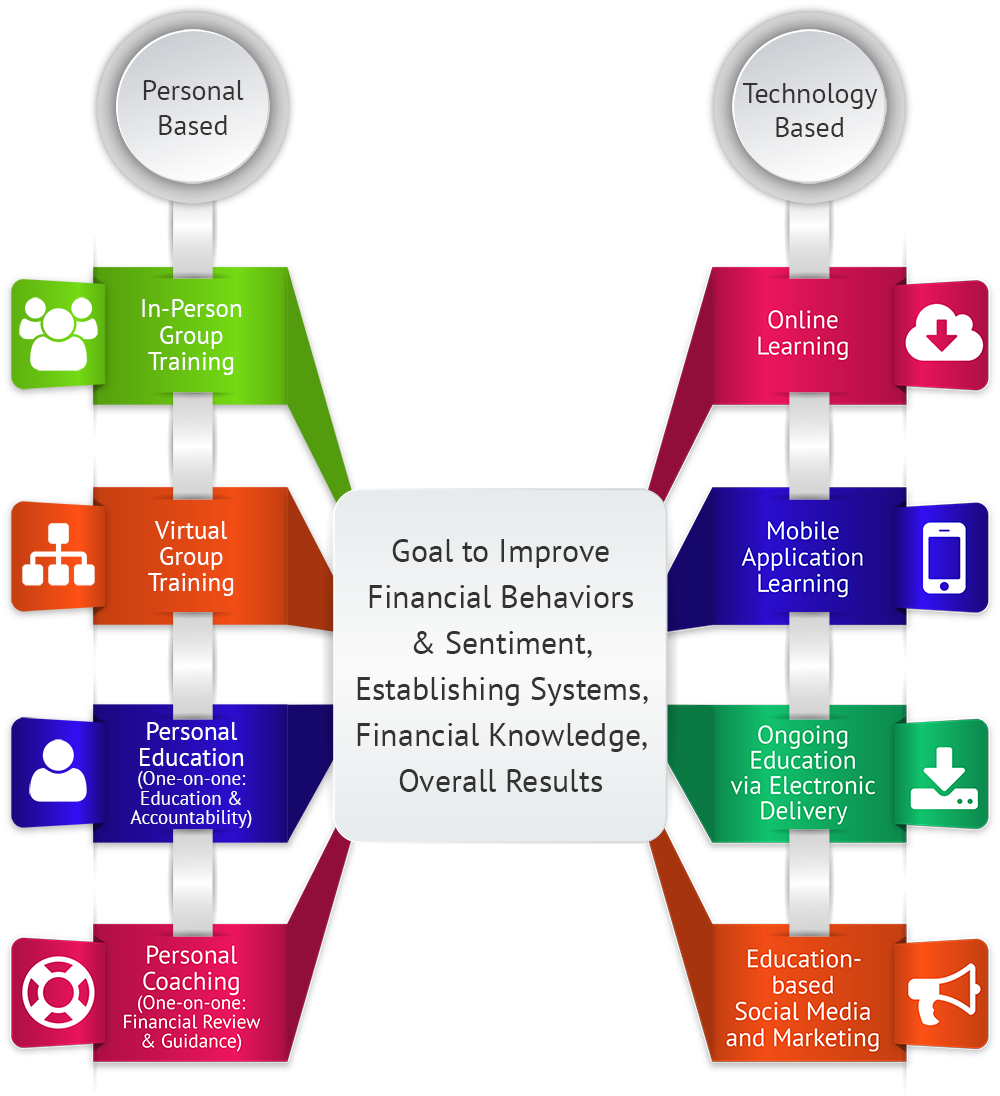
Best results are typically achieved with a multimethod approach – combining all three categories: personal education, technology-based education, and support education options.
2 Popular Multimethod Instruction Strategies
Blended Learning
Blended learning incorporates digital and online learning delivery with more traditional in-person classroom teaching methods. Since a single person can only teach so many students, blending face-to-face instruction with technology-based training offers an opportunity to deliver learning on a much larger scale.
The blended learning approach gives students some level of control over the time, place, and pace at which they learn the material, and offers both educators and students flexibility to choose specific lessons or learning pathways.
Flipped Classroom
In the traditional model – with which we’re all familiar – students would attend lectures in class and then complete homework activities on their own. In the flipped model, students learn topics on their own and classroom time is spent applying what they learned to complete practical activities, with the instructor as a guide.
Flipped classroom learning takes advantage of increased student access to technology and the fact that a high percentage of the adult population now views videos online. This approach helps increase concept engagement by reinforcing knowledge with activity-based learning.
Deepen Multimethod Education by Including Key Touchpoints
In addition to live presentation curriculum and lesson plans, the NFEC provides additional learning resources that can connect with learners at various touchpoints. This comprehensive package allows you to diversify your class and makes it easy to conduct blended learning or flipped learning models.
Pre-program Education
Begin educating participants before the official start of your training using high-quality marketing and pre-education resources. Leverage all communications leading up to the event to help participants develop reasons to learn and gather the information they may need for class.
Post-program Education
Ensure that your participants feel supported after the primary education concludes by providing continuing education opportunities. Our ongoing education connects with people where they spend most of their time: drip education to email or phone, timely education reminders, and social media education resources.
Federal Reserve Case Study of NFEC’s Multimethod Education Approach
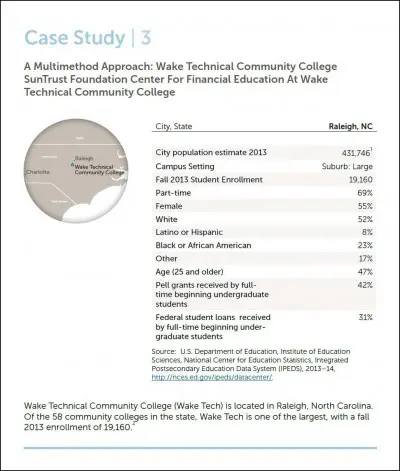
The Federal Reserve featured the NFEC-led and developed multimethod approach to college financial literacy campaigns as a best practices case study.
This 6-year program with Wake Technical College and the SunTrust Foundation reached thousands of students through several hundred live events, an online learning platform, a custom mobile learning application, contests, partnerships with teachers, media education, and other methods.
Multimethod Instruction for Financial Education Gets Top Results
If you’re planning a financial education program, decisions about delivery methods should be made early in the process. The educational mix on which you settle should take into consideration the preferences and learning styles of your target audience. The NFEC recommends including multiple touchpoints and multimethod approaches such as blended learning, flipped classrooms, pre-program communications, and post-program continuing education. As illustrated by the Federal Reserve case study of the NFEC’s college campaign, multimethod instruction leads to improved learner outcomes.