
How to Develop Your Own Personal Finance Games for High School Students
If you’re looking for guidance on how to develop personal finance games for high school students, look no further. As you will see, we offer support and customizable solutions for people of all ages and backgrounds.
The NFEC offers a broad range of engaging, actionable lessons that students can directly apply to their lives. Our Curriculum Advisory Board of educators and financial professionals designs customizable games that teach personal finance in a fun, memorable format. We are completely independent and don’t even have ads on our educational material.
Money Management Games for High School Students Can Be Fun and Rewarding
Andreas was a high school math teacher who recognized a gap in high school education when it came to personal finance. He wanted to create a program that taught high school students about personal finance but needed help getting the school board’s approval.
When he talked to the board, he was surprised to discover them more open to the idea than he anticipated. He decided to push on. The NFEC’s financial literacy games for high school students and other financial literacy resources he had recently discovered would give him the structure he needed.
Intended Levels of Understanding
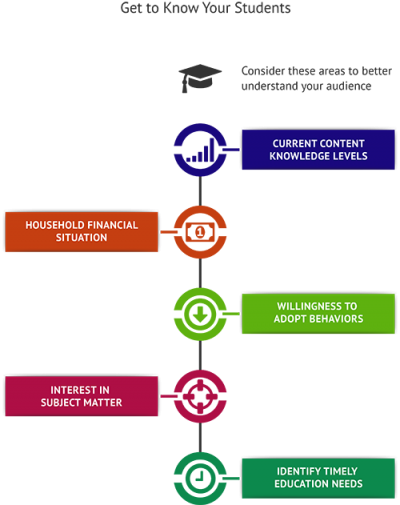
The first step would be to determine the depth of learning goals of the program. High schoolers would need to think strategically about career planning and managing college loans. He also wanted to make sure they obtained the skills and concepts they would need to make prudent money management decisions that would soon confront them. Andreas had to make sure his money management games for students had the time to deliver these levels of understanding. He would be including lecture and personal financial presentations via PowerPoint to build out the training.
Delivery Considerations for High School Financial Literacy Games
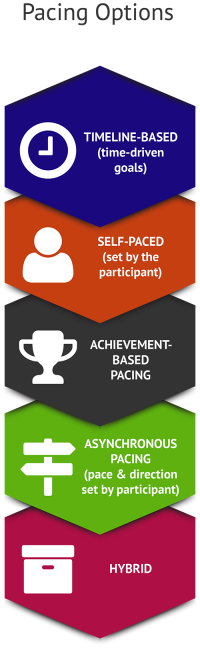
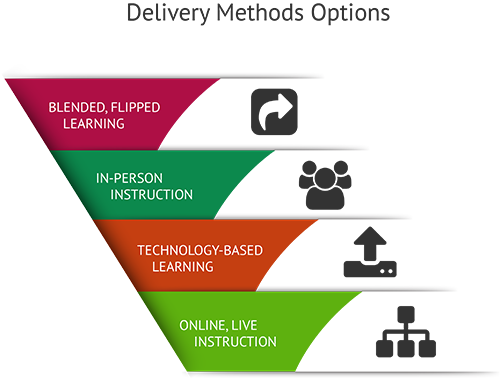
With the levels of understanding now defined, Andreas thought about the most impactful way of delivering his personal finance games for high school students. He reasoned that a self-paced program based on achievement would give the students independence to proceed as they wished. This could be delivered through pre-recorded webinars. Live help would be provided once per week via webinar and a Facebook group would serve as a forum where the class could interact and get help from the instructor.
Defining Money Management Topics that would Impact High School Students
Andreas’ money management games for high school students would need to cover the basics of budgeting and debt while focusing on how to manage college loans and how to plan a career. As long as he allotted enough time to the program, he’d be able to cover these topics and reach the desired level of knowledge. Eight weeks should cover it.
Factors to Consider in Customizing a Curriculum
It was important to Andreas that his personal finance seminar series offered actionable lessons that could be used in the students’ lives right away. The personal finance games for high school students needed to be engaging and relevant to their lives. A credible course would have to meet established standards of financial education and be created by a specialized design team.

A Certified Educator Would Be the Cornerstone for Credibility
Although he planned to get his own certification in financial education, he wasn’t there yet. A legitimate course would have to be presented by a Certified Financial Education Instructor (CFEI). He could not present his money management games for high school students on his own, especially not this first class. The NFEC helped him find a certified instructor with high school experience and a successful track record.
Results of Andreas’ Personal Finance Games for High School Students
Out of the 53 students who signed up for Andreas’ program, 48 went on to complete the course. A success rate of over 90% showed success, especially considering the program was offered outside of the high school curriculum.
He sorted the data and designed a report that would highlight the course’s success. This would help him get community support for expansion and the funding he would need to make his lofty goals possible.
What’s Next for Financial Literacy Games?
During the last live webinar, Andreas presented certificates of completion to the successful students and showed them how to best use it in their college and job applications. The Facebook group stayed active long after the class ended.
Andreas had a strong sense that he had just begun to fulfill his passion for financial literacy. He wanted to offer money management games for students of all ages and backgrounds. He also aspired to broaden his territory of influence. One step at a time, he’d get there.