
How People Participate in Financial Education
To address the financial problems and financial illiteracy epidemic plaguing the world’s population, champions from a variety of backgrounds are leading the charge. From nonprofits to bankers and from entrepreneurs to schools, all these champions are valued contributors and their efforts are much-needed in this grassroots push to help others work toward more secure financial futures.
As a nation, we spend about $670 million per year on financial education, according to the Consumer Financial Protection Bureau. To meet the growing demand spurred by regulatory pressures, increased funding, and social interest, those people who are passionate about helping others and increasing access to high-quality financial education programming are greatly needed and appreciated.
Who Participates in the Financial Literacy Movement?
Although each has a different reason for being involved, one common thread found in the majority of this sample is a desire to help people more effectively work toward financial wellness.

How They Participate in Financial Education
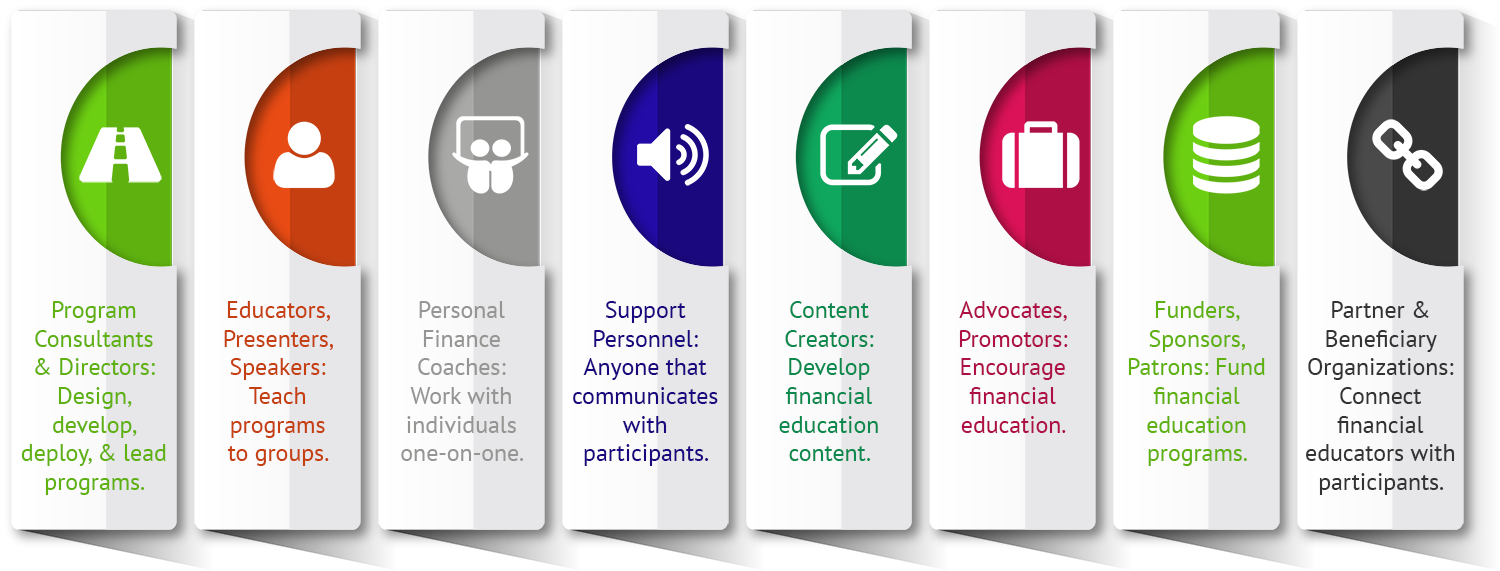
There are many ways to participate in the movement to encourage improved financial literacy and wellness. All these roles are highly-valued and play an important part in pushing the financial literacy movement forward. From teaching financial literacy to coaching to volunteering, here are some of the most popular ways people become involved in financial education:
How People Fund their Financial Education Involvement
Many passionate individuals and organizations are promoting financial literacy, but lack clear revenue and funding strategies that support continued expansion. Thinking through the revenue aspects of financial education programs can help you grow your program, spend more time on financial education, and continue to help people for years to come.

Select the Next Step
How They Reach People in Their Communities
Programs that Target Individual Attendees.
If you’re looking to get individuals to attend an event that you’re hosting, there are important considerations. First, let’s define what it means to target individual attendees – this is a model where you market directly to individuals to attend your program. You can do so through social media networks, email lists, advertising, and different promotions.
Pros: You have full control over what is taught, length of course, and all program aspects.
Cons: Those without a network will incur costs to get individuals to attend the event. And the program is in-person (as opposed to online webinar) there will also be costs for venue and associated expenses.
Programs that Target Organizations.
If you’re looking to work with organizations, different types of collaborations exist. Most common are organization-paid (they pay you for conducting programming) and organization partnership (they provide venue & attendees) where you get outside funding via grants or sponsorships.
Pros: Attendees typically are already at the location or have online time set aside, making it easier to get participants. Free venue, volunteer support, leverage partner’s brand, reach a target audience.
Cons: Besides just considering the attendees’ goals, when serving organizations you also must figure in the organizational objectives and constraints.
Financial Wellness Champions United Toward a Mission
Champions involved in financial education serve unique audiences and bring their own vision into financial wellness programming. Click on any of the images to learn more about community financial wellness champions.

Abuayubul “AbangAbu” Ansari
Melody Bell

Cathrine Bena-Thebe
Annie Blackmon
Ashley Bowden
Michelle Boss
Jefreda Brown
Tina Browning
Karen E. Burks, M.A.
Rachel Capua
Nakiea Cook
Robin Craig
Nnika Cromwell
Arman Cruz

Himanshu Das
Betty Davis
Roger Davis
De’Arno De’Armond
Lynn Demmons
Jake Dixon
Sherrell Duclos
William Easterlin III
Sonya Edwards
Charity Ezenwa
Claudia Fehribach
Jason Fields
Michael Floreth
Rina Di Francesco
Roman Fox
Jeff Gibbons

Ana Gonzales
Samita Goswami

Romona Hale-Coley
Kelsey Halfen
Keith Hamburg
Gwendolyn Hawkins
Del Shawn Hayes
Dr. David Hollins, Sr.
Maya Hoteit
Kristina Ickes

Rachael Jacobs
Cynthia Johnson
Mary Jo LaFever
Jerry LeBlanc
Brenda Lopez
Norma Jean Maltese

Xavier Marmol Blum

Dipankar Mitra
Jaison McCall
Harold McMurty
Andrea Mitchell
Jelena Zivkovic

Stephanie Musgrove
Navy Mutual Aid Association

Simangaliso Newman

Iruoma Nnamok
Tolulope Omokaiye
Janice Parker
Jignasha Patel
Heidi Pauley
Allison Probst
Masenyani Richard Rivimbi
Mike Rini Sutikno
Sheena Robinson
Margaret Robles
Krystle Saulsberry

Deborah Sawyerr
Doug Schorpp
Lauren Shaw
Rachel Slomovitz
Charlotte Stewart
Dr. Suvarna Suryawanshi
Kevin Sutton

Betty Taylor

Tiffany Taylor
Destiny Thomas

Alex Todd

Vishnu Udhan
Dustin Voss
Tracy Watson
Angel Williams

Brad Yeckley
Select the Next Step
Cathrine Bena-Thebe
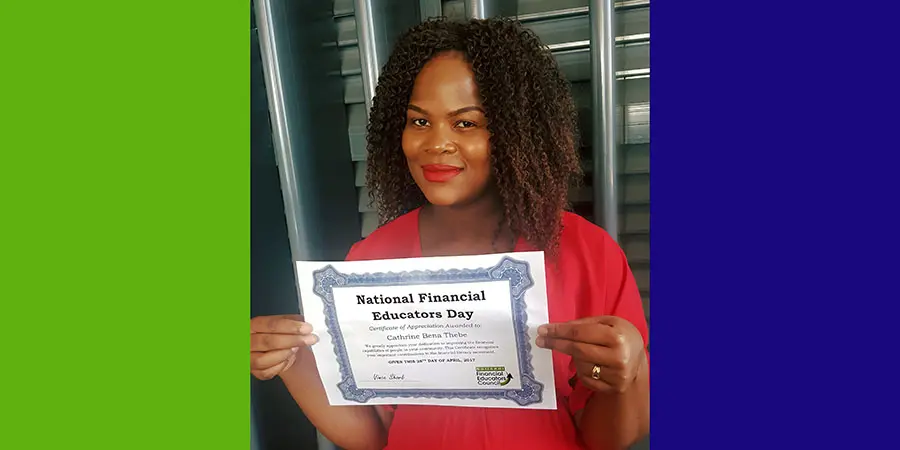
Cathrine Bena Thebe is a Founder of the Financial Literacy Trust, a not-for-profit organisation established (January 2016) to teach financial literacy in Botswana, Southern Africa. Thebe is a passionate financial literacy advocate and spends time teaching financial literacy to the volunteers of the Financial Literacy Trust. The volunteers assist the founder with spreading the financial literacy message to the whole of Botswana (from kindergarten kids to adult groups).

Annie Blackmon
Ms. Blackmon serves as one of the Financial Literacy Instructor/Coaches here at the non-profit organization – Focus: HOPE. Prior to joining Focus: HOPE in 2009, she worked in the banking industry for over ten years. Ms. Blackmon provides financial education to adult students in the training programs here at Focus: HOPE. The education consist of developing a financial plan/characteristics of financial success, budgeting and banking, credit reporting (1:1 coaching session w/credit report) and dealing with financial emergencies, but also as a coach she is a good listener. As one of our financial coaches, she recognizes that financial coaching is not about “fixing” people. She helps the students understand where they are, what their goals are in order to strengthen their financial habits and help them look at building assets. – Yolanda Crain, Focus Hope
Tina Browning
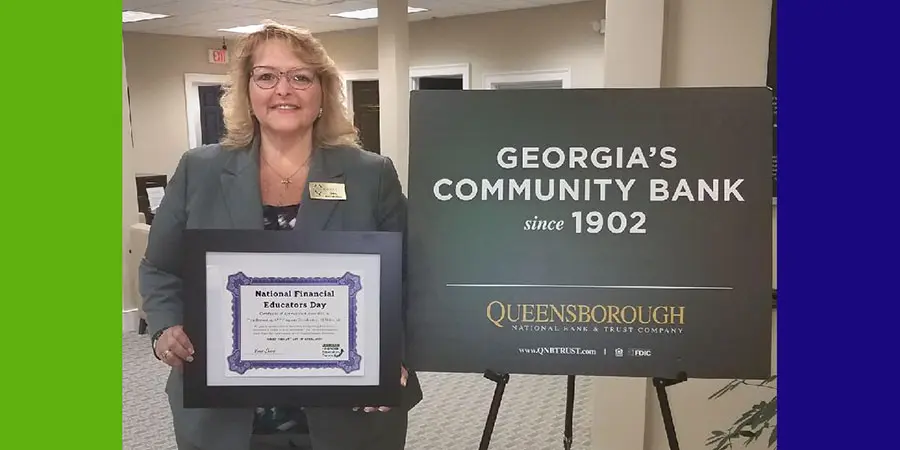
Tina Browning is the program coordinator and facilitator for Queensborough National Bank’s 25 branch footprint for its free community financial literacy program called IQ University and IQ JR. This program allows her to do what she loves in teaching 8 different workshops on everything from understanding credit to youth initiatives in learning and introducing basic banking with our schools.
Rachel Capua
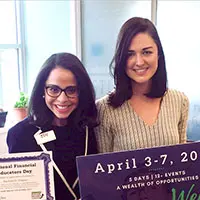
With Katie Johnson
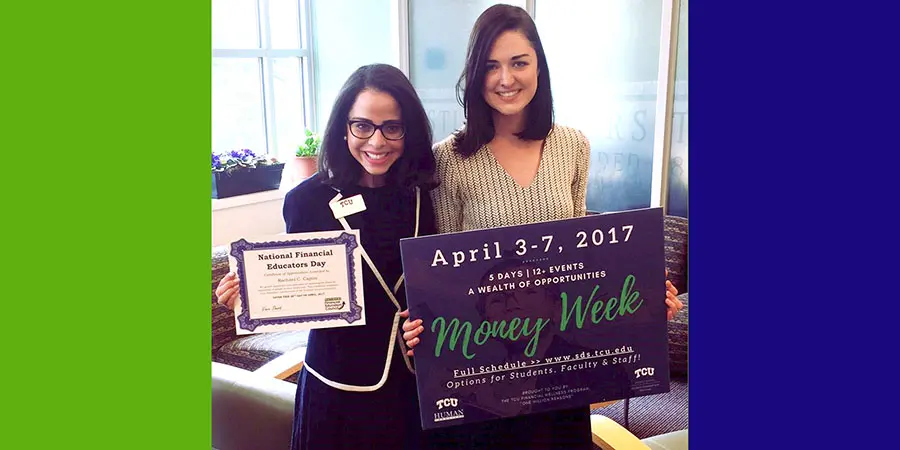
In serving as an Assistant Director in Student Development Services at Texas Christian University (TCU) in Fort Worth, I was tasked with implementing a comprehensive Financial Literacy program in Fall 2015. In our second year, we have executed the following on our campus and have reached more than 3,000 students and community partners thus far:
– Launched a personal finance class open to all majors (juniors and seniors only, 1 credit hour under the TCU Department of Finance);
– Started a student-led peer-to-peer financial fitness coaching model with nine ambassadors (eight undergraduates and one graduate student), students have office hours week-to-week;
– Partnered with our Athletics department and community liaisons to provide programming, financial fitness coaching, and support for student-athletes;
– Selected a program curriculum and provide workshops in classroom and student organization settings;
– Hosting our Second Annual TCU Money Week April 3-7th with 12 events on campus and a partnership with TCU Human Resources to provide opportunities for faculty and staff.
With plans to complete the Certified Financial Education Instructor course, I am sincerely grateful for these resources provided and look forward to the journey ahead. All has been possible due to strong collaborations with TCU’s Office of Financial Aid and through the vision of our department in Student Development Services. As we see proactive dialogue surrounding financial wellness in our community growing, I am optimistic we are making an immense impact. Onward and upward.

Robin Craig
Robin takes to the time to ensure that all of our clients are given the information they need to make an informed decision on whether or not Homeownership is a possibility for them.

Nnika Cromwell
Cathrine Bena Thebe is a Founder of the Financial Literacy Trust, a not-for-profit organisation established (January 2016) to teach financial literacy in Botswana, Southern Africa. Thebe is a passionate financial literacy advocate and spends time teaching financial literacy to the volunteers of the Financial Literacy Trust. The volunteers assist the founder with spreading the financial literacy message to the whole of Botswana (from kindergarten kids to adult groups). – Kenneth Smith, President/Founder, Grace-Mar Services Inc.
Betty Davis
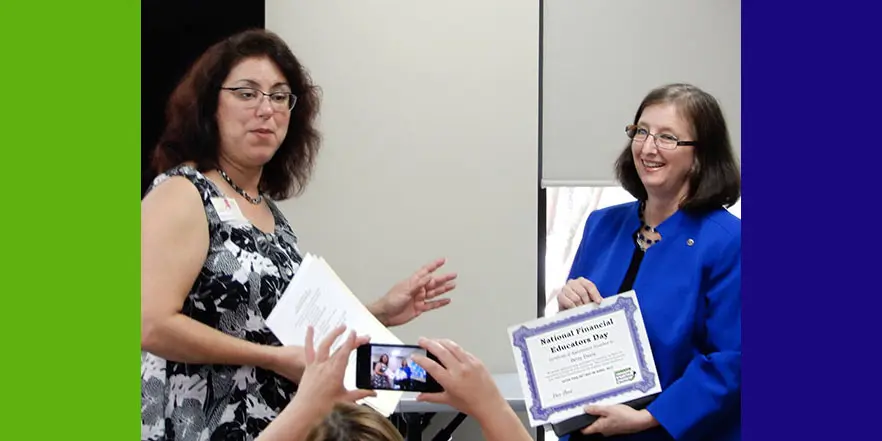
Betty Davis has been promoting and teaching financial literacy classes for more than 15 years. In 2004, she was instrumental in starting the Financial Literacy Coalition of Central Texas, a non-profit dedicated to teaching free, unbiased, personal finance skills and information classes. She has taken part in the FDIC’s Association for Economic Inclusion group and an offshoot, Austin’s version of Money Week, “Financial Fitness Greater Austin” since its inception 10 years ago. Betty has a deep understanding of all aspects of personal finance and is an excellent advocate.
De’Arno De’Armond

Jake Dixon
With Stephanie Musgrove
Jake Dixon has been an avid champion of financial literacy for several years. In his role at Affinity Plus Federal Credit Union, he uses his expertise and knowledge gained from working with members to help students and community members better understand personal finance topics. Affinity Plus is often approached to provide financial education in schools and with community organizations, and Jake consistently volunteers his time to work with these groups. He is an incredibly engaging speaker, and always makes sure to make the information he’s sharing relevant to his audience so they walk away feeling more confident about their own financial situation. Affinity Plus is lucky to have someone like Jake to advocate for and provide financial education across Minnesota.
William Easterlin III
Mr. William F. Easterlin III is the CEO of Queensborough National Banks 25 location footprint. His love and dedication for community through funding and supporting financial literacy is clearly shown with this quote, “As a financial institution it is our obligation to serve our business owners, employees and their families to understand and educate with the knowledge, tools and programs needed for a better life in every area of financial money management.
His dedication along with a supportive team of financial experts led to developing & funding a program called IQ University. He hand selected a dedicated team of executives in “Wealth Management” and started this free workshop program. IQ University & IQ Jr. community outreach workshop programs cover 8 different modules on everything from understanding credit to homeownership and youth initiatives in the schools that introduce banking at an early level.
Thank you Mr. William Easterlin and Queensborough National Bank & Trust for your generous contribution in supporting financial literacy and employing great people who their only job is to reach & teach individuals to have a better way of life through greater knowledge and increased skill levels of credit and money management for life.
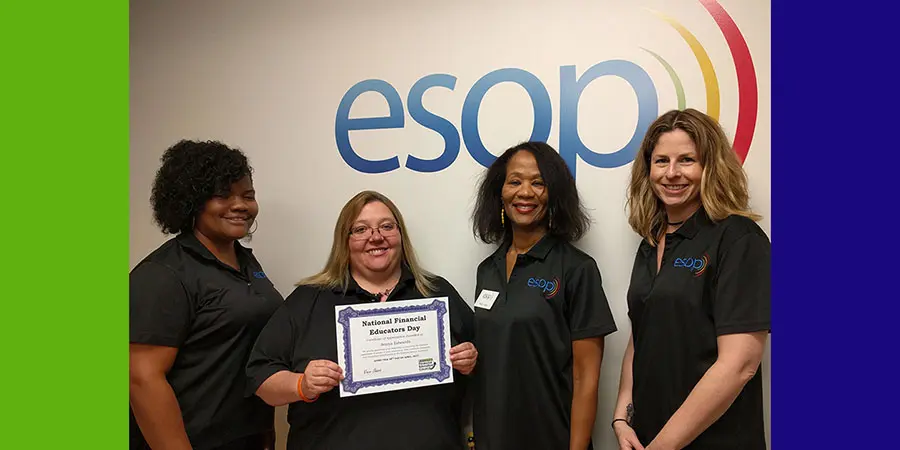
Sonya Edwards
Sonya is the backbone of the Senior Financial Empowerment Initiative (SFEI) at Empowering and Strengthening Ohio’s People (ESOP). The SFEI is a comprehensive financial capability program that helps older adults age in place with greater financial security. Sonya was critical in the design, development, and implementation of SFEI. For the past three years she has built up the Initiative to serve several thousand older adults in Northeast Ohio through Senior Financial Education Workshops to teach participants how to identify and avoid financial frauds and scams and the basics of budgeting, credit, and banking products. The SFEI also provides one-on-one financial counseling and coaching to ensure a client’s basic needs are met and to help clients reduce debt, increase savings, improve credit, and gain access to traditional banking products. Sonya built a strong team of Financial Empowerment Coaches and continues to improve this integrated model of financial capability. She is leading the effort in Northeast Ohio to address the financial issues facing the rapidly growing older adult population often living on limited and fixed incomes. Sonya’s visionary approach to helping older adults has elevated the SFEI to receive recognition on the local and national levels. We can’t thank her enough for her endless dedication to our community.
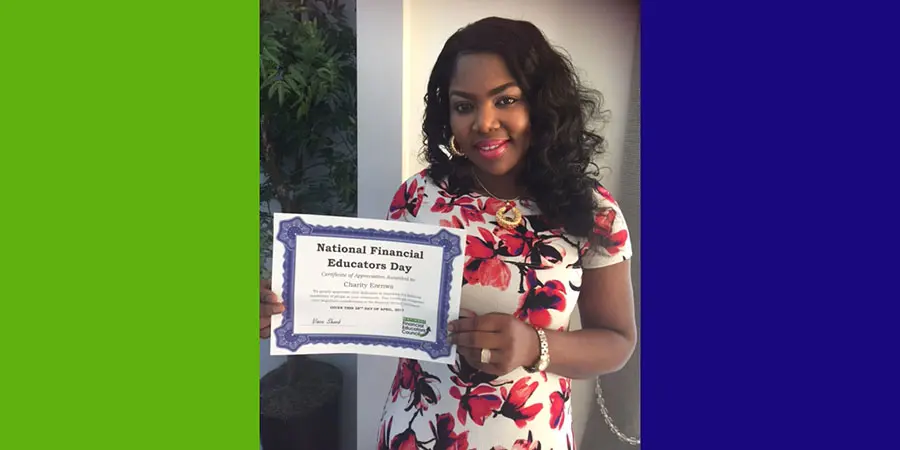
Charity Ezenwa
Dr. Charity Ezenwa writes very relatable blog posts that teaches her readers various aspects of financial management, such as dealing with current expenses and emergencies, saving for retirement, investment strategies, and safeguarding seed money. This she does using her website and social media platforms to engage her readers and followers. She also engages in one on one coaching with her followers through phone calls.

Claudia Fehribach
For the last 3 years I have doing a free seminar for the community about Budget & Credit. Basically we started from the basics of how to build a budget, why is important, the concept of paying yourself first among other things. We also discuss credit basics, how to improve or build yours and how credit scores are calculated. We do these free seminar at least 2 times a month in community centers, churches and associations.. So far we educated more than 3000 people, in English, Spanish and Portuguese.
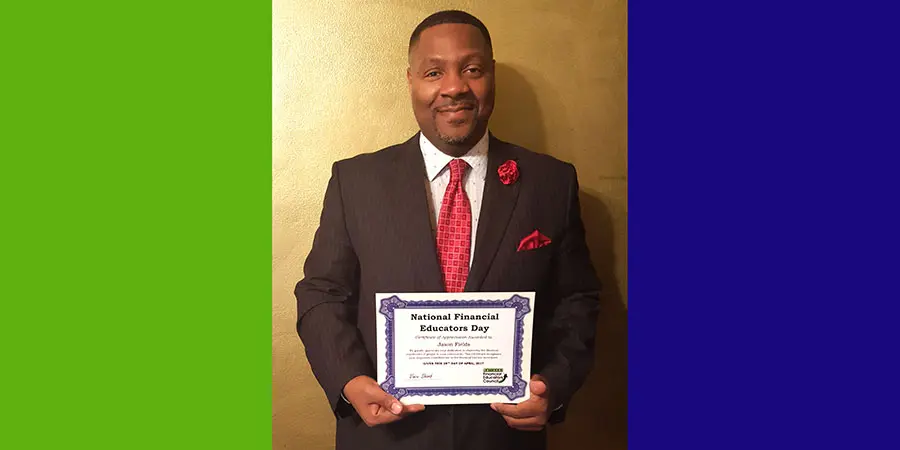
Jason Fields
Jason is a graduate of the NFEC (CFEI) course and has obtained the designation of CFEI. He appears every week on a radio program titled “Money Mondays” to educate African-Americans on personal financial issues as well as business financial literacy issues. He promotes NFEC and financial literacy to over 30,000 social media followers. He holds numerous sessions throughout Milwaukee to discuss the psychology of money and why individuals make the financial choices they make. He is also a Wisconsin state legislator that is co-sponsoring a bill that will make it possible for Financial Literacy to be taught as a requirement in Wisconsin’s High schools to graduate. Finally he is the founder of the financial promise, whose mission is: Dedicated to working with communities to increase financial literacy so they can invest in themselves to build financial stability, careers, businesses and wealth.
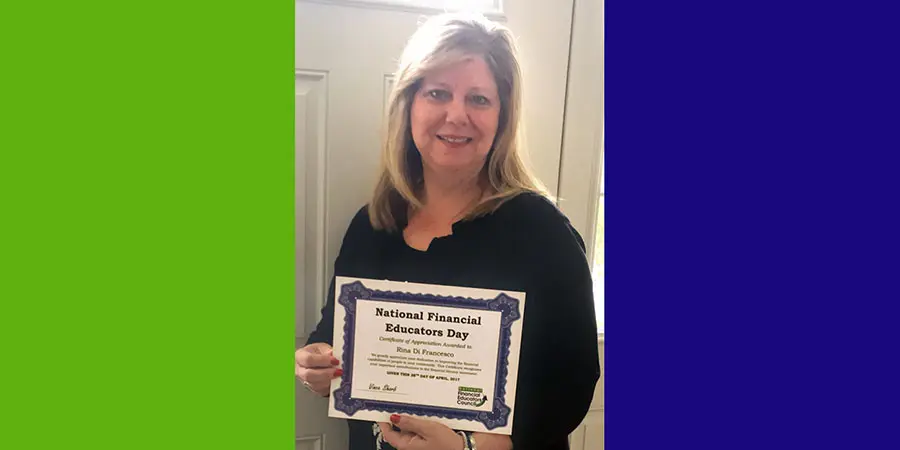
Rina Di Francesco
Rina and Smart Starts Personal Finance, LLC have tought small groups of single women in a shelter, Middle School children from the inner city, and many others the imperative value of financial literacy knowledge.
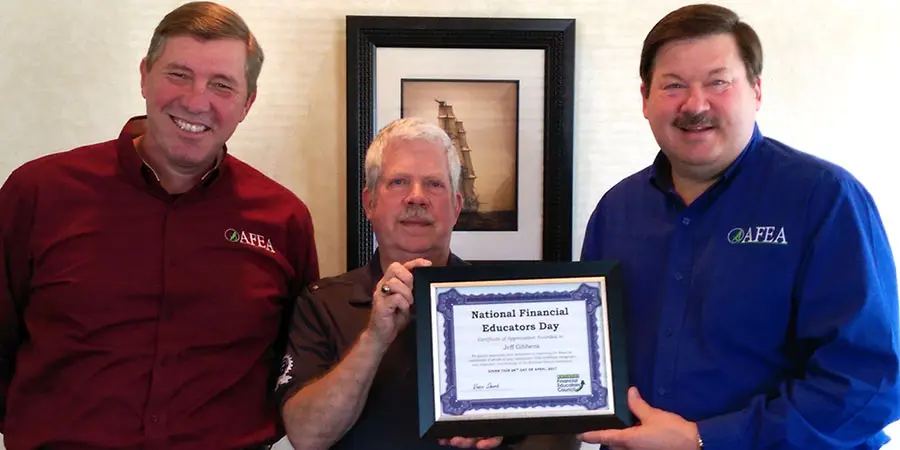
Jeff Gibbons
With Jim Reim (Left) and Greg Tower (Center)
Jeff works with a non-profit organization (AFEA) to teach free financial education to his local community. He donates his time to make sure others have the tools and resources they need to be financially literate. Shown above with fellow Erie AFEA chapter presidents Jim Reim and Greg Tower, who have been conducting free educational workshops in the greater Erie are for four years now.

Romona Hale-Coley
I resigned from Corporate Treasury with the intention to be a full time mom for two years. During that time family and friends inquired how we were able to maintain our lifestyle and continue to travel frequently with our young daughter. Those sincere questions led me to find my true passion which was to educate, empower and inspire young people, women and minorities about the importance of core financial principle. These were essentially the same principles I had implemented in the corporate arena of accounting and finance: Planning, Budgeting, Understanding the impact of interest, investing, etc. I decided write a book titled, “Walking Towards Financial Freedom.” That led to speaking opportunities at various universities and high schools, which most were done on a volunteer basis.
My sincere desire, conviction and passion is to reach young people before they go down the path so many adults have because they were not educated and exposed to money management. Growing up in the inner city certainly gave me the motivation to break the cycle of poverty and living paycheck to paycheck. My purpose on this planet is to continue to educate!

Kelsey Halfen
With Daughter Meghan
I teach both AP and regular Economics at Dulles High School. Designed and implemented a mini-economy simulation into my classes for the last 13 years. Students in my class get paid to do extra jobs, pay taxes, pay rent and other expenses, and learn how to invest in real estate during the semester. I have presented my simulation at the district and state level. I also wrote the curriculum for the new Personal Financial Literacy course for my district. Finally, every year I organize “JA Day” where my high school students are trained and then go over to our neighboring elementary school to present money skills to the children. I am passionate about personal finance and I truly believe it is an essential life skill!
Keith Hamburg
Keith is a financial coach at Montana State University in the Office of Financial Education. He spends time daily meeting with students in a one-on-one capacity, giving presentations to classes and student clubs, and giving workshops. The focus of his work is to help students better understand their financial options to help pay for school, budget through everyday life, and make responsible choices. He helps them better understand their loans and financial obligations and how these choices impact their future. Through each of his interaction, he expands financial literacy at Montana State University and has a lasting impact on the students he sees.

Gwendolyn Hawkins
As a credit counselor I am in daily contact with people that need financial help. This may be making them aware of how to better handle their finances to assisting them with a plan to get out of debt. I have been doing this service for many years simply because I enjoy helping people and the need is so great.

Del Shawn Hayes
Del Shawn Hayes the founder of Hayes Financial Coahing LLC based out of Covington, KY empowers and educates individuals, couples, and families with financial tools such as daily social media awareness, 1:1 financial coaching, webinars, courses, education books, and digital products that helps meet their financial goals, obtain financial independence, wealth building, and complete money control. Del Shawn Hayes the founder of Hayes Financial Coahing LLC based out of Covington, KY empowers and educates individuals, couples, and families with financial tools such as daily social media awareness, 1:1 financial coaching, webinars, courses, education books, and digital products that helps meet their financial goals, obtain financial independence, wealth building, and complete money control.

Kristina Ickes
Kristina provides Financial Literacy education, volunteers as a speaker for organizations. She also facilitates clubs where women can learn more about how to resolve concerns unique to their circumstances.

Rachael Jacobs
With Heidi Pauley
I am nominating Rachael because of her loyal member base. She has members who have made her their financial counselor from one generation to another. She genuinely takes the time to educate our members and their referrals to place them in a better financial position. Whether it is to help build credit, repair credit or save them money, Rachael knows how to build our member’s confidence in their financial picture and creates a clear picture on how our members can reach their goals.
Mary Jo LaFever
Mary Jo and Smart Starts Personal Finance, LLC have tought small groups of single women in a shelter, Middle School children from the inner city, and many others the imperative value of financial literacy knowledge.
Brenda Lopez
Mary Jo and Smart Starts Personal Finance, LLC have tought small groups of single women in a shelter, Middle School children from the inner city, and many others the imperative value of financial literacy knowledge.
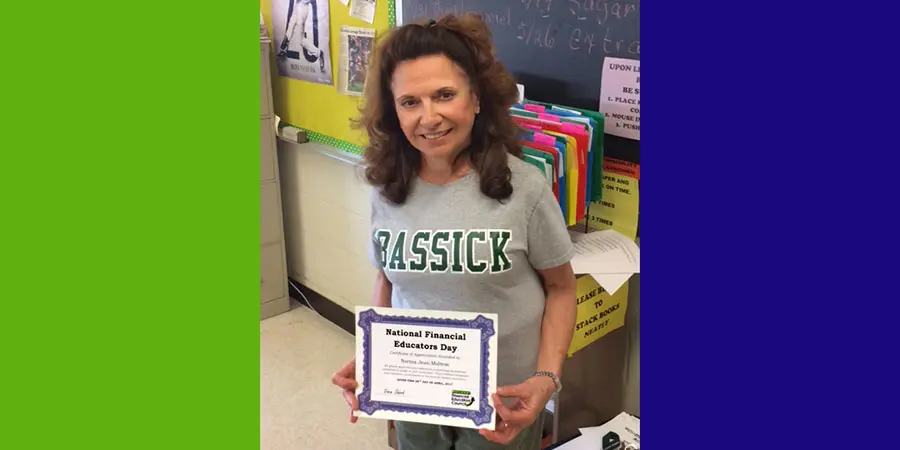
Norma Jean Maltese
Norma Jean Maltese has been teaching Personal Finance for almost 10 years. She has sent many students on their journey equipped with the “How To’s” in Banking, Finance, Investments, renting apartments, buying homes and taking out loans, renting and buying cars, keeping a good credit rating, respecting your credit card and paying at the end of the 30 days each month, etc.

Xavier Marmol Blum
Impartiendo clases como profesor en universidades, cursos y seminarios y dando asesoría (Soy graduado en Administración y Finanzas en la universidad y ademas cuento con dos diplomados (universitarios), uno en Gerencia Financiera y otro en Ingeniería Financiera entre otros estudios relacionados. También soy asesor de finanzas)

Jaison McCall
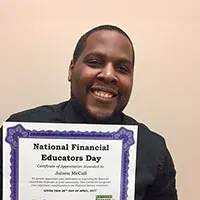
Jaison McCall used his counseling background to build the Prosperity Connection Financial Coaching program (formerly the St. Louis Community CU Foundation). He has used his experience and passion to touch thousands of lives in the underserved St. Louis region since 2011. He has an engaging personality which allows financial education participants to grasp the information on a level they can use in their daily lives. Additionally, he has been creating strategic partnerships to engage the financial community at large to better serve a population that is often overlooked. Jaison has gone above and beyond to ensure proper training of every Financial Coach that has served within the organization, and for that we are all thankful to work with someone who is so devoted to the field, the clients, the organization, and the staff. The St. Louis region as a whole is a better place because of the work he has put forth and the traction he has helped to build in the community through financial education. I truly believe that no other individual could be more deserving of this award.

Stephanie Musgrove
With Amy Hanson
Stephanie has had an interest in financial education since 2011 when she began her graduate research on the relationship between student finances and their academic experiences. In her role at Affinity Plus Federal Credit Union, she helps coordinate financial education sessions across the state of Minnesota for other Affinity Plus financial educators, and is also a certified financial educator. She has helped develop and update the credit union’s and Foundation’s financial education resources and materials, and helps coach other financial educators on best practices for providing effective financial education. Stephanie has a strong desire to advocate for financial literacy efforts at Affinity Plus and in Minnesota schools and communities, as well as develop and strengthen partnerships with other entities who promote and engage in the financial literacy movement.

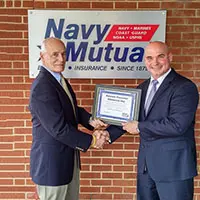
The Navy Mutual Aid Association
Craig Cressman and Stephen Pietropaoli
Craig Cressman, Navy Mutual’s Director of Education and Veteran Services receiving the National Financial Education Council award from, Stephen Pietropaoli, Navy Mutual’s Chief Operating Officer at Navy Mutual Headquarters in Arlington, Virginia. The award was presented to Navy Mutual for their dedicated service of financial literacy education to the military and veteran community. As the country’s oldest congressionally-recognized Veterans Service Organization, Navy Mutual’s mission includes educating and assisting servicemembers and, most importantly, their survivors, in matters concerning financial literacy as well as the government services and benefits for which they are eligible – without any charge or obligation. This small and highly trained team reaches nearly 30,000 service members and spouses nationwide each year, and are proud to support the military community.
Craig Cressman
Craig Cressman is currently the Director of Education and Veterans Services at the Navy Mutual Aid Association in Arlington, Virginia. He served a 31-year career with the United States Marine Corps, during which time he set himself apart in the areas of leadership, creative and innovative thinking, vision, and strategic planning. Sergeant Major Cressman is a graduate of the Marine Corps Command and Staff College, the Naval War College Senior Enlisted Academy, and numerous military and civilian schools. He completed his military career at Headquarters, United States Marine Corps as the Henderson Hall, Headquarters Marine Corps Sergeant Major and Senior Enlisted Advisor to the Director, Marine Corps Staff. His military awards are numerous, to include the Purple Heart and two Presidential Volunteer Service Awards. His dedication to the military community and his leadership and vision for the Education and Veterans Services Department will lead Navy Mutual to reach an even greater audience, in our military community and beyond.
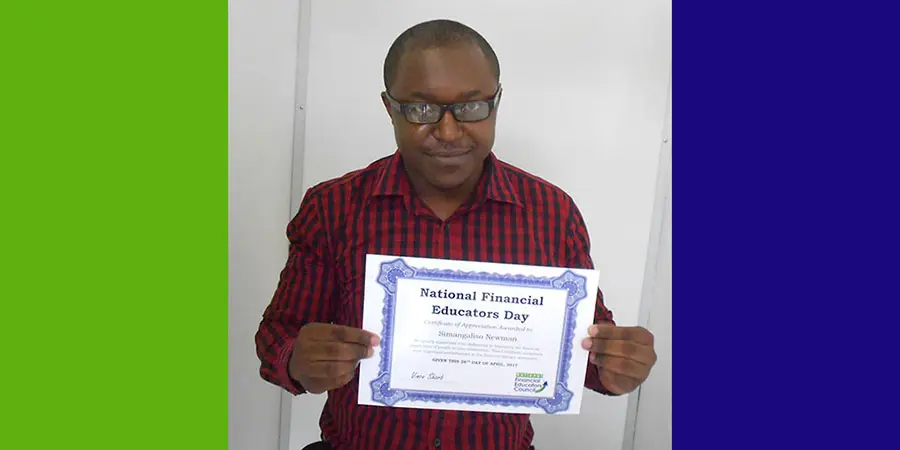
Simangaliso Newman
Sim is a finance professional, financial literacy educator and promoter. He is the founder of Dreams Corporate Advisors (www.dreams.co.zw) which specializes in providing financial literacy education (for individuals, communities, youths, Companies and other organisations), promoting entrepreneurship and sound financial management systems.He is also a certified Trainer and facilitator of the popular Old Mutual `On The Money` Programme. (ref www.oldmutual.co.zw). As the Chairperson of Rotary District 9210 Rotary Youth Leadership Awards (RYLA) training programme, he has ensured that every RYLA programme incorporates Financial Literacy training. Sim has provided financial literacy training to people from various backgrounds including Lawyers (through the Law Society of Zimbabwe), Small to Medium Enterprises through SMEs Association of Zimbabwe and Ministry of SMEs, Employees in Various Companies and various Community groups. In the last year he trained over 1000 people.
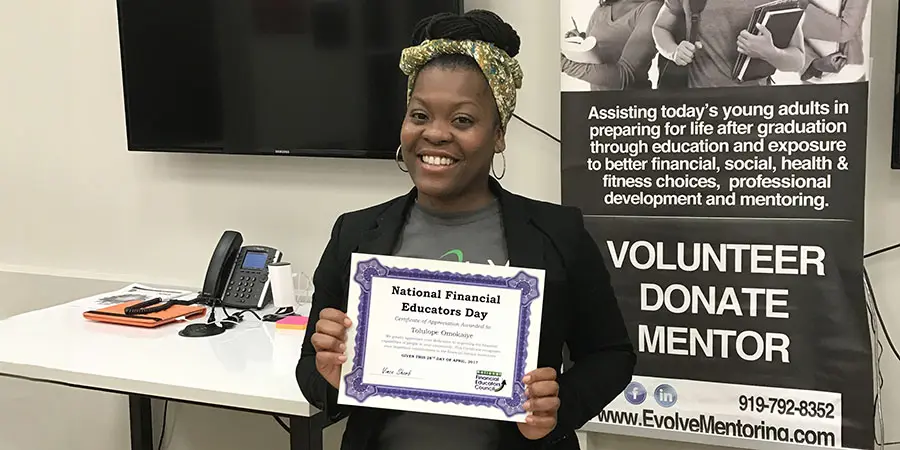
Tolulope Omokaiye
Tolulope O. Omokaiye, MBA is the Founder and Execute Director of an amazing nonprofit called EVOLVE Mentoring that she founded 6 six years ago to teach life skills to youth (ages 14 to 24) to help them become well rounded adults. Through EVOLVE’s TEEACH: Money program she teaches students how to develop money management capabilities. Her students saved over $6,000 in a summer, she has opened over 50 banking accounts for young first time users in her Durham, NC and negotiated a CD financial savings match from their banks for her students reaching their personal savings goals. Her TEACH: Money program is responsible for over $13,000 in youth savings over the last 2 years in Raleigh and Durham, NC. Tolulope loves giving back and helping students learn to make better choices that will lead them into successful lives and believe that being financially literate is the key. She is a dynamic youth financial educator and I can’t think of anyone more deserving of being honor on this years Financial Educators Day.
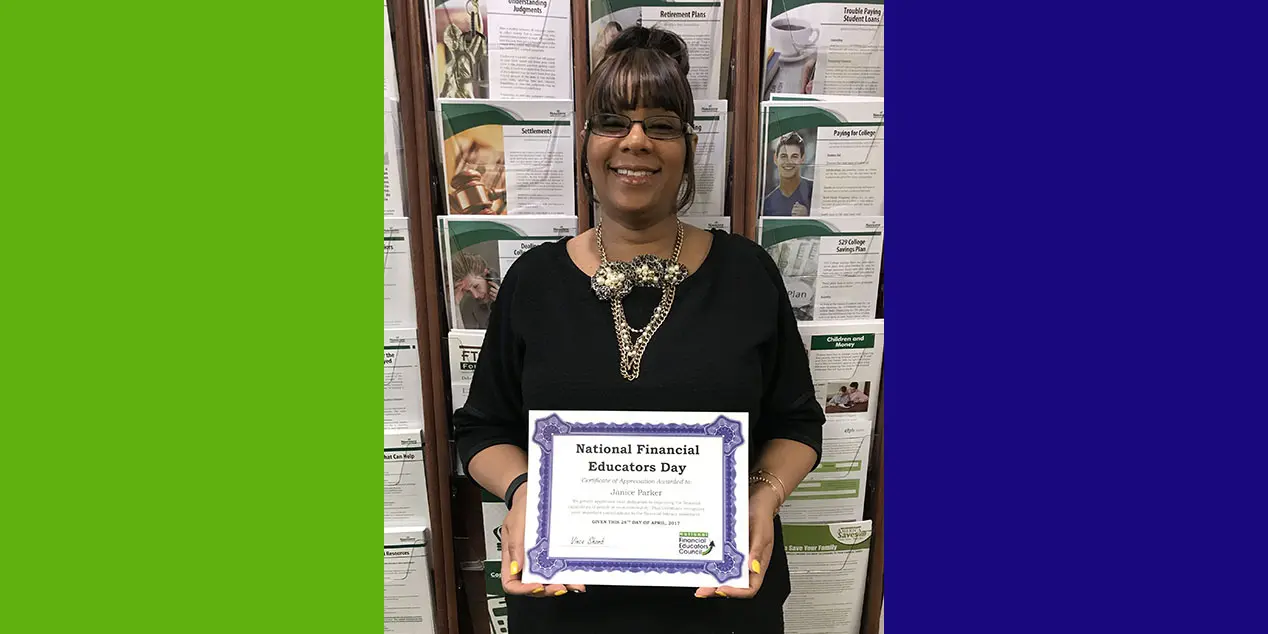
Janice Parker
Janice develops and maintains new relationships and programs within Illinois with Navicore Solutions. Janice evaluates current Illinois programs and relationships focusing on delivering applicable services and to ensure they are in alignment with Novadebt’s mission and education purposes. Janice also is a Certified Consumer Credit Educator and provides education services to the public, evaluates current education programs and implements new education community programs. Janice has more than 16 years’ experience in financial education and the credit and housing counseling industry and was the Executive Director with Central Illinois Debt Management & Credit Education, Inc. for six years prior to its acquisition by Novadebt.
Janice provides education and advocacy within her community to the most vulnerable populations by providing onsite workshops at the homeless/transitional housing, state and federal correctional facilities, domestic violence centers and drug rehabilitation facilities just to name a few. These individuals and organizations have a significant impact on citizens of all ages across the state by helping to enhance their personal financial knowledge and skills. Additionally, Janice educates her community by contributing as a writer to a local African American newspaper monthly. Janice is known to be passionate about helping others success financially and holistically. By developing their financial capabilities, she believes that our communities become more savvy consumers, improve their quality of life, and, in the process, contribute to strengthening our economy.

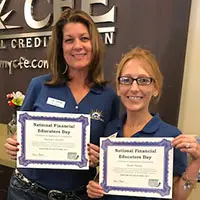
Heidi Pauley
With Rachel Jacobs
I am nominating Heidi because she genuinely takes the time to educate our members and place them in a better financial position. Whether it is to help build credit, repair credit or save them money, Heidi knows how to build our member’s confidence in their financial picture and creates a clear picture on how our members can reach their goals. – Jessica Rosario

Jeremy Preston
I am a strong proponent of strengthening financial literacy in U.S. inner cities. I have implemented numerous financial empowerment workshops and seminars at boys & girls clubs, detention centers, and churches in the inner cities across the U.S.. One of my most successful programs was a summer financial literacy program for elementary students at the Clarence Fraim Boys & Girls Club in Wilmington, Delaware. Note: For more information on this program, visit my website at, theeisolution.com. In addition to financial workshops and seminars, I reach out to people in the inner cities via social media providing free financial guidance, money saving tips, and financial news on a weekly basis. See my financial literacy page: https://facebook.com/Economic Intelligence – E.I. Last but not least, I wrote a financial empowerment book in 2008 titled, ” E.I. = $: 10 Steps To Become Economically Intelligent (E.I.) and Live a Financially Successful Life.” Over the last few years, I have given out (free of charge) numerous books to inner city youth in an effort to invest in the financial futures of our less fortunate American population. I hope that you will consider me for a Financial Educators Day Award.

Mike Rini Sutikno
Mike has been teaching financial planning through out Indonesia since 2016. She had her own radio talkshow, wrote many financial planning articles, becoming a financial planning columnist and received nation wide recognition for her work. Her first international recognition was received when she was trusted by UNIFEM (UN Women) in 2006 to write financial planning book fo Woman Migrant Workers . In 2012 she was assigned by The World Bank and The Tifa Foundation to create financial literacy and entrepreneurship curriculum for Woman Migrant Worker and their family, and gave Training for Trainers. Mike also had been chosen to be a keynote speaker at the 2nd Bank Indonesia International Summit on Islamic Finance , and brought the topic of Financial Inclusion for Low Income Societies.
Mike’s work as a financial planner stems from concern about the financial problems that plagued the community. Most people tend to have consumer lifestyle, a lot of debt, unable to save, not ready to face the economic crisis. The reason is the low level of financial literacy and bad financial behavior. Mike found how personal financial stress impact personal wellness, family’s life, and workplace situation. Therefore she saw the importance of a more holistic approach in conducting financial education and decided to incorporate gamebase learning into her training program so the learning process can be more enjoyable and engaging. She develop Smart Money board game for teaching financial literacy. The board game prove to be successful it create more retention better than any other tools. Since then, the board game has been repeatedly played in a variety of corporate training, schools, colleges and in various Corporate Social Responsibility activities.
Mike will continue to create innovations in teaching financial literacy with the Game Base Learning. She believe that all together with the provision of knowledge and support of the National Financial Educator Council to run financial education that meet aesthetic standards of professional will have an impact on improvement of financial literacy and capability of Indonesian society significantly.

Sheena Robinson
Sheena is the Founder of Financial Parent Academy Inc, a 501c3 nonprofit that teaches kids from pre-school – 12th grade financial education. She also conducts classes for parents teaching them how to become financial parents. She wrote “Financial Parenthood, The Keys to Raising a Rich Kid” to help parents prepare kids at home for the financial world.

Margaret Robles
Over the past 15 years, I have taught many different levels of mathematics within our high school curriculum that prepare students to pass high stakes tests that in turn give students a distinction of being “college ready.” However, from my own personal experience (and from many I grew up with), the content that really needs to be added to all of our high school curriculum is that of financial literacy so that all of our 12th graders can start understanding the complexity of such financial decisions (and their long consequences) that they will be forced to make as they enter the workforce, take out student loans for college, or just decide that they want to live independently of their parents support. For these reasons, I was first on board to start a grass roots recruitment of 75 seniors on our campus to enroll in Financial Algebra for the 2015-16 school year, as well as petition our principal to purchase the recently adopted textbooks for the course to be added to our master schedule. In our first year, these 75 seniors had their eyes wide opened to many financial pitfalls that it takes others years to bounce back from after “learning the hard way.” In addition, they were able to practice (and grow) their financial management behavior by participating in the H & R Block Budget Challenge, in which my students finished within the top 10 teams (out of 860 teams nationwide), earning them a $5000 class grant to help reach even more students understand what it means to be “financially literate.” As those 75 seniors prepared for graduation day, I asked them to spread the word about what they learned and to recommend to others to “request Financial Algebra for their senior year” (since it is still not a required class even though many parents believe strongly that it should be…much like I do). With that said, I’m proud to report that my Financial Algebra courses doubled in size this year (2016-17), with close to 150 seniors receiving an authentic opportunity to learn about what it truly means to be “real-world ready” to tackle the challenges you face daily when it comes to managing and balancing finances. And although this Financial Algebra course is not a requirement (…yet), I remind the seniors that do get this limited opportunity to take this class, to share what they’ve learned (and the free online resources provided) with their families, or their friends, or their future college roommate….so that the impact of financial literacy could continue to be reached much further than my classroom walls.
Deborah Sawyerr
As a money literacy educator for kids, I share simple money tips, tricks and ideas that both kids and their parents can start to use as newbies to the world of money literacy. I recently designed a complete and basic programme designed to help parents, teachers and guardians teach their kids about the six basic steps of money literacy. I call this Bring Nice Wellies But Stay Indoors which is an acronym for budget, need, want,

Doug Schorpp
Mr. Schorpp is a Five Star Wealth Manager who has over ten years of experience in presenting free college planning workshops. These 90 minute workshops are offered throughout the state of New Jersey in the spring and fall of the year. Those who attend receive a free one hour college planning consultation to personalize information presented at the workshop.
Mr. Schorpp presents regular workshops on college planning to help students and parents become aware of the financial aspects of attending college. He also assists students to apply for college, know about financial awards and assists in writing letters of appeal. He has been presenting college planning workshops for over ten years.

Charlotte Stewart
I strive to educate my students on the importance of Financial Literacy. I teach three Personal Finance course a day to Juniors and Seniors in High School. They are obtaining skills necessary to be successful in life. Our lessons are aligned to a set of Content Standards that the state requires. Students participate in the Marketwatch Stock Market Simulation in the fall of the school year. We participate in the H & R Block Budget Challenge with students Nationwide in the Spring semester. The topics that we cover in class include Credit Scores, Credit vs. Debit, Buying a home and car. The students will explore the various options for Insurance and Retirement options for their future. We partner with BB&T. They send representatives from the bank to speak to my students about Financial Wellness. The students enjoy the visits and the jeopardy style games used to review their lessons. It is my desire that when my students graduate and leave my classroom that they are well prepared for financial success.
Kevin Sutton
Kevin Sutton has worked tirelessly over the past year to develop the Making Cent$ Financial Literacy and Wellness Program for college students at the State University of New York (SUNY) College at Oneonta and is deserving of the Financial Educators Day Award. Kevin has been involved in building SUNY Oneonta’s Making Cent$ program from concept to implementation. Kevin develops and presents workshops on a variety of financial literacy topics such as Banking 101, How to Budget, Credit Scores, Managing Debt, Student Loan Repayment, and more. In addition to these workshops, Kevin began the Making Cent$ on the Move activity that gives students a ride to class or across campus if they answer financial questions correctly. Kevin also adapted popular game show concepts with financial concepts like Jeopardy, Trivia, Guess That Salary and Making Cent$ Mad Libs, all in an effort to engage students and make financial literacy fun. Kevin also plans and hosts two signature events each academic year – Making Cent$ of Life After College in the fall semester and Making Cent$ of My Future: Senior Edition in the spring semester. These signature events bookend the academic year and engage students in a variety of workshops designed to increase their knowledge and awareness of key financial concepts and help student make good financial decisions. A recent graduate himself, Kevin is able to connect with the student body and is the go-to person students seek out for one-on-one financial coaching. For all of these reasons and more, I believe that Kevin is the Financial Educator of the year!
Betty Taylor
With Annie Blackmon
Ms. Taylor is one of two financial coaches here at our organization. She provides financial literacy classes to community residents (day & evening) as well as one-on-one coaching sessions to review credit reports and provide a good understanding of what residents are looking at and discuss their financial goals and next steps. She is very passionate about empowering residents to use financial institutions instead of neighborhood grocery/party stores for their check cashing needs and budgeting/saving. She has developed several strong partnerships with financial partners, which have assisted with conducting workshops, providing educational literature/workbooks and giveaways for our Money Smart event. – Yolanda Crain, Focus Hope

Alex Todd
Been the driving force for nine years for a financial literacy high school graduation requirement in the state of Kentucky. Senate Bill 106 was filed by Senator Dennis Parrett, and Mr Todd testified before the Senate Education Committee on March 2, 2017. The bill passed committee by a vote of 10-2. Mr Todd continues to advocate for a graduation requirement in Kentucky by bringing school, community, and church leaders together. Financial Literacy is the cornerstone in education that has long been forgotten. We are seeing the consequences of ignoring financial literacy for well over 35 years. It is the number one problem for our young people in North America today, however that means it is the number one opportunity to get it right.

Dustin Voss
Second Highest Number of Nominations for 2017
I’m Dustin Voss. I help design Chicago’s Personal Finance course for high school students. I have been an innovative contributor infusing my class with case studies, controversial material, and up to date materials. As an example of this, I tweeted at noted personal finance author Ramit Sethi and he send my classroom a set of books for free. Similarly, 2 of my students and myself have been features on the Teach or Retire Rich podcast being interviewed about my financial literacy course. I’ve been an advocate in CPS constantly dispelling the pernicious myth that students can achieve their consumer education graduation requirement with a consumer ed test (11 years ago this was possible, but ISBE decided in 2007 that a test does not constitute the type of education IL residents deserve. In spite of this, many schools still believe there is a consumer ed test and have counselors administer this test rather than scheduling a financial literacy or similar class.) In general I’ve been an advocate for sensical financial literacy. Notably I’ve expanded the teaching of the foundation of cost/benefit analysis and supply and demand. I’ve also enfused the idea of cognitive dissonance as a reason why so few people are able to become financially independent even though the information is easily accessible. I have partnered with UIC and the CFEE to provide consulting to “Teach your kids about Money Day,” the Canadian initiative and I am routinely called on to offer my expertise in the teaching of personal finance. In addition to my personal finance course, I write the district wide economics assessment and teach an Entrepreneurship course through the Network for Teaching Entrepreneurship. Finally, I am a resource for my colleagues helping many other professionals set up retirement accounts, choose banks that wont rip them off, or understand the benefits and traps of 403b/457 plans offered to CPS employees.
Additional Nominations
Mr. Voss Contributes To The Finanicial Literacy Movement Because He Is Teaching Us Students How To Budget And Save Money In A Good Way. We Can Also Have A Little Spending Money For Our Selves!
Dustin Voss is my financial literacy/Civics teacher. He contributed to help me become who I am today. I’ve learned so much from his financial literacy class it teaches me how to save up money it also show how many people are caught up in the thoughts traps and lastly it shows us how to use cost/benefits and apply everything we learned in financial literacy to real life Scenarios.
Everyday There is something new to learn in class its always engaging and always fresh no matter what we always are learning never off topic. There is so much to be thankful for when you have a young teacher like Mr.Voss.
Mr. Voss deserves this award because he’s just the best! Voss is always there when you need him and he’s a great teacher! Loving kids. making them laugh and get 100% from a person is his job. So he totally deserves this award!
Angel Williams
Angel contributes to the financial literacy moment by educating homeless , at risk homeless, and those that have become stable. She also educated through workshops in the community and with other non-profits agencies and organizations.
Brad Yeckley
Brad is always looking for new ways to bring financial literacy to people. He is always willing to do presentations and meet with people on campus regarding the different modules he has helped create. He has presented to a variety of groups and consistently adapts to where they are at and what they need. All to often people employ tactics that are condescending, not at comprehension level appropriate to the group or try to shame people into making changes. He engages, brings a sense of humor when needed and presents reasoning for the ideas he puts forth. Personally he has worked with me to create communications to the student populations that I work with. This includes being able to remotely attend presentations for my on line students and blurbs for letters and emails to students. When one talks to him, he is truly excited to have the opportunity to help others become more aware and better at managing the financial aspects of their education and lives.

Jelena Zivkovic
The nominee offers a course called Community Development Service – Financial Literacy for first year students of the American University of Nigeria; she also does community work by setting up forums where women come together to learn more about budgeting, financial responsibility, and banking. The nominee works closely with the Standard Microfinance Bank who have published 2000 financial literacy booklets – the nominee was part of distributing the booklets in the community along with facilitating the creation of turning the booklet into a CD. The nominee engages students in financial literacy research and training. Financial Literacy training has been offered to a thousand community residence in the last two years.

Jignasha Patel
Jignasha is a banking center assistant manager in the Indianapolis market. She has been instrumental in leading efforts to help non-violent ex offenders work towards a better understanding of managing their money. Jignasha partners with the Volunteers of America of Indianapolis to lead a 6 week course on various personal finance topics. Individuals that go through our program think so highly of her, and many of them end up coming to bank with us because of her and the trust she has built with them.
Jefreda Brown
I am the owner of Goshen Business Group. We focus on financial and business compliance consulting and professional development training. As a speaker and trainer, I frequently provide financial literacy training and seminars at churches and in partnership with financial literacy organizations such as Operation HOPE. I’m a volunteer Business Coach with Operation HOPE. In addition, I’m also an Adjunct Finance Professor. I’m also a featured contributor for the soon to be released book, “I Didn’t Learn That in High School: 199 Facts About Credit Scores” by Atlantic Publishing. For over 15 years, I’ve been focused on educating individuals and businesses about financial literacy.
Sherrell Duclos
Sherrell Duclos is the Financial Educator for our youth non-profit organization and she educates the youth on financial literacy.
– Sharmaine Brown, Jared’s Heart of Success, Inc.

Destiny Thomas
Destiny Thomas is our newest Financial Empowerment Coach at Empowering and Strengthening Ohio’s People [ESOP] in Cleveland Ohio. Destiny facilitates financial education workshops in Cuyahoga County on topics ranging from how to recognize and avoid elder financial exploitation, goal setting and budgeting, taking control of credit and debt, to understanding financial products. Destiny also provides one-on-one financial coaching to some of our most vulnerable older adult clients. Although Destiny has been with ESOP less than six months, she has shown that she is committed to helping our clients improve their financial stability.
– Sonya Edwards, Director of Financial Counseling, Empowering and Strengthening Ohio’s People

Ana Gonzales
Ana Gonzalez has been a housing counselor with ESOP for over ten years. She conducts Home Buyer Education courses, provides pre-purchase counseling, post-purchase counseling and foreclosure prevention counseling. Ana is bilingual and is able to assist both our English-speaking and Spanish-speaking clients. Ana is also certified to complete and file income taxes through our VITA (Volunteer Income Tax Assistance) program.
– Sonya Edwards, Director of Financial Counseling, Empowering and Strengthening Ohio’s People

Michael Floreth
Michael Floreth is a Financial Empowerment Coach for Empowering and Strengthening Ohio’s People [ESOP] in Cleveland Ohio. Last year alone, Michael facilitated 53 financial education worksops with nearly 400 participants in attendance in Cuyfahoga County on topics ranging from how to recognize and avoid elder financial exploitation, goal setting and budgeting, taking control of credit and debt, to understanding financial products. Michel also providing one-on-one financial coaching to over 100 clients, completed over 50 benefit assessments, and helped over 100 clients file their income taxes for free. Michael is committed to helping our clients improve their financial stability.
– Sonya Edwards, Director of Financial Counseling, Empowering and Strengthening Ohio’s People
Rachel Slomovitz
Rachel Slomovitz is a Financial Empowerment Coach for Empowering and Strengthening Ohio’s People [ESOP] in Cleveland Ohio. Last year alone, Rachel facilitated nearly 100 financial education workshops with over 850 older adults in attendance in Cuyahoga County on topics ranging from how to recognize and avoid elder financial exploitation, goal setting and budgeting, taking control of credit and debt, to understanding financial products. Rachel also providing one-on-one financial coaching to over 75 clients in 2017. Rachel has been actively working to improve the financial stability of our community through financial and housing counseling at ESOP for almost 10 years.
– Sonya Edwards, Director of Financial Counseling, Empowering and Strengthening Ohio’s People
Tiffany Taylor
Tiffany Taylor is a Financial Empowerment Coach for Empowering and Strengthening Ohio’s People in Cleveland Ohio. Last year alone, Tiffany facilitated over 100 financial education workshops with more than 1100 older adults in attendance in Cuyahoga County on topics ranging from how to recognize and avoid elder financial exploitation, goal setting and budgeting, taking control of credit and debt, to understanding financial products. Tiffany also providing one-on-one financial coaching to over 100 clients in 2017. Tiffany goes above and beyond to assist her clients in achieving financial stability.
– Sonya Edwards, Director of Financial Counseling, Empowering and Strengthening Ohio’s People
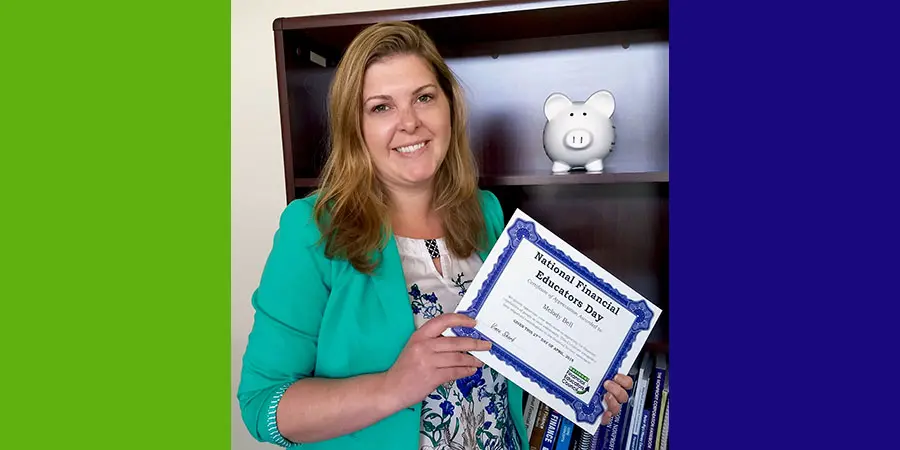
Melody Bell
In 2005, Melody Bell, EdD, founded the nonprofit Financial Beginnings in Portland, Oregon. What began as a local effort to fill an education gap in Portland-area schools, Bell, Financial Beginnings’ CEO, has since grown into a network of affiliates and partners delivering customized financial education programming to more than 50,000 students and adults across the United States each year.
Financial Beginnings has a measurable impact on the financial behaviors of youth and adults. Financial Beginnings follows up with individuals three to six months after participating. Of recent Financial Beginnings grads, 94% improved their financial behaviors, 85% accomplished at least one financial goal, and 67% increased their savings. Financial Beginnings’ programs are designed to improve financial capability among economically-vulnerable populations such as those with legal histories, first-in-family college students, low-income youth, domestic abuse survivors, veterans, individuals and families without stable housing, and more.
Financial Beginnings’ full suite of programming, taught in schools and in the community by over 600 trained volunteers, includes programs for elementary school-, middle school-, and high-school-age youth, as well as programs for college students, adults and Spanish speakers. All programs are provided at no-cost to participant or partner. In addition to founding Financial Beginnings and spearheading its exponential growth, Bell has long worked with Jump$tart Coalition and is credited for reviving its Oregon Chapter while serving as its Board Chair. Bell continues to sit on Jump$tart’s Board of Directors, a position she has held for over a decade. Bell is also an adjunct professor of finance at Portland State University. Bell continues to be a visionary leader for Financial Beginnings and is excited by the continued geographic expansion of the organization’s network of affiliates. Bell is particularly adept at bringing together multiple sectors to find common ground in the need for accessible, inclusive, and unbiased financial education. Bell is part of Washington State’s Financial Education Public Private Partnership coalition and works with corporations, school districts, fellow national nonprofits, and neighborhood leaders to develop an ecosystem, one community at a time, that supports financial education for all. Financial Beginnings increases equitable economic advancement. Doing so ultimately increases the life opportunities such as home ownership, secure retirement, and higher education available to youth and adults, thus improving individual quality of life and strengthening local and regional economies.
– Kristin Monahan, Development Director, Financial Beginnings
Dipankar Mitra
We have 06+ Farmer Producers Companies in West Bengal along with the office room and large numbers of farmers and local resources to impart the training on Financial Literacy. Other networking partners who are unorganized workers as Jori Workers- Factory workers- Jewelers’ workers etc. In 2017-18 we have conducted 30 Financial Literacy Programme among 1500 poor farmers within West Bengal with great success. And Dipankar Mitra helped us from all corners to get this success. Organising, conducting, Resource persons identification, food and decorator arrangement to conduct the progarmme. Advocacy and lobbying with the local religious and political leaders also done very diplomatically. Man management also managed by him.
Dipankar as a Secretary planned to work on this issue and train the farmers for strengthening their financial planning and advocacy. He is very much active and played a important roll to make success the programme and planning for the future programme to implement. He support the programme on planning, implementation, awareness, education and advocacy. In 2017-18 People’s Participation trained more than 1500 poor farmers within West Bengal.
Dipankar planned to make aware the poor farmers on Financial Literacy issues in different parts of West Bengal. organised and conducted 30 Financial Literacy Camps in 2017-18 with great success along with his team members. Moire than 1500 poor, financially deprived farmers empowered on the issue.
– People’s Participation, India
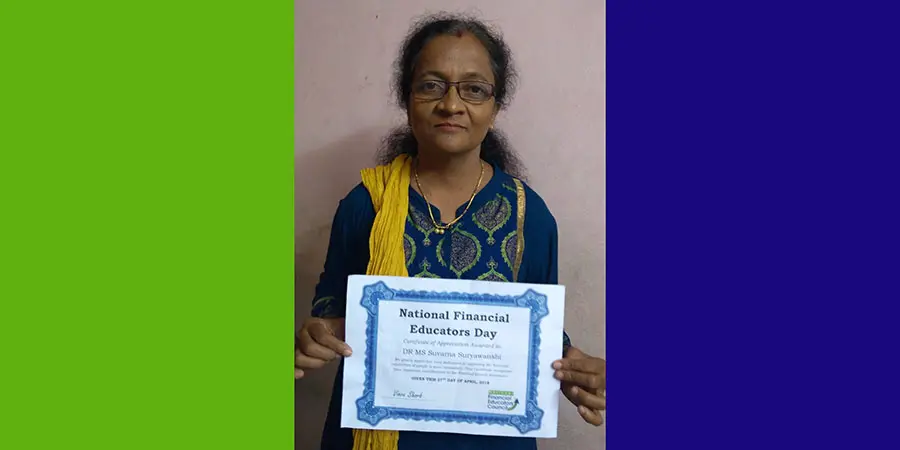
Dr. Suvarna Suryawanshi
I am empaneled and working as a resource person for the financial literacy program given by SEBI (Securities and Exchange Board of India) in Maharashtra, India. I have spoken at 150+ workshops on financial education for school children, young investors, executives, self-help groups, homemakers, and retired persons, etc.

Jerry LeBlanc
Jerry has developed a passion for helping his clients and community understand topics related around money, credit, personal financial planning and wealth building. He has developed educational training programs, conducted presentation workshops, benefit fairs, served clients and under-served communities and facilitated classes designed for adult learners and mentored clients and members of his community throughout their life and career development.

Krystle Saulsberry
Krystle contributes to the financial literacy movement by conducting personal finance workshops, and she educates individuals on personal finance via social media. She recently published a book entitled Kingdom Finances: 40 Financial Principles That Empower You To Properly Manage Money, and it is an Amazon bestseller. She plans on launching a personal finance blog later this summer entitled TheFinancialQueen.com.
Samita Goswami
Samita is President of People’s Participation and has worked hard to educate poor and deprived groups in society for the last 9 years, restlessly. She prepares leaflets in local languages and trains illiterate and semi-literate farmers in the financial literacy management training programme for a bright future. She is one of the most valuable training partners in the Financial Literacy Training program.
– People’s Participation, India
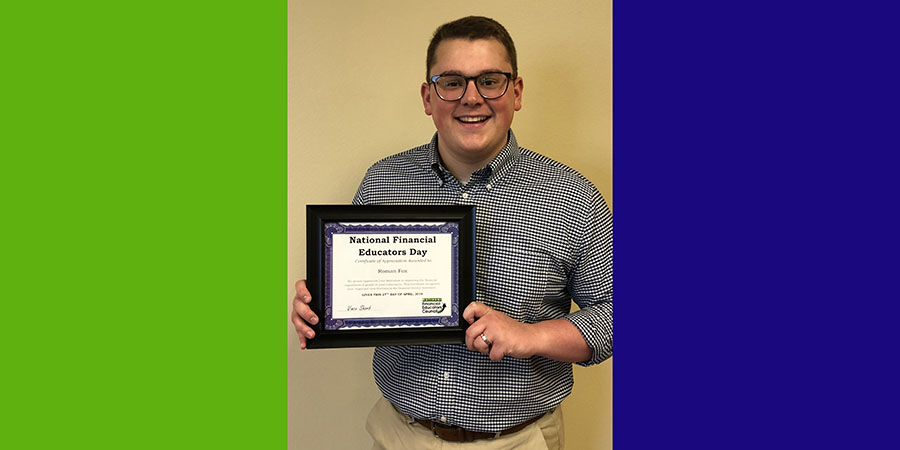
Roman Fox
Roman works full time as a financial educator. He helped create ECU’s financial literacy curriculum for students (grades K-12). All lessons are based on the TEKS (Texas Essential Knowledge and Skills for financial literacy). He helped create an online distance learning program for seventh graders to be used by teachers who reside in our field of membership, but live outside the area in which he can travel. He has been an active volunteer for Junior Achievement for two years. He creates money management material and delivers presentations at our local community college. He has delivered financial education presentations to over 8,600 youth this school year (just over 15,000 since 2015!). He created a “Paying for College” activity that he presents to parents and their students at our Paying for College workshops. For two years, he has conducted workshops for teachers in Amarillo ISD and Region 16 (our regional education service center) to help them learn more about how to meet our state’s financial literacy standards in their classrooms. The manner in which Roman has helped students, parents, teachers and our community makes him an outstanding candidate for this award!
– Tricia Bass, VP of Learning & Staff Development, Education Credit Union (ECU)