Program Spotlight
Financial Pathways Carolina and Miles Raymond
Financial Pathways Carolina Program Profile

My name is Miles Raymond, and I’m a 16 year old, rising senior at Hough High School in Cornelius, NC. I’m the founder of Financial Pathways Carolina, a nonprofit dedicated to making early financial education accessible for young students across the country.
This summer, we ran Young Money Matters, a free five-week financial education program for rising 5th-8th graders nationwide. The program was held via Zoom, leveraging interactive learning platforms like Nearpod, Peardeck, and various other platforms. We teach the essential topics from the NFEC curriculum like saving, budgeting, credit, and more, aiming to give students the confidence and skills to make smart financial decisions early. Our goal is to inspire healthy financial habits and empower kids to feel curious and confident about managing money. We divided the program into three groups: Monday, Tuesday, and Wednesday. Each group of students met on their corresponding day of the week, and each session was two hours long. In total, we had about 45 students. We recently finished the program, and each student’s progress truly showed. Throughout the program, we sent out weekly updates and meeting summaries, family projects after each weekly session, and we measured program success using the NFEC pre-program survey, during-program survey, and post-program survey. At the end of the program, each graduate received a certificate for their hard work and dedication. Each graduate also received an ongoing education folder, including activities, family projects, and many other resources that allow them to continue their fun and exciting educational experience.
We also recently launched SmartStart Stocks, a free stock market simulator I developed, open to all students and educators. We plan to use this in alignment with some of our upcoming workshops, particularly those focused on investing. In alignment with the NFEC curriculum, this allows students to practice real-world application, learning not only the knowledge, but the skills that are learned through experience. In addition, our work was featured in the News of Davidson, which provides a comprehensive overview of our mission and program. Ultimately, the program was a success, with student feedback reflecting their growth in financial literacy. We also received lots of positive feedback from parents, highlighting their gratitude for our dedication to empowering each student, and ultimately, motivating action and inspiring the next generation of leaders.
What have been some of the biggest accomplishments of your program in terms of student / participant success?
Measured through our pre-program survey, all students reported never receiving financial education prior to the program. Moreover, during the first session (Financial Psychology), students’ knowledge of certain concepts reflected this. However, given the wide variety of online platforms, as well as engaging examples, activities, and NFEC resources, we were able to tailor the curriculum to each students’ abilities and interests. This is a big part of our curriculum, as we emphasize providing a tailored experience for each student. As reflected in the during-program survey, this was successful, as nearly 95% of students said they agreed, or strongly agreed, to all of the positive survey indicators.Moreover, the actual curiosity and inspiration of the students was truly reflected in each discussion, each lesson, and each activity. Parents continued to give positive feedback throughout the program, and students showed up each week ready to learn, but more importantly, excited to learn. We had students type in the chat that they loved the class, and we had one student who asked how he could work with us. Unfortunately, we have a minimum age requirement for our team members, but we assured him to keep this option in mind as he enters high school, emphasizing the importance of equitable financial literacy education for all.
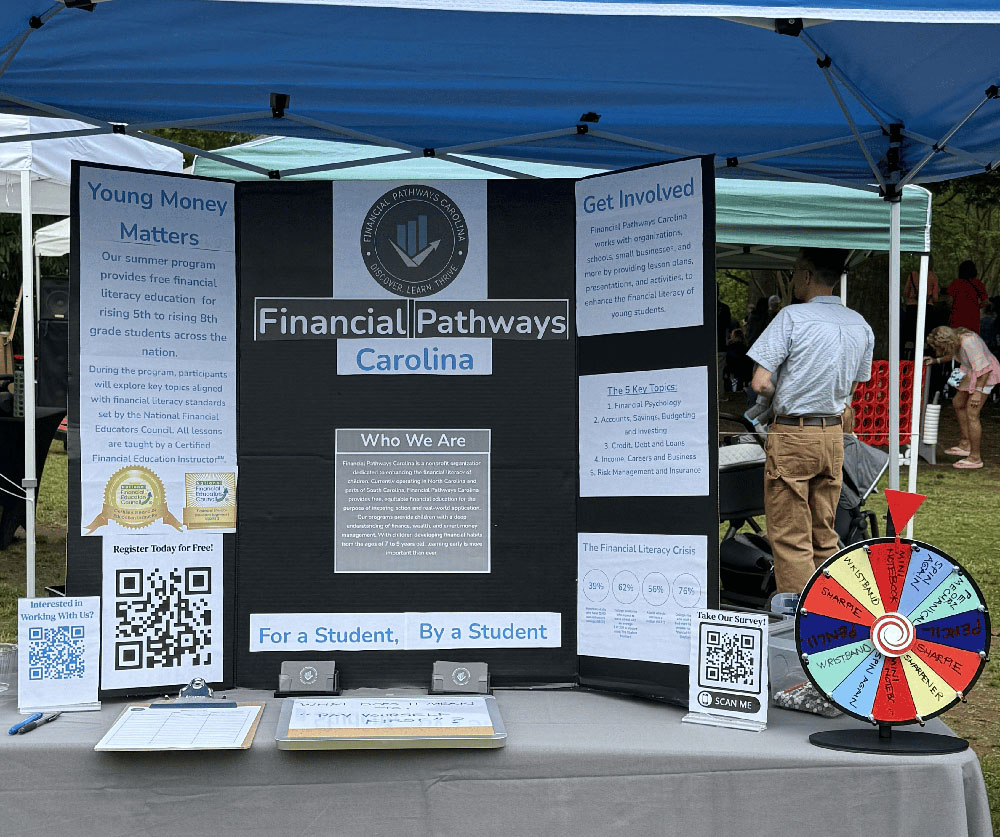
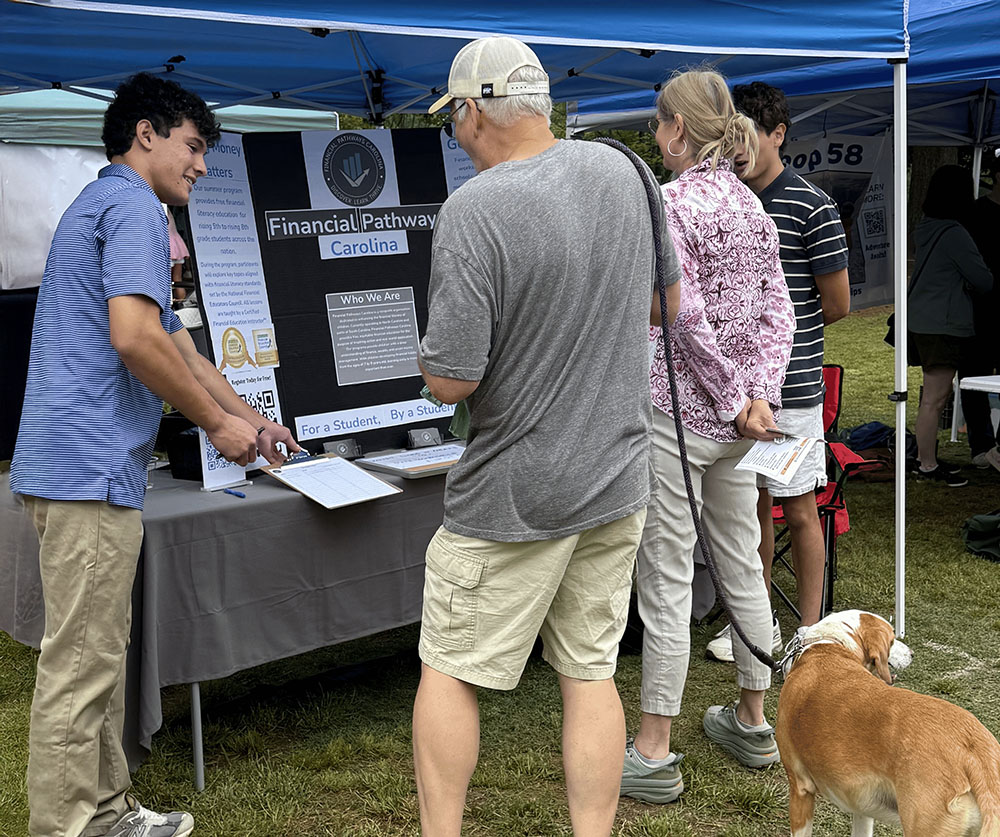
Below: Financial Pathways Carolina at a Davidson Town Day event. We engaged families, promoted financial literacy, and hosted activities — including answering questions for prizes.
NFEC Credentials & Resources
As a Certified Financial Education Instructor℠, I have gained a comprehensive understanding of our true mission, and our true vision behind our programs. Not only do we aim to teach practical money management skills, and allow real-world application, but we aim to inspire action, and to motivate each and every student. Moreover, it has allowed me to understand the programming processes, but also the tailoring, and the engaging aspects of teaching. I have learned more than just how to teach financial literacy to young students; I’ve learned how to engage each student; how to actually inspire each student to recognize the importance of each concept, and how to motivate action. Moreover, it has helped me understand what makes a great instructor. Since financial literacy is such a unique topic, I’m able to evaluate each prospective financial education instructor on our team, assessing their knowledge, but also their ability to teach effectively, and in alignment with our values, our mission, and our vision.
We use a variety of NFEC resources, ultimately allowing us to enhance our impact, but also allowing us to inspire action in a variety of ways. For one, we use multiple surveys, which make up our pre-program survey, during-program survey, and post-program survey, allowing us to measure success, but also allowing students to reflect on their growth, and actually see their success. We also use the financial sentiment survey for those who are not enrolled in one of our programs, such as other high school students, or other adults. We used the scoring system provided by the NFEC, allowing each respondent to see the meaning behind their score, and gain valuable knowledge and tips for their financial well-being. Furthermore, one of the most important resources we use are the ongoing education resources. We provide a folder of ongoing education resources to each program graduate, including NFEC family projects, Family Money Talks activities, and other resources that we have developed. Furthermore, we provide these for multiple age groups, as our program is tailored to 5th-8th graders. Moreover, we use the Financial Literacy Standards, framework, and methodology when developing each program’s curriculum, and tailoring them to the audience. Furthermore, we use complimentary promotional materials (e.g. Financial Wellness Month promotion) as provided by the NFEC, to further spread the word and expand our reach. Ultimately, the variety of resources provided by the NFEC gives us a clear way to develop our curriculum, tailor our curriculum, measure success, drive each learner’s growth, and ultimately fulfill our mission; to inspire action.
Plans For Growth and Future Impact
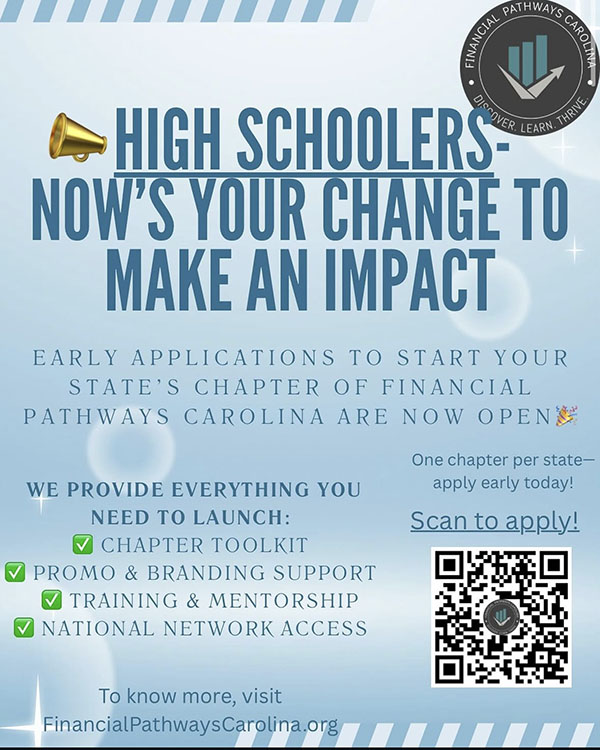
Right now, we hold in-person workshops and events. However, our main program (Young Money Matters) is always open for students across the nation, for absolutely free. This allows each student to have access to a meaningful, engaging, and quality educational experience. However, as we can only have so much of an impact, we increasingly recognize the importance of our equitable programs, workshops, and events. Therefore, we have been working on a chapter expansion project, in which we invite other students to fill out an application, so that they can launch their own Financial Pathways chapter in their state. The possibilities with this branch system are endless. We just developed our Chapter playbook, which includes absolutely everything each chapter needs. As branches of our nonprofit organization, each chapter receives steps, curricula, knowledge assessment and onboarding processes, guidelines and policies, legal requirements and documents, forms and templates, and many, many more resources that allow us to expand our impact further across the nation, ultimately in alignment with our vision. In addition to our chapter expansion, we are working on building our advisory board, to further enhance our operations and our impact, by gaining valuable insights from financial education professionals.
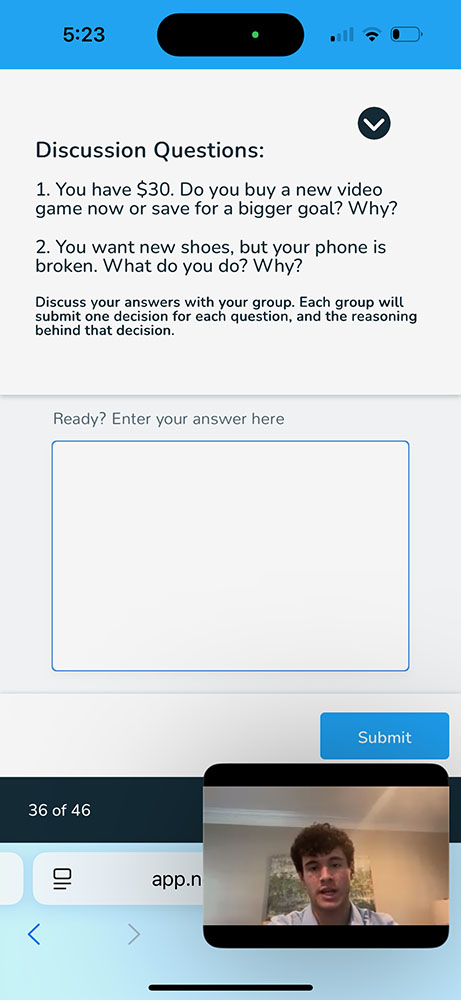
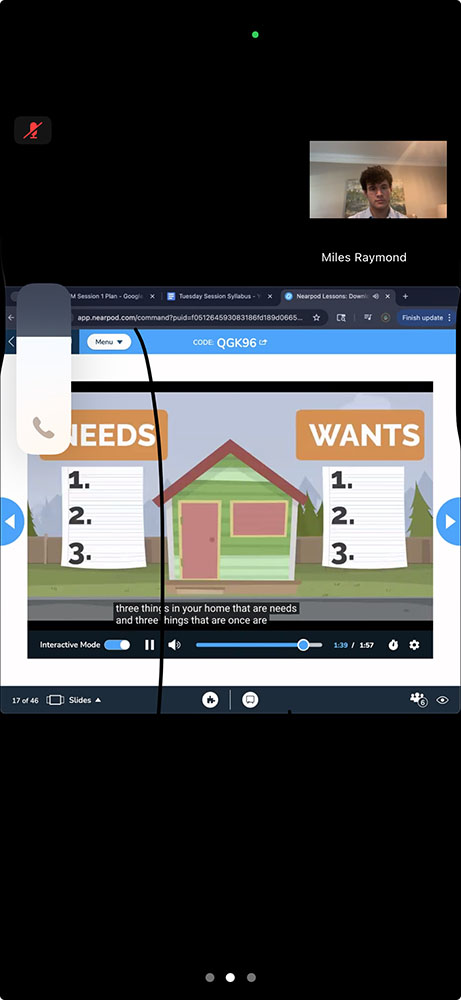
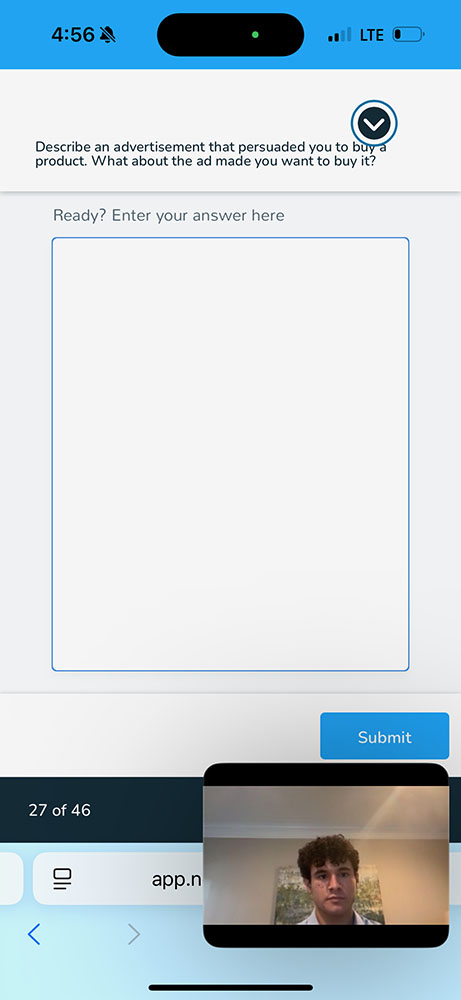
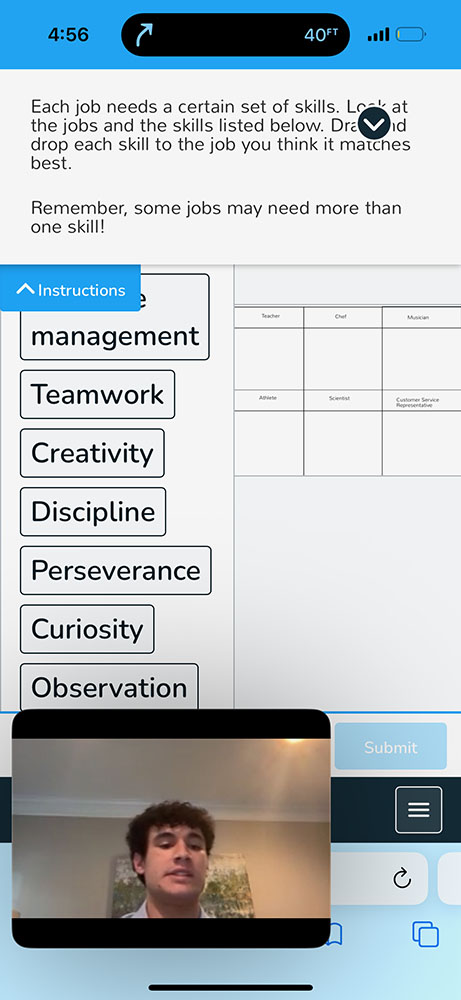
Young Money Matters Program Screenshots. Click on an image for a larger view.