
Financial Literacy Programs: Public Schools
In the past, the biggest barriers encountered by public schools looking to participate in financial literacy initiatives centered on the cost, time, and complexity involved to develop and deploy financial education programming. A properly-designed financial education campaign provides ways for schools and educators to make long-term positive differences in their student bodies, faculty, and overall communities.
The NFEC designs financial literacy programs for public schools that reflect positively on the school brand and align with best practices for promoting financial wellness. With over 15 years leading the deployment of financial education programs, we share a model with you that includes education, awareness, and sustainability components to increase program reach and impact.
Public Schools’ Role in Financial Education
The Consumer Financial Protection Bureau report illustrates that we spend about $670 million per year on financial education. Schools make up a small portion of financial education programming. Teaching personal finance coursework is not required in most states; and the states with the most comprehensive requirements do not provide enough training to make a lasting difference on most students’ financial behaviors. There is a significant gap between school requirements and student needs when it comes to ensuring that students are prepared for the financial realities they will face after graduation.

Organizational Objectives for Public Schools
While making a positive impact in their communities is a main goal, public schools share common organizational objectives as well, including:
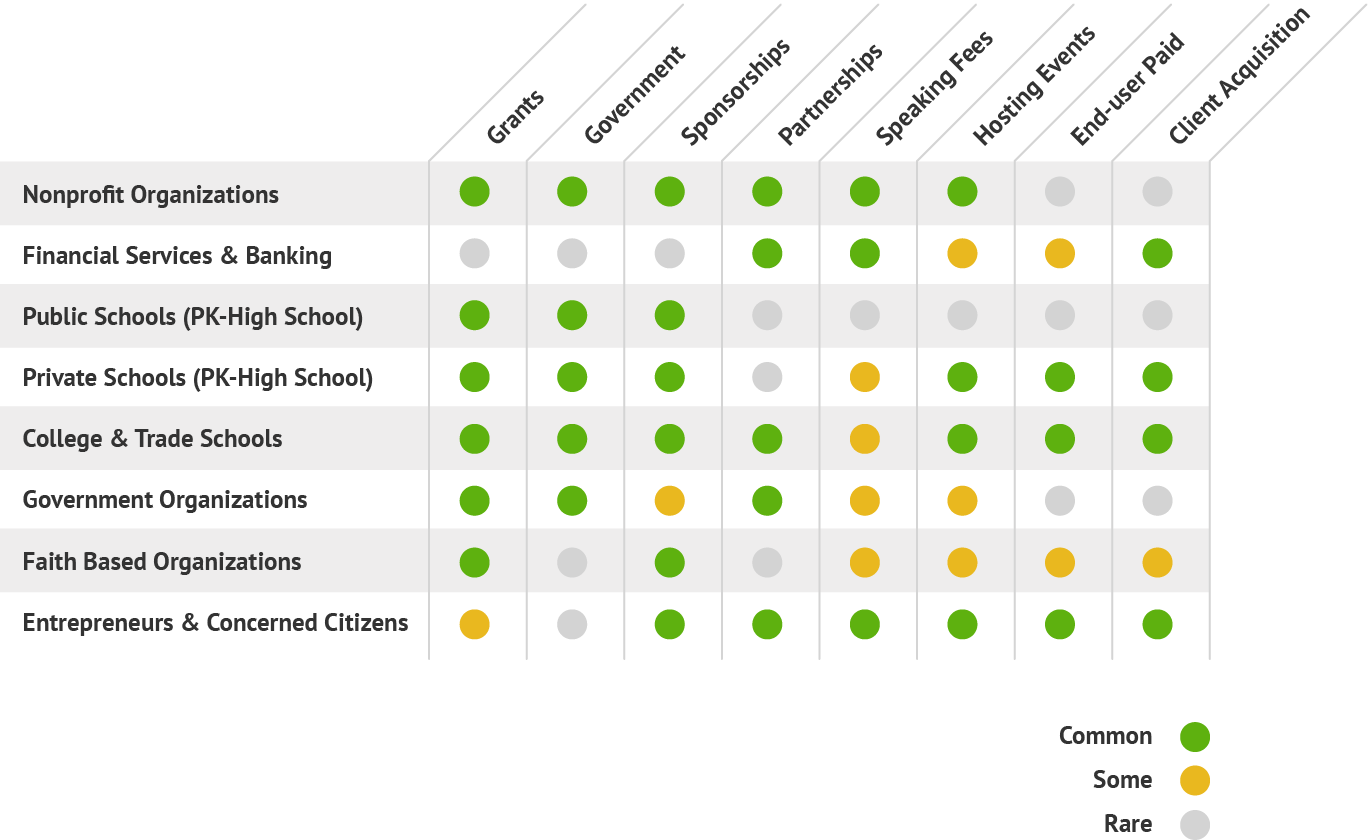
Revenue Models for Public Schools and How They Compare with Other Industries
How Public Schools Participate in Financial Education:




Arizona State University & MidFirst Bank
The NFEC created a campus-wide peer financial literacy initiative for MidFirst Bank to deploy across Arizona State University. This program is going into its fifth year and was designed to widen the reach of financial literacy programming and improve the financial capabilities of its students.
The NFEC developed the core campus-wide campaign, including the materials they needed to host and promote their financial literacy programming. At the center of the campaign were their student-led program facilitators.
The program was peer-led, so Arizona State University students were trained and certified to deliver the customized workshops. Both live in-person and virtual training were provided to students who participated in the Certified Financial Education Instructor training course.
Using peer-led trainers presented unique opportunities and challenges. While the peer leaders could relate well with their fellow students, the format presented a credibility problem. To solve this issue, students went through additional practice to ensure that they could deliver the materials with confidence and that they knew the teaching pedagogy and personal finance content front-to-back.
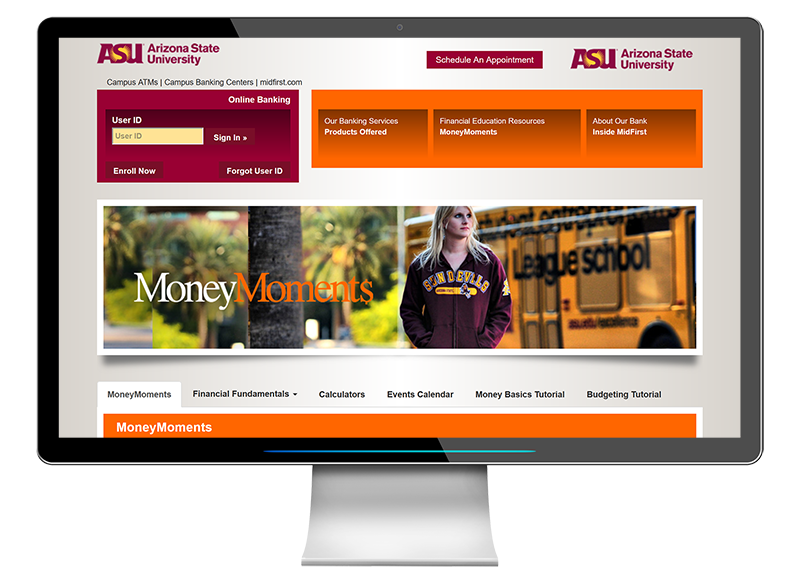
To build peer leader confidence, the NFEC developed a custom curriculum package for the student facilitators. A series of four 90-minute workshops included 14 custom video segments. The video segments featured celebrity speakers and fellow students, with the goals of keeping participants engaged and reducing presenter training time. The coursework was broken up into the four core areas the university and bank felt would serve ASU students best: Savings & Investing, Budgeting & Account Management, Credit Profile, and Student Loans.
Comprehensive testing, surveys, and measurement tools were customized to accompany the curriculum. Measurement tools gathered relevant data to help all parties involved to assess program impact, recognize trends, and leverage information to provide students with timely and relevant financial education.
To get the word out, the NFEC developed custom marketing pieces and tools that helped form collaborative opportunities with various on-campus organizations and groups. Promotion also included materials to facilitate connections with various on-campus groups.
The ASU initiative currently is in its fifth year of conducting continued efforts to empower students with practical financial education. We commend MidFirst Bank and Arizona State University for promoting student financial wellness.
Aspen Academy: Curriculum for Kids
The NFEC developed 200 hours of curriculum – 20 hours per year from PK through grade 8 – for Aspen Academy. The final programming represents one of the most extensive financial education curricula for kids available today.
Aspen Academy was seeking a comprehensive financial education program to roll out to its entire student body. The Academy’s goal was to “help our children make sound financial decisions for a promising future.”
To start, the NFEC developed Framework and Content Standards for kids. In reviewing existing standards, we discovered that they needed to be expanded in order to provide our curriculum development team with clear instructions toward achieving the desired outcomes.
The NFEC brought on board Dr. Heidi Jacob’s Curriculum 21 consultants to develop the National Financial Literacy Framework & Standards. The NFEC also chose Dr. Ann Johnson as Director of Professional Development for Curriculum 21 because of her strong background in curriculum design and mapping. These experts’ assistance helped support the creation of performance-based assessments and curriculum maps that align with and integrate the Common Core Standards. View the National Financial Literacy Framework & Standards.
Once the framework was in place, our curriculum development team went to work. A total 120 hours of existing material was refined and trimmed down to 95 hours based on results and feedback from testing and surveys. Then a further 105 hours of material was created to meet the educational objectives.

Once testing and measurement goals were set, the material was customized and co-branded to meet Aspen’s specific needs. Additional content was written to connect with students’ parents and with the broader community.
Aspen Academy’s educational strategy is to help students develop skills that move them toward rewarding lives. Adding personal finance training to the leadership, character development, entrepreneurship, and core training coursework will help prepare Aspen graduates to excel in the real world. The NFEC is honored to be chosen to complete this rewarding project.
Case Study: SunTrust Foundation Center at Wake Technical College
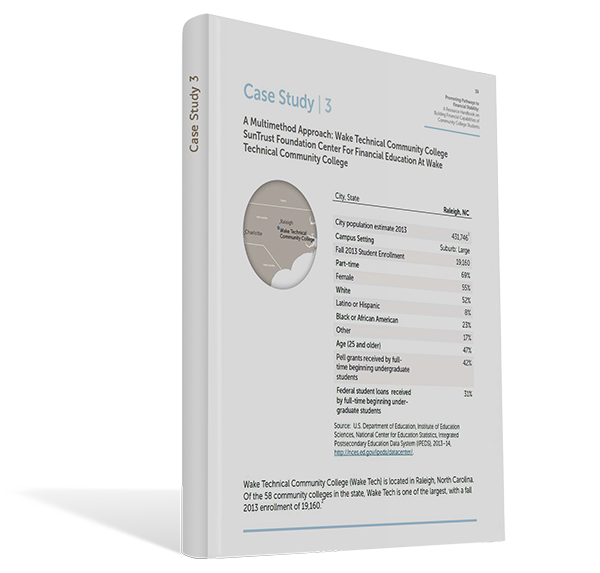
The NFEC designed, deployed and manage a campus wide campaign at Wake Technical Community College with the SunTrust Foundation as the sponsor since 2013. To meet the goal of raising financial literacy competencies among Wake Tech students, staff, and community members the NFEC developed the multimethod programming and developed the branding for the SunTrust Foundation Center for Financial Education at Wake Technical Community College.
Combining live events, financial education-based contests, an eLearning center, interactive experiences, and a personal finance mobile app, the NFEC built an authentic, dynamic learning experience while giving students access to practical financial education programming.

To date this initiative has included more than 150 live instructional events for students, parents, faculty and staff. In addition to live instruction, promotional events and contests encourage active participation while raising awareness about the program. Online and mobile learning also contribute to the educational mix. The NFEC’s proprietary eLearning platform forms the backbone of the Center’s online personal finance initiative.
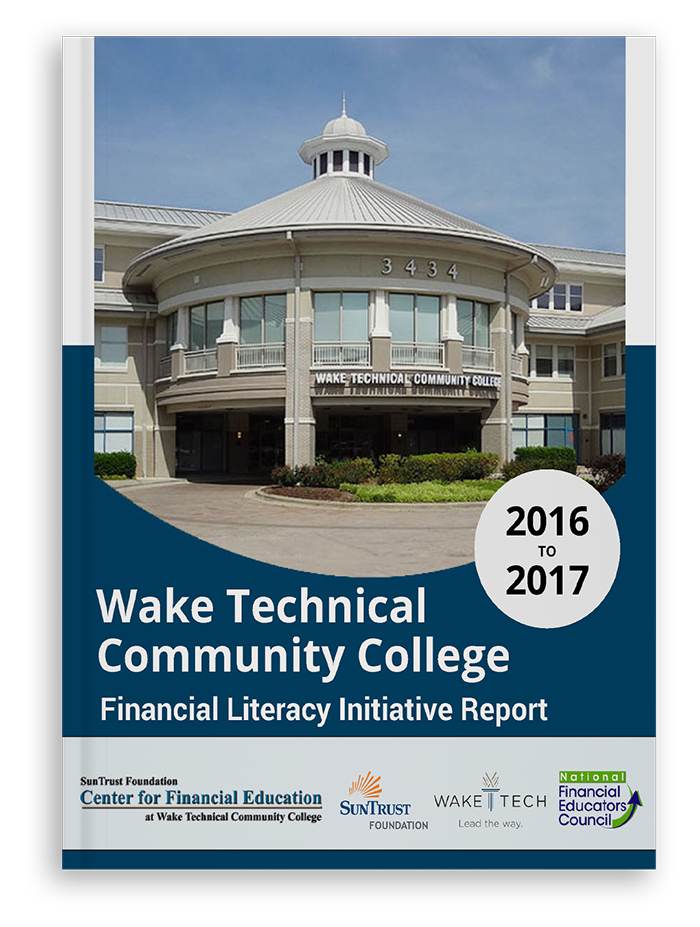
The campaign’s focus on increasing the reach of the programming was achieved through a mixture of building new partnerships, campus-wide marketing, generating media coverage, building an online presence, word-of-mouth networking, and other collaborative efforts.
For Wake Tech College, the NFEC designed a comprehensive financial wellness program incorporating live events, media outreach and promotion, workshops, crash courses, and contests. This holistic effort was made possible by the sponsorship of the SunTrust Foundation.
The NFEC designed the Wake Tech campaign with the goal of raising financial competencies among the broadest possible group of students, parents, staff, and community members. The campaign had multiple components:
Center for Financial Education
At program outset, the NFEC helped Wake Tech and the SunTrust Foundation open the Center for Financial Education which serves students, faculty, and the whole community with financial education and resources.
Customized Instruction
The NFEC implements the Center’s acclaimed Financial Empowerment Workshop series which takes place over four college class periods and covers lessons in credit, debt, savings, money management, and investment basics. Multimedia videos and real-world activities are featured to engage participants while they improve their financial foundation. Two 90-minute crash courses also have been created – one to help students reduce or eliminate debt, and one aimed particularly at helping educators and staff take action toward retirement planning.
Live Events
High-profile open house events showcase the NFEC’s financial education opportunities at Wake Tech, including the College Family Finance event for students accompanied by parents and the Financial Empowerment event for students who attend alone. Each April the NFEC helps Wake Tech celebrate Financial Literacy Month with free access to online financial education, a booth at the Spring Fling, and other exciting activities.
The campaign also hosts an annual Financial Scavenger Hunt contest, a reality-based competition that helps people learn money management skills while getting a chance to win fun prizes. The contest includes activities that help build solid financial foundations, such as reviewing SunTrust’s student checking account options and calculating compound interest.
Each Wake Tech semester ends with a Closing Ceremonies event wrapping up the financial education campaign activities with fun, food, and participant recognition.
Media Outreach
The NFEC supports Wake Tech to gain important media coverage, distribute flyers around campus, build presence online and in the social media, conduct word-of-mouth networking, and use the NFEC’s email listserv to reach more than 20,000 people with information about the SunTrust and Wake Tech-sponsored financial literacy events.
Collaborative Partnerships
Part of the NFEC’s financial literacy mission involves building collaborative partnerships to maximize the use of resources and extend program reach and support. At Wake Tech the NFEC has facilitated collaborations with a variety of community and campus organizations including Jack and Jill of America, the COSMO department, dental hygiene program, and Business 125 courses. These collaborations make it possible for the campaign to reach hundreds of students, staff, and community members with financial education courses each year.
With the support of the NFEC and SunTrust, the Wake Tech financial education initiative has achieved sustainability across campus and in the surrounding community. Demonstrating the sponsors’ commitment to improving financial outcomes for students, staff, faculty, and community members alike, this program has been steadily expanding over the past three years and shows every indication of continuing to extend its reach and positive impact. This initiative epitomizes how successful collaboration between the college, organizations, and students can empower the whole community with financial knowledge.

Case Study: Simon Scholars
The NFEC is celebrating its third year hosting the financial literacy event at the Simon Family Foundation’s Summer Conference. In each of these three years, 100 college-bound youth participated in a three-day event offering training in various life skills. The NFEC’s role was to provide complete event production for the financial education portion of the event.
The Summer Conferences are hosted at Chapman University and more than 100 current Scholars and alumni are invited to participate. Students enjoyed a variety of activities designed to prepare them to face life in the “real world.”
One of the many conference highlights is the National Financial Educators Council’s hands-on financial literacy event, the Real Money Experience (RMX). RMX gave Simon Scholars a chance to visit booths where they practiced making the life decisions they’ll encounter when they move away from home.
RMX presents fourteen “skills booths” that offer practical financial literacy lessons that engage students through live interaction with volunteers. Participating youth (Junior High through College) get practical experience making the financial decisions they’ll face after they graduate, but in a safe environment.
Simulating real-world experience is proven to dramatically increase students’ retention and keep them talking about the event long after it’s over. This lasting impression also benefits our Patrons, who get the opportunity to connect with students one-on-one – which helps build top-of-mind awareness.
“We just received the Financial Literacy Event Report. Wow! This is fantastic! We can easily show our board how much students learned. We’ve just begun planning our summer conference, and would like to offer the scholars your amazing financial workshop. Are you available on August 8th? Same time as last year. Thank you again! I can’t wait to share this.” – Joanna Mueller, Program Director, Simon Family Foundation
The National Financial Educators Council (NFEC) is honored to serve the Simon Family Foundation at their annual Summer Conference. The generous scholarships offered to each Simon Scholar are commendable and contribute to maintaining the 90% success rate of students active in the program or having graduated from college.
Individuals
Educators form the backbone of the financial literacy movement. The NFEC has built a nationwide infrastructure of financial educators who can give high-quality presentations that meet the needs of a wide range of organizations and groups. Members of the Personal Finance Speakers Association are working in communities across the country to promote financial wellness. Here are their stories: