
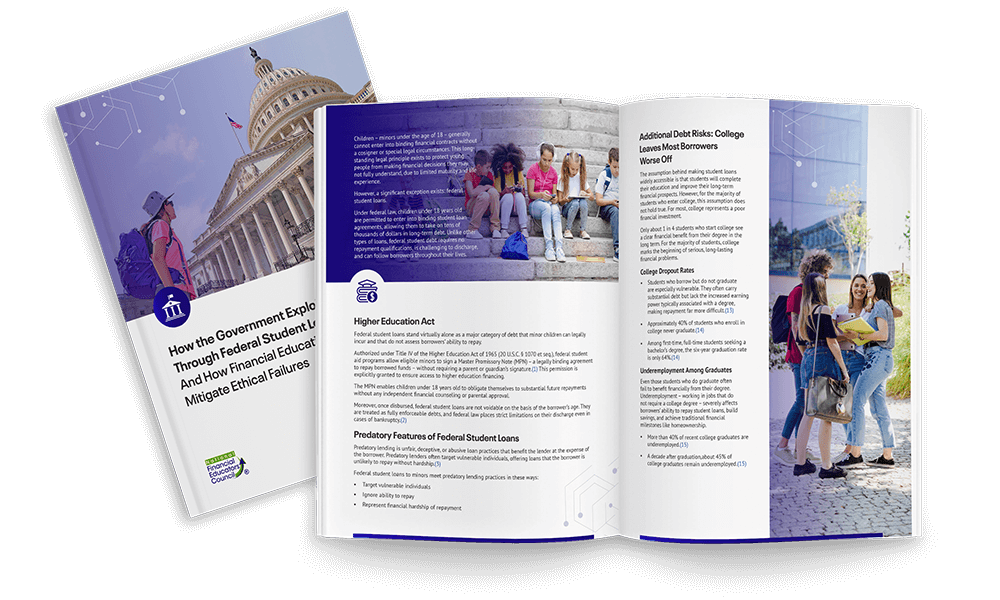
Protecting Minors from Predatory Student Loan Practices Through Mandated Financial Education
Children under the age of 18 generally cannot enter into binding financial contracts without a cosigner or special legal circumstances. This long-standing protection shields minors from obligations they may not fully understand. However, federal student loans are a major exception. Minors are allowed to legally commit to tens of thousands of dollars in debt without parental consent, repayment qualifications, or basic financial safeguards. While some states extend limited protections through age-of-majority or educational loan statutes, most do not – leaving minors uniquely exposed in the federal lending system.
Predatory Lending and Student Loans to Minors
Predatory lending practices are defined as unfair, deceptive, or abusive practices that benefit the lender at the expense of the borrower. Federal student loans to minors share many of these characteristics:
Under most circumstances, minors cannot legally sign for auto loans, credit cards, or mortgages. Yet the federal government allows them to take on student loan debt – often without understanding the lifelong consequences.
How Financial Education Mitigates Predatory Practices
A rigorous financial education program that measures students’ abilities on performative assessments offers the best defense against predatory student lending. When minors receive rigorous, practical financial education before borrowing:
Teaching students how to make informed financial decisions through real-world, performance-based assessments significantly reduces their vulnerability to exploitation.

The College Student Protection and Financial Education Act
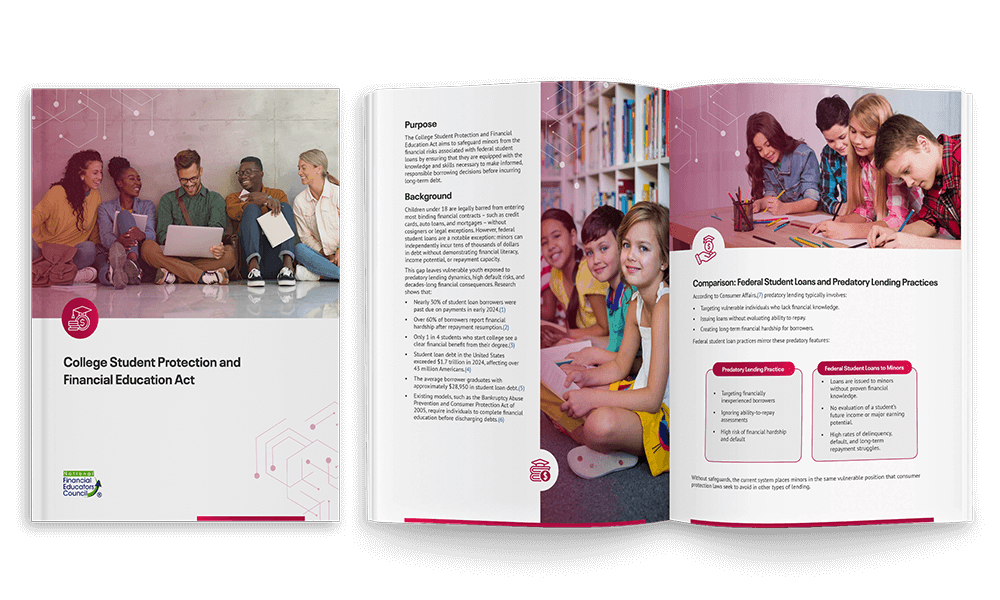
As a policy solution, the College Student Protection and Financial Education Act proposes that minors must complete rigorous financial education – proven through performance-based assessments – before qualifying for federal student loans.
This act would close the current loophole that exposes minors to life-altering debt without sufficient knowledge, safeguarding their financial futures and aligning borrowing practices with ethical standards.
Administrative Petition to Protect Minors from Uninformed Student Loan Debt
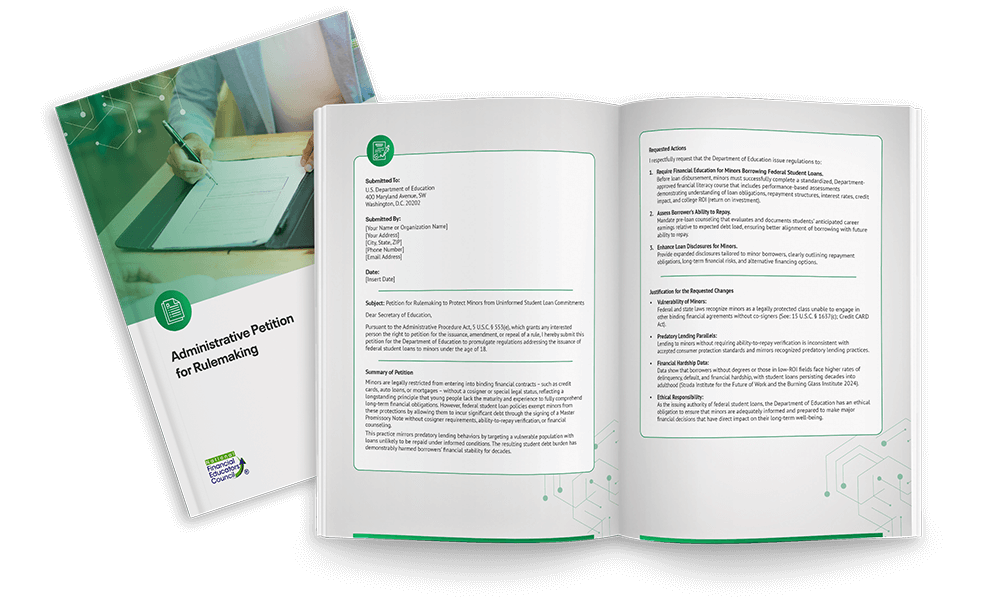
The NFEC provides this Administrative Petition for Rulemaking as a resource for individuals and organizations advocating stronger protections for minors. This ready-to-use template enables you to formally request that the U.S. Department of Education address the issue of federal student loans issued to borrowers under 18—who are otherwise restricted from entering financial contracts. By submitting this petition, you support efforts to align policy with responsible lending practices and protect young people from lifelong debt burdens incurred without adequate safeguards.
Social Media
Join the movement to protect young borrowers.
Follow us on social media for updates, facts, and advocacy tools you can use to spread awareness. Together, we can demand reforms that require financial education before federal student loans are issued to minors.