

Considerations when Financial Coaching
Each person you coach has pre-existing financial behaviors, past experiences with money, and a unique financial situation. Due to these factors, the subject of money can evoke strong feelings and reactions in people; the educator must address these reactions.
Providing personal financial coaching services requires unique skill sets that bridge educational methodologies, subject matter expertise, behavioral finance, and psychological understanding. To bridge these fields effectively, financial coaches must possess cross-disciplinary skill sets from each area to help students work toward a state of financial wellness and security.
Childhood Influencers of an Individuals’ Finances
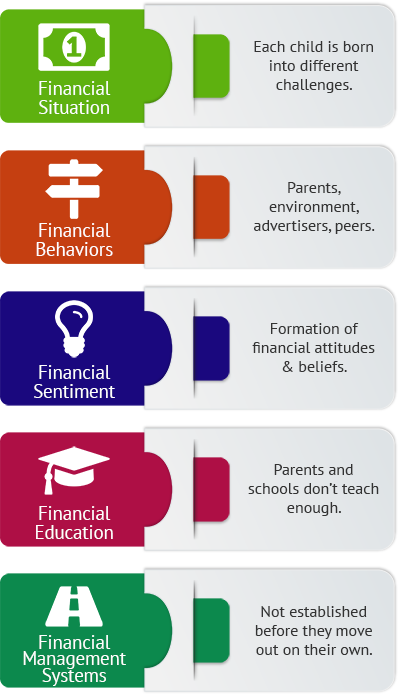
People’s upbringing directly affects their ability to manage money, how they feel about the topic, and the financial habits they develop. The relationship a person develops with money starts in childhood. Consider these 5 areas:
Adult Influencers of an Individuals’ Finances
Financial behaviors, sentiment, knowledge, and management systems are just some of the considerations when financial coaching. Each of these traits start forming in childhood and often solidify into habits by the time a person reaches adulthood. The problem is that, once habits form, they are difficult to break; therefore a person’s financial situation becomes harder to change as he or she matures.

Overcome the Financial Coaching Challenges
Although providing financial coaching services poses many challenges, those challenges can be overcome and you can make a real difference in people’s lives. There are important steps to consider when planning your practice and building the skills you need to provide financial coaching support that affects many areas of a person’s life. These are the main considerations when financial coaching to address: