
Big Picture Financial Literacy Program Planning
On this page you will discover a primary initial program goal and some tips that can help you work toward that objective. It’s our hope that this information will help you build your financial education program more effectively, so you can start making a difference in people’s lives sooner.
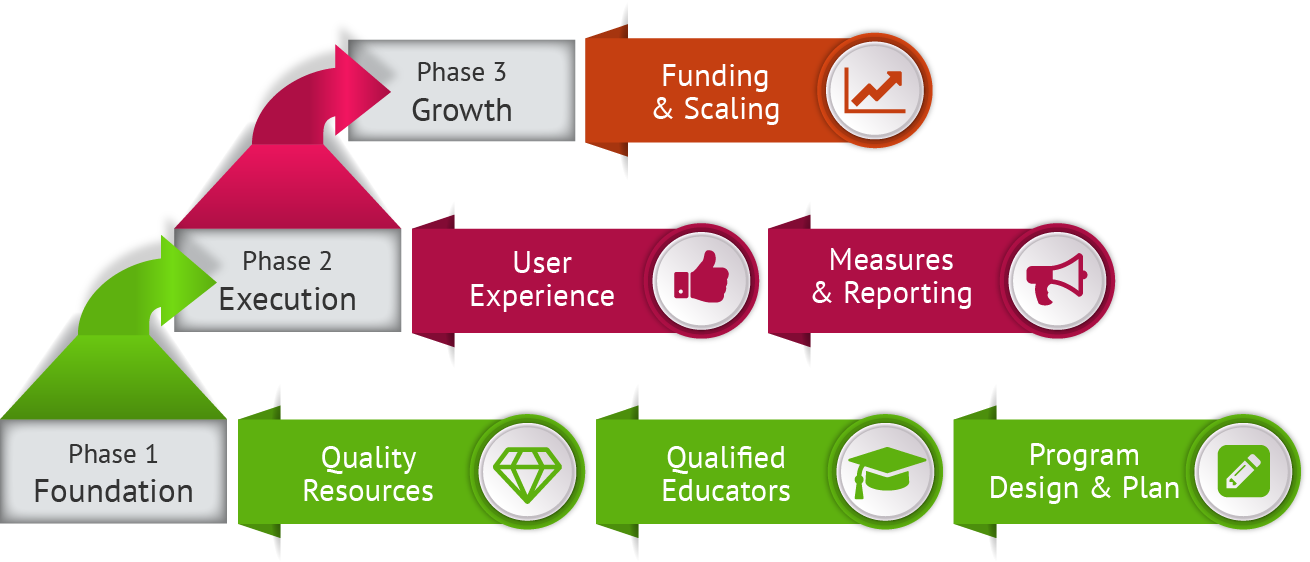
When you dive into any new project or subject, it’s easy to get hyper-focused on the details. It’s important to zoom out from time to time and reflect on the big picture vision of your program. This activity will help you plan out each phase of your program development and stay on course toward your personal, business, and philanthropic goals.
This article and 10-minute activity will help you establish your program goals and give you some practical tips for accomplishing those objectives.
Primary Initial Milestone Goal: Proving Your Program’s Impact via Case Study
Completing a case study report that proves your competency as a top-quality provider of financial education programming that makes a measurable impact should be the primary major milestone goal you set for yourself.
In our interviews with thousands of providers of financial education, we’ve learned that only a few make the effort to build out case study reports that demonstrate their impact. By developing case studies about your programs, you will stand out among the crowd.
The process of building case study reports takes more effort on the first few, but gets easier each time. The key is to have a clear plan for what information to gather and collecting those data at established points of your program. Once the information is gathered, it can be easily added to case study report templates and leveraged to help you expand your programming.
In your course, you will find comprehensive training and the report template that will help you build your case study – Check out the case study page training.
All clients are eligible for NFEC sponsorship by completing their case studies – Click here to learn how the NFEC can sponsor your program.
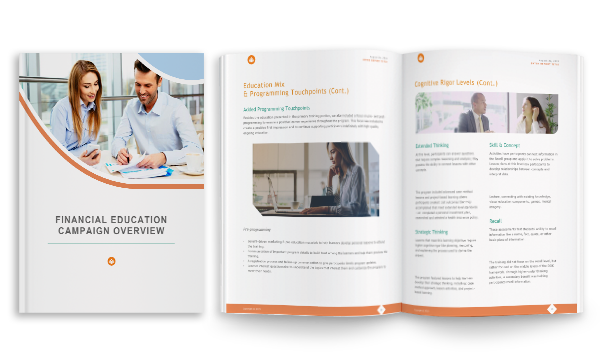
We provide you case study surveys, testing and a template report in your Patron Resource Center to easily complete your case study.
4 Essential Tips for Staying on Track with Your Goals
When we spoke with our successful clients, they shared similar approaches to working toward their program goals. Here are a few tips they suggested:
The NFEC has a vested interest in your success. The more successful you are at accomplishing your personal, business, and philanthropic goals, the more successful we are in promoting financial wellness.