
6 Essential Elements Financial Literacy Programs Must Consider: Video with Infographics & Tips
You want to make a meaningful difference in people’s lives, but you need resources and guidance to support your financial education initiative vision.
Individuals and organizations around the globe have mobilized to tackle the financial illiteracy epidemic; yet most of them need financial education resources, support, and guidance to get underway.
This complimentary short training was designed to help people who are championing financial education initiatives get better results and bring programming to scale so more people can receive vital personal finance information. The resources in this program are based on the latest research and have been proven to make positive impact across all demographics and age groups.
Click on the Tabs Below for Added Details
Qualified Educators
Because each person has his or her own preexisting financial habits, relationship with money, and current financial situation, personal finance is a unique subject that requires specialized expertise to teach effectively. Qualified financial educators form the cornerstone of any personal finance program; such educators can help learners achieve far better outcomes than poorly-qualified instructors can.
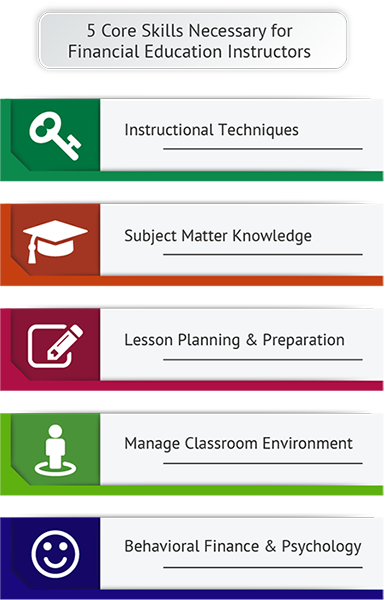
5 Core Skills Necessary for Financial Education Instructors
Instructional Techniques. Understanding of research-based educational methodologies to increase learner application.
Subject Matter Knowledge. Sufficient understanding of the topics being taught to lead programming with confidence.
Lesson Planning & Preparation. Knowledge of how to design an educational path that matches learners’ abilities.
Manage Classroom Environment. Ability to create a learning environment that gives learners a feeling of security.
Behavioral Finance & Psychology. Knowledge of the psychological principles that affect financial literacy education.
Financial Education Resources
Teaching basic personal finance lessons is easy; making a measurable impact requires more effort, but can be accomplished. There are important steps you need to consider when designing your program and selecting a financial literacy curriculum to use.
Most financial education resources are focused on lower-order thinking processes, are built to be delivered in lecture format, and do little to prepare people to confidently make effective financial decisions. They fail to address financial sentiment, behaviors, and systems to demonstrate measurable results.
When you set out to teach personal finance, selecting the right education resources is critically important. Financial education resources should be grounded in research-based educational methodologies and real-world application. They should focus not only on knowledge, but also on financial behaviors and establishment of systems to encourage long-term benefit for the learners.
Important Considerations for Financial Literacy Lesson Plans
Backwards Planning. Ensure that the lessons support learners to progress toward pre-defined outcomes.
Active Learning Techniques. Include visual, social, self-regulated, and project-based learning.
Audience Adaptation. Enable instructors to adjust activities to support learners at different levels.
Motivation & Reasons. Help learners determine their personal reasons and motivations for adopting positive financial behaviors.
Ongoing Education. Include long-term follow-up and support to encourage permanent change.
Application. Include activities so students take action on what they learned and practice completing real-world tasks.

Program Design & Approval Resources
We all want a financial education program that makes a meaningful difference in the lives of the audience we are teaching. The overall results of any program are directly influenced by its initial design and plan.
Like most endeavors, having a clear plan for teaching personal finance is essential. That’s why creating a cohesive financial education program that delivers results requires careful planning of all programming details.
We find that the people championing financial education in their communities feel more directed and confident once they have a plan in place. Planning allows them to avoid a lot of common missteps that can cost a lot of time, money, and frustration.
Properly-designed programs are built with purpose, so all campaign components work together to promote financial literacy and to further the leader’s business objectives. A well-designed program will stand out from among average programs, which often are simply random financial literacy resources pieced together. This section offers resources for designing a cohesive program that creates positive brand alignment and increases overall results.
Once the data have been gathered in the discovery phase and measures have been established in the define phase, the design process can begin. The resources in this section enable analysis of the feedback from the discovery session to create a program that best meets the needs of the stakeholders.
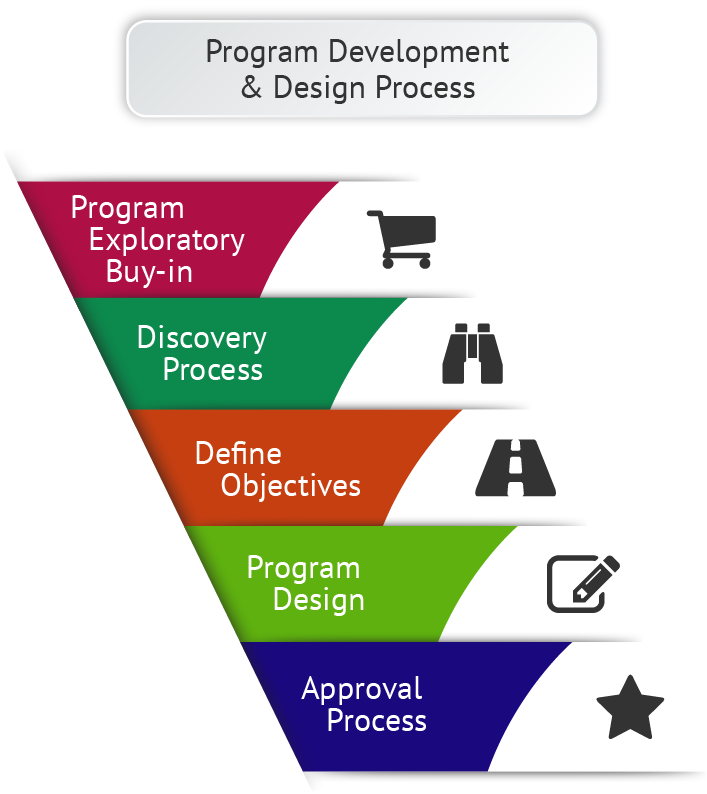
Program Development & Design Process
Program Exploratory Buy-in. The goal is to get approval or enlist the help of others as needed to start the discovery process.
Discovery Process. Uncover the needs of the learners and any partner organizations being served.
Define Objectives. Set clear outcome goals for the program.
Program Design. Selection of topics taught, training delivery methods, lesson plans, and all other program details.
Approval Process. When partners or organizations are involved, approval is the last step before moving forward.
User Experience
A financial education program that creates a positive learner experience can make a program stand out. Building a positive experience not only benefits the participants and makes a measurable difference in their outcomes, but can also position you as a quality provider of financial education programming.
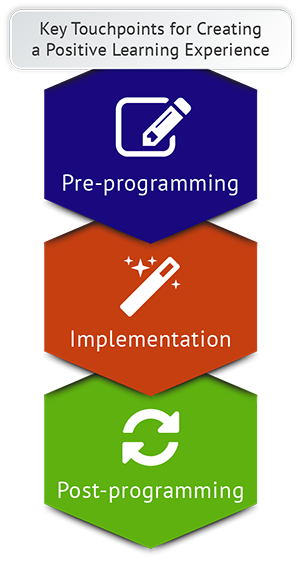
The goal is to create a positive first impression, showcase professionalism during the actual program, and continue to support participants indefinitely with quality ongoing education. Focusing your efforts on ensuring a positive user experience along the three main touchpoints – pre-programming, implementation, and post-programming – is an important aspect to include in the program design.
3 Key Touchpoints for Creating a Positive Learning Experience
Pre-programming. From first contact through the start of the event, consider all your touchpoints with learners as opportunities to promote the program and engage in pre-education strategies.
Implementation. Once learners arrive for the training, ensure that they receive a thoughtfully planned experience that highlights your professionalism. Such an experience may be created through quality resources, décor, and a trained support team.
Post-programming. Ensure that your learners feel supported after primary training concludes by recognizing their achievement and providing ongoing training to encourage them to take action on what they learned.
Measures & Reporting
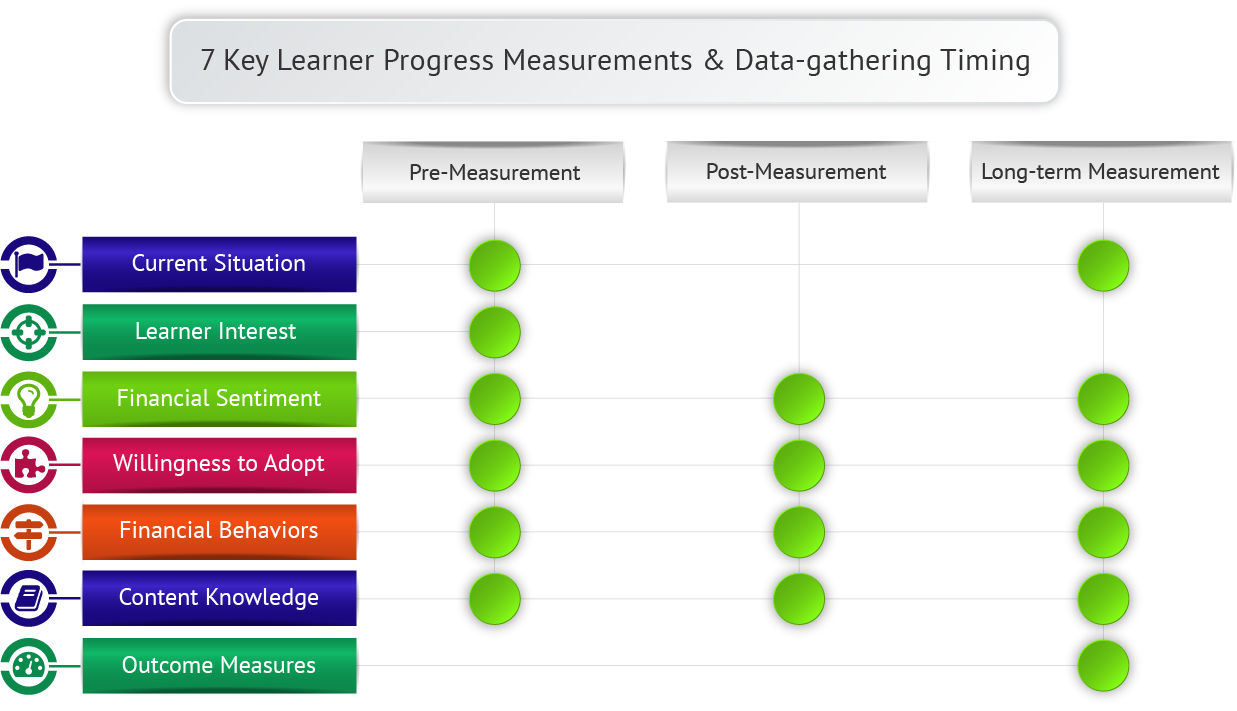
To achieve best results and help others improve their financial capabilities – measurements, data gathering, and reporting are vital. By taking accurate measures and reporting on the results, you can prove the impact of your program and demonstrate your competencies as a quality provider of financial education programming.
Building case study reports offers many benefits to leading financial education programs. Internally, reviewing your program results will help you identify and improve your program. Externally, the reports will demonstrate your professionalism and program impact to help you expand your program and leverage funding opportunities.
Proving your program’s impact through case studies should be the primary goal for anyone in the financial education industry. For those new to the industry or who have not reported their program results data – completing programming, taking comprehensive testing, and reporting on the data should be a primary goal.
Financial Education Programming Business Aspects
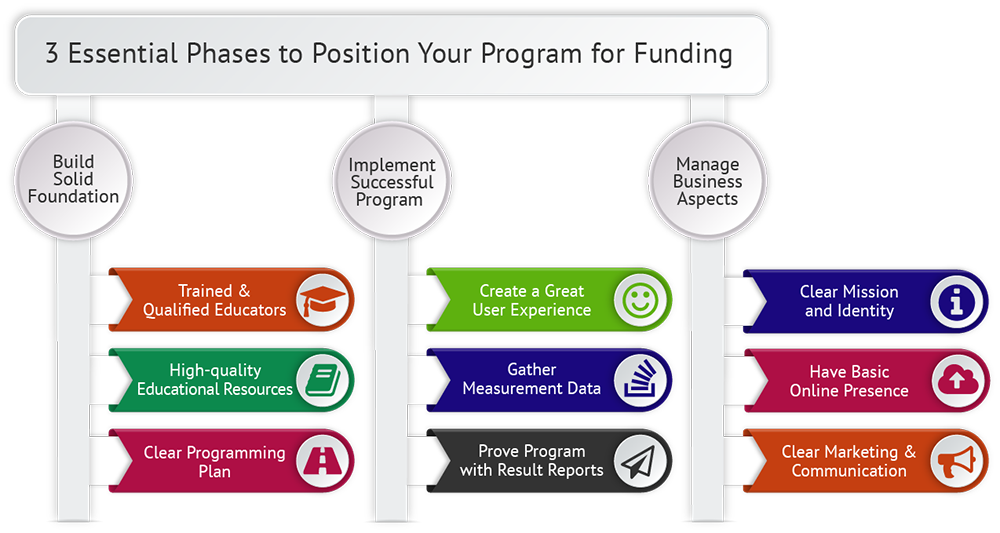
Creating sustainable financial education initiatives is the key to building scalable solutions to address the financial illiteracy epidemic that can continue to help people for years to come. Having clear revenue and funding strategies that support continued expansion is essential for you to grow your programming.
There is a clear path to increasing funding opportunities for your program. If you skip steps, you’re likely to experience less success and more rejection. But if you build a solid foundation, prove your program’s impact through detailed reporting, and build a positive reputation, you become better positioned to capitalize on funding opportunities and get recognized as a competent provider.
We Share the Same Model that Worked for Us and for Thousands of Clients of All Sizes
The NFEC did not start as a Council. Our beginnings were boots on the ground, delivering financial education and coaching services in local communities. Our vision from day one was to focus on helping people with their finances so they can live more rewarding, secure lives.
As we grew and other groups saw our materials and results, people began coming to us asking for support. That was the moment when our model changed – from presenting and producing financial education programs and offering financial coaching services, to helping others with a passion for financial wellness develop and build campaigns in their areas.
Today the Financial Educators Council is the leading provider of independent financial wellness resources that empower a global team of financial wellness champions with the resources and training they need to effectively support others in their communities to work toward greater financial security.