
Lesson Planning for Financial Literacy Programs: 8-step Process
Planning a financial education program requires different strategies than your typical school course or presentation. Because each person has a unique situation, formed habits and behaviors, and different goals – lesson planning for personal finance courses requires a unique approach.
In this article, we present the 8-step process for financial literacy lesson planning. This framework will walk you through the most important considerations and provide examples of how to implement the different strategies.
Step 1: Understand the Learners
Before we select the topics and lessons to present, we need to understand the people we’re teaching. Questions to consider in the process of understanding your learners include:
What is their age and education level?
How about their financial situation – what are timely needs they may have?
What are their attitudes, behaviors, and thoughts about money?
Are they interested in learning, or taking the class because it’s mandated?

Step 2) Consider Learners’ Life Stage: Immediate Needs & Long-term Goals
Now that you understand the audience, next consider their life stage. What is their most pressing need in the near term, and what long-term goals should they be considering at the present time?
This step will also help you develop a theme designed around their life events or the audience’s most pressing financial needs. This alignment provides learners with strong reasons to participate and a timely education they can implement in the short term. For example, if you’re working with people facing housing security issues, your event theme, topics, and goals should be directed toward addressing those challenges.
Common Life Stages: Youth & Young Adults
Moving Out on One’s Own
Buying a Car
Going to College
Entering the Job Market
Starting a Savings Plan
Common Life Stages: Recovery Adults
Paying Off Debt
Improving Credit Scores
Gaining Near-term Financial Security
Establishing a Savings Habit
Rebuilding after Financial Hardship
Common Life Stages: Foundation Adults
Having a Child
Planning for a Major Purchase
Buying a Home
Combining Finances with Partner
Paying off College Loans
Common Life Stages: Long-term Planning
Transitioning to Retirement
Deciding on Social Security Options
Estate Planning
Paying for Children’s College & Other Purchases
Step 3) Identify Program Constraints
The time available to teach personal finance is another area that affects the lessons you choose. For most programs, this is the top constraint that must be addressed in lesson planning.
A course with 50 hours of teaching time will be significantly different than one with only two hours. Your role is to match the time availability with the program learning outcomes.

Step 4) Define Learning Outcome Goals
Now that you understand whom you will serve, their life stage, and the time constraints, you can move forward to define your outcome goals. Clarifying outcome goals before choosing how and what we teach is a process known as “backwards design.”
At this stage you will define the levels of knowledge you want your students to achieve. For example, if you’re presenting a one-time lunch-and-learn workshop, simply getting them to recall and reproduce important topics might be an achievable goal. At the other end of the spectrum, a full-semester course could get them to the highest levels of learning – creating, evaluating, and extended thinking.

Step 5) Real-world Outcome Goals
What real-world outcomes do you want your participants to accomplish? Practical outcomes could range from completing their budgets now to developing their future retirement budgets; from creating a debt payoff plan to setting up their bank accounts to save automatically.
Setting clearly-defined real-world goals helps ensure that the lessons support learners to progress toward pre-defined outcomes with benefits for them.

Step 6) Decide on Program Delivery Methods
There are many ways to deliver information today – in what way does your audience prefer to learn? You can find out by asking participants attending your course via surveys and informal discussions.
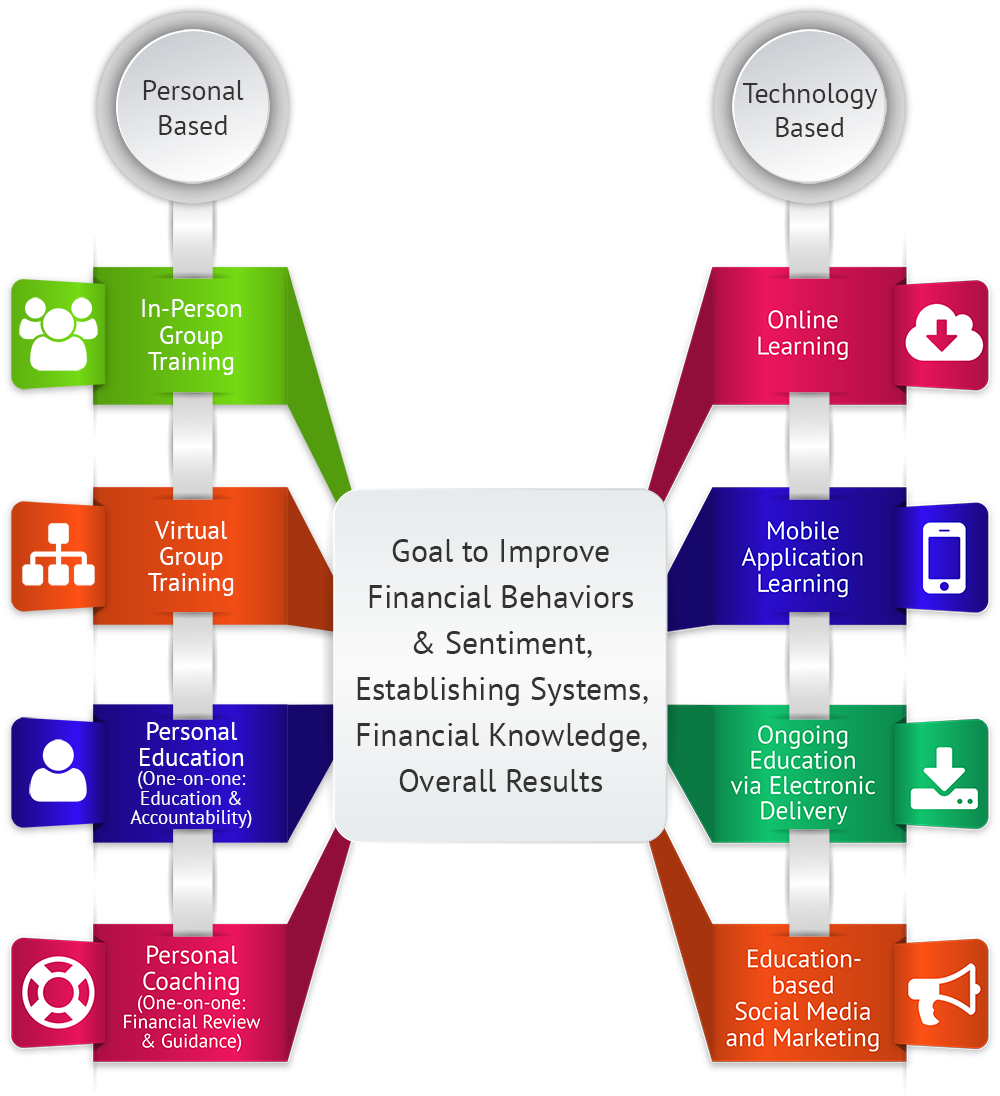
Think through the different touchpoints and consider how each will further your outcome goals. Including multiple delivery methods in your education plan will help you communicate effectively with students who have diverse learning styles. This connection can improve interest, retention rates, and outcomes.
For programs with longer student contact hours, consider combining all three categories: personal education, technology-based education, and support education options.
Step 7) Develop Educational Methods Mix
The overwhelming majority of financial education programs are just lecture-based presentations. While lecture does have its place in learning, there are other methods we can employ to appeal to a wider audience and achieve better results. Plus, using a mix of methods is easier and more enjoyable for the instructor.
The educational methodologies developed by the NFEC support learners to develop positive financial behaviors, acquire financial knowledge, and establish systems that help them work toward stronger financial positions. These methods include:

Step 8) Selecting Topics & Lesson Flow
While many educators start with topics and design a program based on those subjects, the NFEC method suggests that you first must understand learners, their needs, time constraints, learning and outcome goals, and how you will deliver the training – only then is it time to select the topics.
The flow between topics is equally important. A life stage theme can help you easily bridge topics by sharing with students how each subject helps them work toward achieving their financial objectives.