
Top Tips for How to Become a Financial Life Coach
If you want tips for how to become a financial life coach, you will find what you’re looking for here. Below are the five steps in the best process for becoming a financial coach, and a story about someone who successfully followed them.
Step 1: Training & Certification
Erica Chadwick, Human Resources Manager at Western Supply, Inc., wanted to find out how to become a financial life coach. That’s because she had a passion for helping WSI employees handle their personal finances better, to improve their health and productivity. She knew the first step would be to update her education and earn financial coach certification credentials. This step would be particularly important for a financial coach.
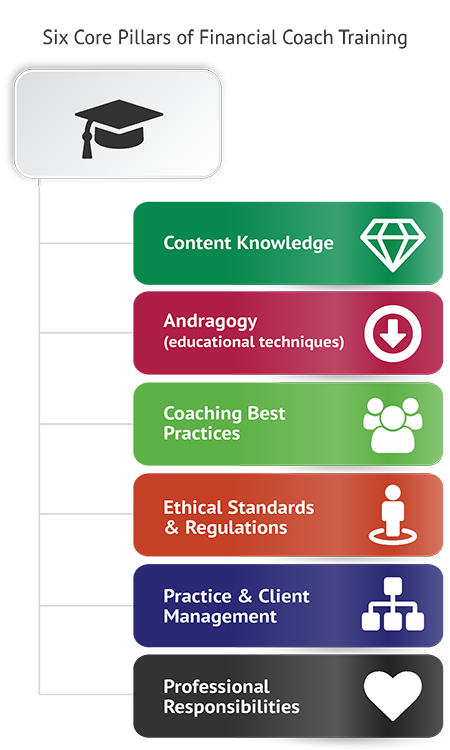
Successful financial life coaches, Erica knew, needed more than just knowledge about personal finance topics. They required understanding of behavioral psychology, effective teaching methods, regulations, and coaching techniques. While Erica was well-versed in industry regulations, she needed help in the other categories. She found what she was looking for in a financial life coach certification program.
Completing the programming and getting certified would demonstrate Erica’s competency and compliance with standards for financial coaching. Accomplishing this goal would ensure client confidence in Erica’s ability.

Step 2: Initial Experience
While Erica was pursuing her financial life coach certification, she also strove to get hands-on experience with the oversight of a supervisor. Book knowledge is an essential component; but the process of how to become a financial life coach involves putting learning into action.
Erica convinced a couple of employees to let her practice financial life coaching, so she could gain real-world experience. Erica’s initial practice showed her that each person was unique, with various emotional responses, habits, and realities related to money. While this variation was challenging, Erica continued practicing and her skill gradually increased.
Ms. Beck had a colleague at WSI who was certified as a life coach. She prevailed upon him to become her mentor, and he agreed. Before Erica had completed her education and proven her coaching competence, having her work and recommendations monitored was important.
Step 3: Systems, Processes, & Resources
Education, client experience, and results documentation laid the groundwork for Erica’s progress toward how to become a financial life coach. The third step would be getting systems, processes, and resources in place to handle effective client management.
Erica had a software program for managing human resource systems, which she adapted to guide her financial coaching client communications and relationships. The software allowed her to organize and view client financial pictures in their entirety, from bank accounts to credit reports to insurance coverage.
Failure to provide clients with a physical financial plan is characteristic of ineffective coaches. Erica gave her clients personalized financial plans with clear direction. Through the financial life coach certification training she developed a system for generating progress reports showing client achievements toward goals.

Step 4: Plan & Path – Work for Organization / Start a Business
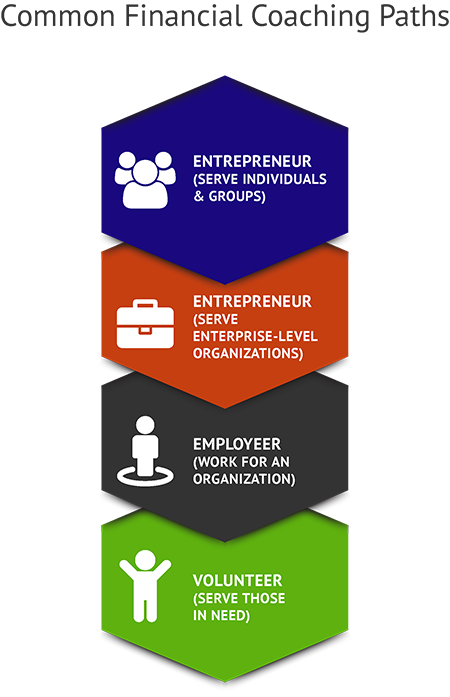
Now it was time for Erica to determine how she wanted to coach. Would she work for a company, or start her own business? She chose to include financial life coaching as part of her current company’s professional development offerings and took a certification course that aligned with her company’s financial counselor job description. She could always start her own business later.
Identifying her path gave Erica a clear preparation process to follow. She started tracking her clients’ results on paper, building them into interesting case studies (adhering to confidentiality and privacy protection standards).
Case studies would show others – individual clients, WSI clients, or potential employers – that Erica was a well-qualified financial life coach.

Step 5: The Essential Step on How to Become a Financial Life Coach – Commitment to Excellent Service & Results
Erica’s primary responsibility as a financial life coach was helping clients reach their goals. She encouraged them both at times when they hit obstacles, and times when they were feeling motivated and upbeat.
Not all Erica’s clients had positive results, which was frustrating. But more often Erica’s hard work was proven worthwhile as clients met their objectives. She watched the progress of her clients through her financial coaching website and learning management system. But the most rewarding data came from her clients feedback. Some clients go from sleepless nights worrying over finances, to the excitement of seeing retirement funds grow. Those experiences brought deep rewards.
Erica had made a solid commitment to her clients’ futures, which helped more of them make positive progress. As she reaped the rewards of their accomplishments, she also let their successes motivate her to continue building her skills.