Revenue, Funding, & Scaling for Individuals and Small–Mid-sized Programs
A reliable funding stream lets you hire staff, maintain quality, run follow-ups, and prove outcomes that unlock bigger opportunities.
After you graduate from the Certified Financial Education Instructor course, the NFEC provides you with resources and support to help you work toward your professional goals. Whether you are looking for a salaried position, funding your nonprofit, building clients, or developing more of an entrepreneurial venture, we welcome and support anyone passionate about helping the community.
We put together this post to address some of the top questions we receive about how people use their credentials. You will learn about the opportunities available for financial educators and how we support your goals.

4 Common Funding & Revenue Models:
Employment, Organization-paid, Individual-paid, and Client Acquisition Models
Salaried & Employment Opportunities
Skilled financial educators are in demand across sectors that value measurable financial capability and workforce readiness. Employers hire CFEI®-trained instructors to design and deliver programs that improve employee well-being, support customers, and strengthen community outcomes. The most common organizations that hire salaried financial educators include:

Funding Opportunities Listed by Your Profession / Industry
Per the Consumer Financial Protection Bureau, as a nation we spend about $670 million per year on financial education. A growing demand for such education is being spurred by regulatory pressures, increased funding, social interest groups, and increased competition among various corporate and nonprofit stakeholders.
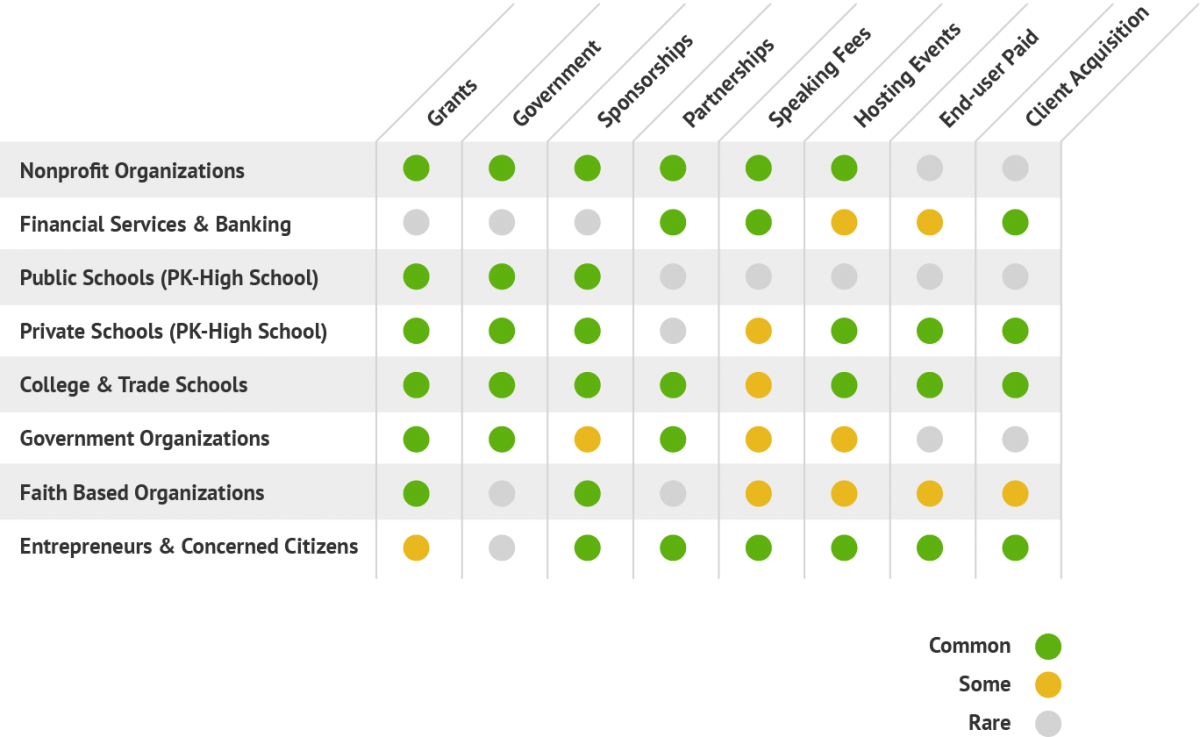
These financial literacy funding opportunities are available to organizations through various channels. The chart below outlines how individuals and organizations can fund their continued involvement in financial education:
CFEIs Execute Programs That Prove Impact – Increasing Funding Opportunities
CFEIs learn to design programs that deliver measurable outcomes – which increases opportunities for you to achieve funding and helps you build a trusted reputation. You’ll master needs analysis, define clear learning objectives, and deploy curriculum and assessment strategies that prove real learner progress – so you don’t just teach, you demonstrate impact.
The training equips you with tools – discovery templates, measurement instruments, case-study formats, and proposal language – so you can document results, report to stakeholders, and secure funding. Those tools, paired with your training, help you translate classroom wins into credible evidence that funders and partners trust.
Ultimately, this pathway positions you as a trusted financial education instructor: someone who can diagnose needs, recommend evidence-based solutions, and show quantifiable outcomes – making it easier to win contracts, attract sponsors, and scale your work.