Top Challenge to Teaching Personal Finance – Why Educator Preparation is Key
Teaching personal finance brings a set of distinct challenges: learners arrive with widely varying knowledge and goals, deeply ingrained habits and money mindsets, real-world constraints like unstable income or limited access to financial products, emotional triggers (shame, fear, pride), privacy concerns that limit disclosure, the need to drive actual behavior change rather than just knowledge, and a fast-changing financial landscape that demands up-to-date, practical guidance.
This list is not meant to discourage you – the CFEI training directly addresses these challenges – it’s meant to help you prepare so you can design realistic, compassionate, and effective learning experiences.

Some of the Challenges Unique to Teaching Personal Finance
Risk of Underqualified Instructors
Because of the unique challenges when teaching personal finance, underqualified financial educators can cause significant harm. Unlike other subjects that do not have a direct impact on people’s well-being, the topic of money does. Something as simple as giving incorrect information or turning a student off learning can cause major problems that affect many areas of their lives.
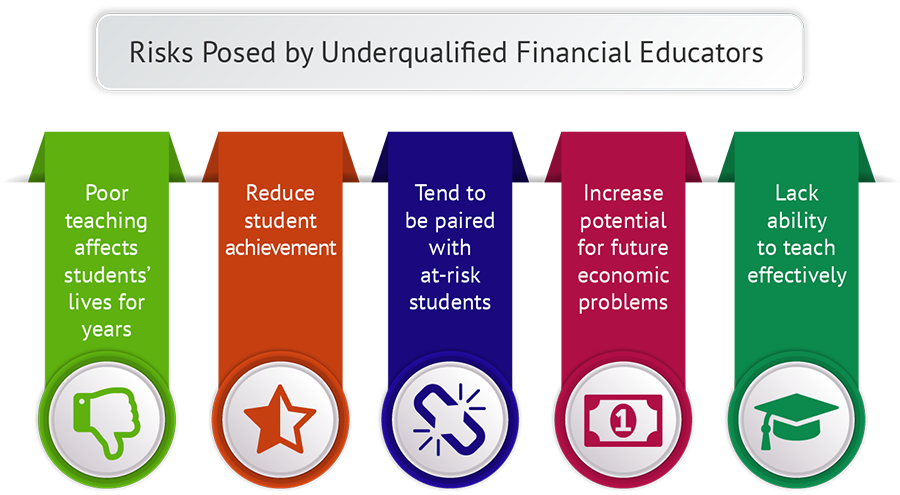
The effects of poor teaching can continue to affect students’ lives for many years after instruction ends.[1] Underqualified teachers reduce overall student achievement levels and tend to be paired with at-risk students – thus exacerbating the risk of future economic problems.[2] Most financial literacy instructors today lack the training and knowledge about personal finance topics they need to teach effectively. This puts students at risk.[3]